UK Bushcraft for Beginners: Where to Actually Start
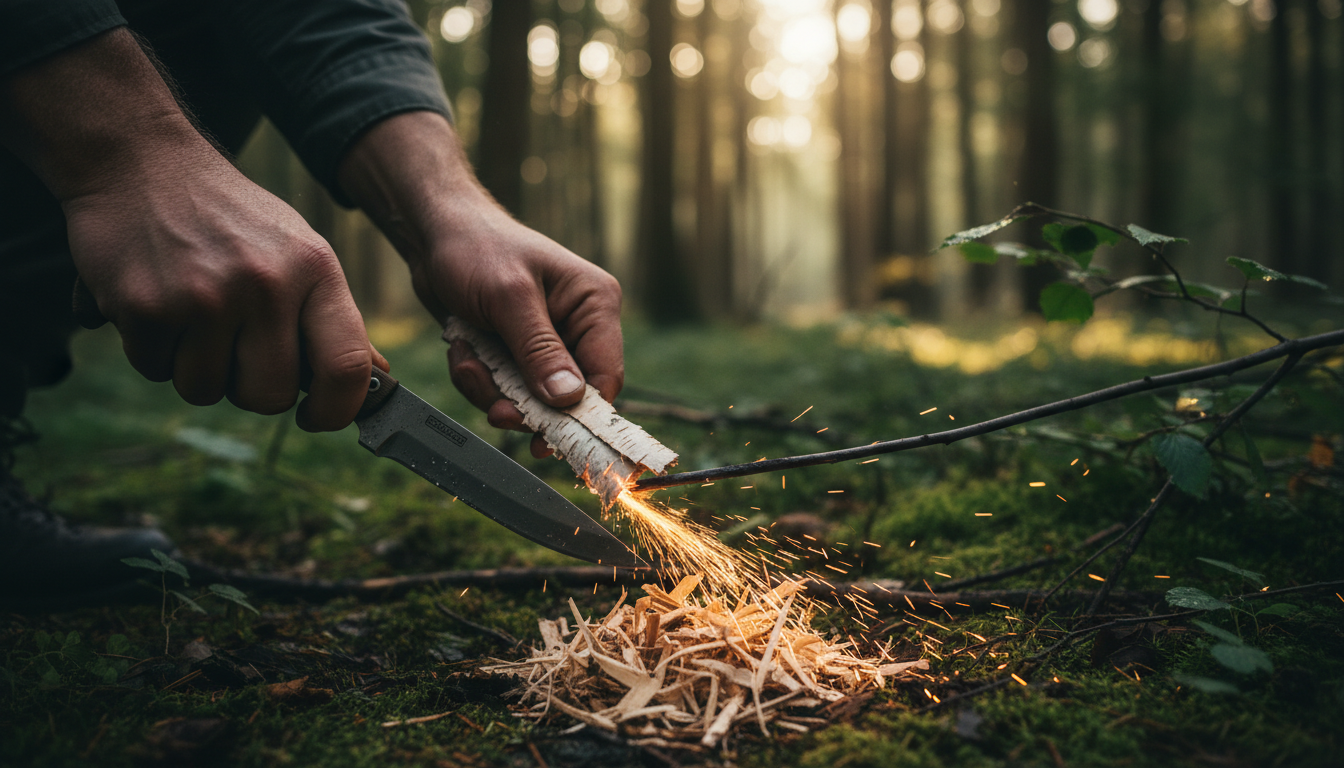
Bushcraft in the UK gets much easier once you focus on three things first: where you can practise legally, which kit actually matters, and which skills are worth learning before everything else. This guide is a practical starting point for all three, built around the damp, changeable conditions most UK beginners meet straight away.
If you are after a quicker overview of what bushcraft actually involves, our introduction to bushcraft in the UK is a great place to start.
What is Bushcraft, Really? (And Why Bother in the UK?)
Bushcraft is the art of thriving in a natural environment by developing a deep understanding of its resources and how to use them for your needs, fostering a profound connection with the wild. It’s about developing practical outdoor living skills, self-reliance, and an intimate knowledge of the natural world around you.
Now, that might sound a bit grand, but at its heart, it’s simply learning to be comfortable and capable outdoors, using what nature provides.
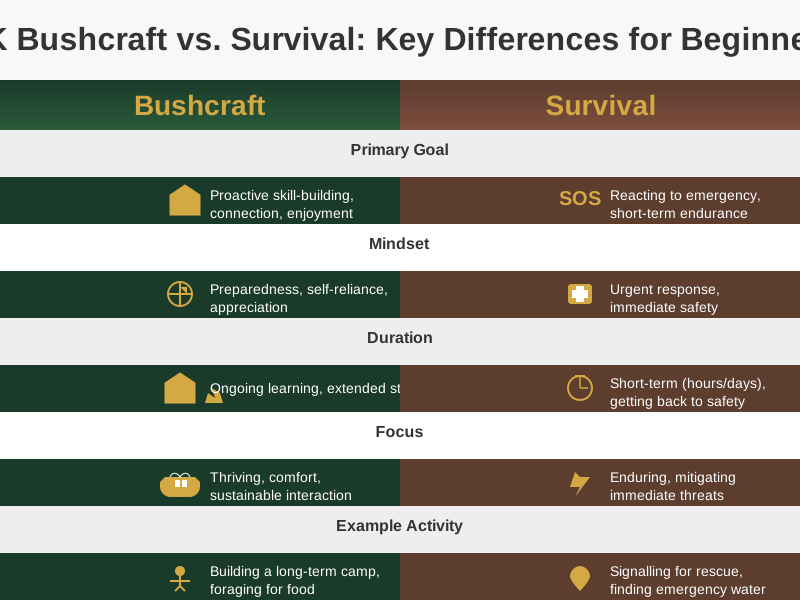
Often, people get bushcraft mixed up with survival, and while there’s certainly an overlap, they’re not quite the same beast. Bushcraft is a proactive pursuit, focused on skill-building, connection, and enjoyment, whereas survival is typically about reacting to an emergency situation.
Think of it this way: bushcraft is learning to build a cosy, waterproof shelter for a planned overnight camp, making it comfortable and efficient. Survival is frantically trying to cobble together any shelter when you’re unexpectedly lost and the weather turns nasty. Bushcraft skills definitely give you a solid foundation for survival, but the primary goal is about appreciating and working with nature, not just trying to escape a sticky situation.
Bushcraft vs. Survival: A Quick Comparison
| Feature | Bushcraft | Survival |
|---|---|---|
| Primary Goal | Proactive skill-building, connection, enjoyment | Reacting to emergency, short-term endurance |
| Mindset | Preparedness, self-reliance, appreciation | Urgent response, immediate safety |
| Duration | Ongoing learning, extended stays | Short-term (hours/days), getting back to safety |
| Focus | Thriving, comfort, sustainable interaction | Enduring, mitigating immediate threats |
| Example Activity | Building a long-term camp, foraging for food | Signalling for rescue, finding emergency water |
So, why bother with all this in the UK? Well, the truth is, we have a uniquely challenging and rewarding landscape. Our weather is famously unpredictable – glorious sunshine one minute, a proper downpour the next!
Learning bushcraft here means you’re developing resilience, not just against the elements, but also within yourself. It’s about understanding our native trees, plants, and wildlife, appreciating the beauty of a proper ancient woodland or a windswept moor, and finding a deeper connection to our local environment that a lot of us city-dwellers are missing these days.
Many beginners have found that spending a weekend immersed in learning a new skill, like identifying edible plants or perfecting a fire lay, does wonders for mental well-being. It is a real antidote to the hustle and bustle, honestly.
Now, a quick word on the legalities, because this is often where beginners get a bit muddled. Bushcraft skills themselves are absolutely legal to learn and practice. It’s where and how you practice them that matters.
We don’t have the vast tracts of wilderness or “right to roam” laws like some other countries. In the UK, most land is privately owned, managed by organisations like Forestry England, or designated as common land. You must always have permission to be on the land you’re using.
Wild camping, for instance, is generally not permitted across England and Wales without landowner consent, with some specific exceptions in places like Dartmoor. Open fires are even more restricted due to fire risk and land damage. Before heading out, take a few minutes to check the ownership and site rules for your chosen spot. Websites like the Woodland Trust or National Trust often make their rules clear, and when they do not, a quick message to the land manager is usually worth the effort.
The key is responsible practice. Always follow the Countryside Code, which is a brilliant guide for everyone enjoying the outdoors in England and Wales. It’s all about respecting nature, protecting the environment, and being considerate to others.
This means taking all your rubbish home, leaving gates as you find them, and being mindful of livestock and wildlife. For more detailed information on land access, it’s always best to check official sources like the UK Government’s guidance on the Countryside Code.
And if you’re ever unsure about a specific woodland or area, a quick search for the managing body (like the Woodland Trust or Forestry England) will usually give you the lowdown on their rules.
On your first few trips, it is normal to worry about accidentally treading on someone’s toes or doing something wrong. But once you understand the basic principles of Leave No Trace, which is essentially about leaving no lasting impact on the environment, it becomes second nature. It’s about being a guest in nature’s home, and a respectful one at that.
For instance, the Leave No Trace Centre for Outdoor Ethics outlines seven key principles that are easily applicable to UK bushcraft, helping you minimise your footprint wherever you go.
Gearing Up: The Absolute Beginner’s Kit List (Without Breaking the Bank)
When you first start looking into bushcraft, the sheer amount of gear out there can feel overwhelming, like a massive outdoor superstore has just exploded in your face. But here’s the thing: you absolutely do not need to spend a fortune to get started. In fact, buying too much fancy kit too soon is one of the biggest mistakes we see beginners make.
The core of bushcraft is skills, not stuff.
For your first few outings, focus on what we call the “Big Three”: a reliable knife, a way to make fire, and a basic shelter. These are your foundational tools, and you can get brilliant, affordable options for each.
First up, the knife. This is arguably your most important tool, your extended hand in the woods. For a beginner in the UK, we always recommend a fixed-blade, full-tang knife with a blade length of around 4 inches (10cm). “Fixed-blade” means the blade doesn’t fold, making it much stronger and safer. “Full-tang” means the metal of the blade extends all the way through the handle, giving it incredible strength.
Our top recommendation, without a shadow of a doubt, is a Mora Companion. These Swedish knives are legendary for a reason: they’re incredibly sharp, tough as old boots, comfortable to hold, and best of all, they cost around £15-£25. You really can’t go wrong. Many bushcrafters still use their first Mora, even after years of owning much more expensive knives. It is a workhorse.
You’ll use it for everything from preparing tinder to making feather sticks, so make sure it’s comfortable in your hand.
Next, fire. Being able to make fire reliably is seriously useful, especially in our damp climate. You want multiple methods, because what works one day might fail the next.
- Ferro rod and striker: This is your primary, most reliable method. A ferro rod (ferrocerium rod) throws a huge shower of sparks, even when wet. It takes a bit of practice, but once you’ve got the knack, you’ll be able to get a flame going in almost any conditions. You can pick up a decent one for £10-£20.
- Waterproof matches: A simple, often overlooked backup. Keep them in a waterproof container.
- Lighter: A bog-standard Bic lighter is incredibly effective and cheap. Again, keep it protected from the wet.
- Tinder: You’ll need something to catch those sparks or flame. Cotton wool soaked in petroleum jelly (Vaseline) is a classic, cheap, and brilliantly effective commercial fire starter. You can also look for natural tinder like birch bark (if you can find it responsibly), fatwood (resin-rich pine), or very dry fine grasses.
Finally, shelter. For a beginner, forget about fancy tents. A simple tarp and some paracord (a strong, lightweight rope) are all you need. A tarp can be pitched in countless ways to give you protection from rain and wind. A decent 3x3 metre tarp from brands like Snugpak or DD Hammocks will set you back around £30-£60.
Coupled with 15-20 metres of good quality paracord (Type III 550 is usually spot on), you can learn to pitch an A-frame, a lean-to, or a diamond fly. These are incredibly effective for keeping you dry and out of the wind. The first time you manage to pitch a basic A-frame tarp in a proper downpour and stay completely dry inside, it feels like magic.
We also call these “Basha bags” in the UK, especially in military circles, and they’re incredibly versatile. If you’re buying paracord, Type III 550 is a sensible place to start because it is strong enough for shelter work without being awkwardly bulky.
Beyond the Big Three, there are a few other essentials that will make your life much easier:
- Water bottle/container: Staying hydrated is crucial. A simple metal bottle (like a Nalgene or a stainless steel Pathfinder bottle) can even be used to boil water over a fire.
- Basic first-aid kit: Plasters, antiseptic wipes, pain relief, any personal medications. Accidents happen, so being prepared is just sensible. The NHS website has great advice on what to include in a basic kit, and we always recommend tailoring it to your own specific needs and any known allergies.
- Headtorch/torch: Even if you plan to be back before dark, things can go wrong. A small headtorch frees up your hands.
- Small backpack: Something comfortable to carry your gear. You don’t need a massive expedition pack; a 20-30 litre rucksack from somewhere like Go Outdoors or Millets will do the trick.
- Appropriate clothing: This is massive in the UK. Layers are key. Avoid cotton, especially for anything close to your skin. Cotton absorbs moisture and then loses all its insulating properties, meaning you’ll get cold very quickly when it’s wet. Think synthetics (polyester fleece) or wool. A good waterproof jacket and trousers are non-negotiable for British weather. A first proper outdoor clothing setup can often be built from a military surplus store – tough, cheap, and surprisingly effective.
What should you avoid buying initially? Don’t get sucked into expensive multi-tools (a good fixed-blade knife is better), massive camping tents (learn with a tarp first), or any gadgets that promise to do everything. Stick to the basics, learn to use them well, and then, as your skills grow, you can gradually upgrade or add more specialised kit.
Many beginners waste money on shiny bits of kit that they never actually use. Focus on the skills, not the gear list.
Mastering the Fundamentals: Your First Bushcraft Skills
Developing a strong foundation in core bushcraft skills is far more valuable than accumulating a pile of gear, as these skills empower you to interact with and thrive in nature using minimal resources. Once you’ve got your basic kit sorted, it’s time to get hands-on and start practising.
And the brilliant thing is, you don’t need to head deep into the wilderness; your local park or even your garden can be a great place to begin.
1. Fire Lighting in Damp Conditions
Successfully lighting a fire in the UK often hinges on meticulous tinder preparation and shielding your ignition source from wind and rain, which is a common challenge here. In Britain, it’s almost a given that things will be damp, so learning to make fire when everything feels a bit soggy is a crucial skill.
Here’s how we approach it:
- Preparation is King: Before you even think about striking a spark, you need three things: tinder (something that catches a spark easily and holds a flame for a short time), kindling (small twigs that catch from the tinder), and fuel wood (larger pieces to sustain the fire). The biggest mistake beginners make is rushing this.
- Finding Dry Tinder: This is the real challenge. Look for dead, dry material that’s still attached to trees (it’s often drier there), or under overhangs, logs, or thick vegetation. Birch bark is brilliant if you can find it responsibly (only take from fallen trees or very sparingly from live ones, as it’s a living part of the tree). Fatwood (resin-rich pine heartwood) is fantastic but less common. Dry grass, inner bark fibres, or even fluffy thistle heads can work. Our go-to, as mentioned, is cotton wool with petroleum jelly – it is practically foolproof and burns for ages.
- Feather Sticks: These are thin curls of wood shaved from a larger piece, creating lots of surface area to catch a flame. Use your sharp knife to carefully shave thin layers from a dry stick, leaving them attached. It takes practice, but a good feather stick can turn a spark into a flame, even with slightly damp wood.
- Using a Ferro Rod Effectively:
- Scrape: Use the spine of your knife (the blunt edge, not the sharp one!) or the striker that came with the ferro rod to scrape some shavings off the rod onto your tinder.
- Angle: Hold the rod at an angle over your tinder.
- Strike: Press the striker firmly against the rod and push away from your body, letting the sparks shower down onto the tinder.
- Shield: This is where UK conditions come in. If it’s windy or raining, cup your hands around your tinder and ferro rod to shield it. Even a light breeze can blow sparks away. Many beginners spend frustrating minutes trying to get a fire going in a gusty wind before realising how much difference a simple windbreak makes.
- Building a Simple Fire Lay:
- Teepee: Stand your kindling sticks upright around your burning tinder, forming a teepee shape. This allows air to circulate and the flames to climb.
- Log Cabin: Lay two small sticks parallel, then two more across them, building a small square. Place your tinder in the middle. This creates a stable structure that will eventually collapse inwards, feeding the fire.
- Safety First: Always clear a good metre or two around your fire lay down to bare earth to prevent sparks from spreading. Never build a fire under low-hanging branches. And crucially, always ensure your fire is completely extinguished before you leave. Douse it with water, stir the ashes, and check for any remaining embers. If it’s too hot to touch, it’s not out. According to the Forestry England fire safety guidance, even a small ember can reignite hours later, especially in dry conditions.
2. Basic Shelter Building (Tarp)
Knowing how to quickly and effectively pitch a waterproof shelter is vital for staying comfortable and safe, especially given the likelihood of rain in the British countryside. A tarp is your best friend here.
- Choosing a Suitable Site:
- Level Ground: Find as flat a spot as you can for comfort.
- Avoid Hazards: Look up! Are there any ‘widowmakers’ – dead branches or trees that could fall? Avoid pitching under them.
- Drainage: In the UK, water is always a concern. Don’t pitch in a hollow where water will collect. Look for slightly higher ground or a gentle slope for natural drainage.
- Wind Direction: Try to orient your shelter so the prevailing wind hits the strongest, lowest side.
- Simple Tarp Pitches for UK Rain and Wind:
- A-Frame: This is a classic. Find two trees roughly 3-4 metres apart, or use two poles. Run your paracord between them as a ridgeline. Drape your tarp over the ridgeline, then peg out the four corners. This creates a simple, effective tent shape that sheds rain brilliantly. It’s a great first pitch to master. An A-frame pitched properly can keep you bone dry even during biblical rainstorms in the Lake District.
- Lean-to: If you only have one anchor point (like a large tree or a high branch), you can pitch a lean-to. Secure one edge of your tarp high, then peg out the opposite edge low to the ground. This offers great protection from wind and rain coming from one direction, and it’s super quick to set up.
- Using Paracord Effectively: Learn a few basic knots: a bowline for a strong, non-slipping loop, a taut-line hitch for tensioning your guy lines (the ropes from the tarp to the pegs), and a clove hitch for securing to trees. Practice these at home, because trying to learn them with cold, wet fingers in the dark is no fun! There are loads of brilliant resources online, like animated knot guides, that can help you get these sorted before you even step outside.
- Making it Comfortable: Once your tarp is up, think about insulation from the ground. A simple foam sleeping mat is ideal, but if you’re going natural, a thick layer of dry leaves, bracken, or pine needles can make a surprisingly effective insulating bed. Just make sure they’re genuinely dry, otherwise you’re just adding more dampness!
3. Safe Tool Use
Learning how to safely handle and use your bushcraft tools is absolutely key, not just for preventing accidents but also for developing efficiency and respect for your equipment. Your knife is sharp, your axe (when you get one) is even sharper, and fire can get out of control quickly. For a complete overview of staying safe in the wild, our guide to essential health and safety for UK bushcraft beginners covers everything from risk assessment to dealing with common hazards.
- Basic Knife Safety:
- The “Blood Bubble”: Imagine a bubble around you. Anything inside that bubble is at risk when you’re using your knife. Keep other people, and your own body parts, out of it.
- Cutting Away From Your Body: Always cut away from yourself. If the knife slips, it goes into the air, not into your leg.
- Controlled Cuts: Don’t hack wildly. Take small, controlled cuts. Use your thumb on the spine of the blade for finer work.
- Batoning (Briefly): This is using a wooden baton to strike the spine of your knife to split wood. It’s an advanced technique and can damage your knife if done incorrectly or with the wrong knife. For beginners, focus on carving and shaving. If you do baton, ensure your knife is full tang and you’re hitting the blade, not the handle.
- Sheath It: When you’re not using your knife, it should be in its sheath. Never leave it lying around.
- Safe Handling of Fire-Starting Tools: Ferro rods can throw sparks, so be mindful of where they land. Lighters and matches are obvious fire hazards – always use them carefully and put them away immediately.
- Respecting Your Tools: Keep your knife sharp (a dull knife is more dangerous as it requires more force). Clean your tools after use. Treat them with respect, and they’ll serve you well for years. Many beginners once try to cut through a stubborn piece of wood with a blunt knife and ended up slipping and cutting my thumb – a proper ’learned-it-the-hard-way’ moment that taught me the value of a sharp edge and proper technique. According to the Royal Society for the Prevention of Accidents (RoSPA), sharp tools are actually safer as they require less force and are less likely to slip.
Avoiding the Pitfalls: Common Beginner Mistakes in UK Bushcraft
Embarking on a bushcraft journey is exciting, but many beginner frustrations stem from trying to run before walking – focusing on advanced techniques before mastering the basics of fire, shelter, and tool safety. To help you sidestep these common issues, we’ve compiled a detailed guide on the 10 biggest beginner mistakes in UK bushcraft and how to avoid them. We have certainly seen our fair share of blunders, and countless others do the same. Learning from these common pitfalls can save you a lot of grief and help you progress much faster.
1. Gear-Related Mistakes
- Buying Too Much, Too Soon: This is a classic. You see all the cool gadgets and shiny tools online or in magazines and think you need them all. The truth is, you don’t. Start with the basics outlined earlier. Many beginners once buy a huge, expensive multi-tool that is so heavy and cumbersome it just sits in their pack, unused, while a trusty Mora does all the work.
- Buying Inappropriate Materials (Especially Clothing): As mentioned, cotton is the enemy in a damp UK climate. It’s cheap, but when it gets wet, it stays wet, making you cold and miserable. Investing in good quality wool or synthetic base layers and a proper waterproof outer shell is money well spent. Many beginners have a shocking experience camping in the Brecon Beacons wearing cotton socks. After a day’s hiking in the rain, their feet are absolutely freezing, and they genuinely worry about trench foot.
- Prioritising Gadgets over Essentials: A fancy GPS watch is lovely, but a basic map and compass and the skills to use them are far more crucial if your battery dies. Focus on analogue skills first.
2. Skills-Related Mistakes
- Rushing Fire Lighting & Not Preparing Tinder Properly: Everyone wants that instant fire, but it rarely happens, especially when you’re new to it. The biggest mistake is not gathering enough tinder and kindling before you even try to strike a spark. You need a good pile of each, enough to sustain a flame for several minutes while you add progressively larger fuel. Many beginners used to just grab a few twigs and wonder why their fire kept going out.
- Unsafe Tool Handling: This is a big one. Not understanding the “blood bubble” or cutting towards yourself is asking for trouble. A moment of carelessness can lead to a nasty cut, ruining your day and potentially putting you in a tricky situation if you’re far from help.
- Poor Site Selection for Shelters: Pitching your tarp in a hollow, under a dead branch, or directly in a wind tunnel will make for a very uncomfortable (and potentially dangerous) night. Take a few minutes to observe your surroundings and choose wisely.
- Trying Too Much Too Soon: Don’t try to master fire, shelter, foraging, and carving all in one go. Pick one skill, like fire lighting, and practice it until you can do it reliably in different conditions. Then move on to the next.
3. Mindset & Ethical Mistakes
- Expecting Instant Results: Bushcraft takes time, patience, and practice. You won’t be a master overnight. Embrace the learning process, the failures, and the small victories. It’s a journey, not a destination.
- Not Respecting the Environment or Weather: The UK countryside is beautiful but can be unforgiving. Don’t underestimate the weather, and always leave no trace. This means taking everything out that you brought in, being mindful of wildlife, and not damaging trees or plants unnecessarily. Many beginners once see someone hack a huge branch off a live tree just for a quick fire – completely unnecessary and disrespectful.
- Ignoring Legalities: Assuming you can just camp or light a fire anywhere is a recipe for trouble. Always check land access rules and get permission where needed. Ignorance is no excuse, and it gives bushcrafters a bad name. The National Parks UK website offers excellent guidance on responsible behaviour in our protected landscapes, reminding us that we’re guests in these special places.
By being aware of these common mistakes, you can sidestep a lot of frustration and focus on what truly matters: learning, practising, and enjoying your time outdoors. Honestly, the biggest lesson most beginners learn early on is that preparation and patience trump flashy gear every single time.
Related Reading
What is Bushcraft UK: A Beginner’s Introduction to Wilderness Living A perfect starting point that defines what bushcraft means in a UK context, separating myth from reality.
Essential Health & Safety for UK Bushcraft Beginners: Stay Safe in the Wild Before you head out, get to grips with the key safety considerations, from UK-specific hazards to essential first aid.
Sources & Further Reading
- Forestry England: Offers guidance on fire safety and responsible woodland use across England.
- Woodland Trust: Provides information on UK woodland access, conservation, and responsible outdoor activities.
- GOV.UK (The Countryside Code): Official guidance for enjoying and protecting the countryside in England and Wales.
Note: This article covers general principles and tips, so always adapt advice to your own experience and conditions. For advice specific to your situation, get in touch.
Your Next Steps: Continuing Your UK Bushcraft Journey
Bushcraft gets easier when you make it regular. Short sessions in your garden or on a legal day trip will build far more confidence than waiting for one big weekend away.
If you’re keen to go deeper, there are some fantastic resources out there for further learning. Once you feel you have mastered the fundamentals, you can explore our guide on the UK bushcraft progression path from beginner to intermediate to see what skills to tackle next.
- Reputable UK Bushcraft Books: Look for authors like Ray Mears, John ‘Lofty’ Wiseman (for survival, but with bushcraft overlap), or Lars Fält. Their books are packed with wisdom and practical advice, often tailored to European or Northern Hemisphere conditions. Many bushcrafters have got a whole shelf dedicated to them, and still dip into them regularly!
- Bushcraft Courses: While this guide gives you a solid foundation, nothing beats hands-on instruction from an experienced instructor. Look for reputable UK-based bushcraft schools that offer beginner-level courses. They’ll teach you safe tool use, advanced fire lighting, foraging, and much more in a controlled environment. A good course can accelerate your learning hugely, and you’ll meet other keen folk too. A quick search for “UK bushcraft courses” will bring up plenty of options, but always check reviews and the instructor’s experience.
- Online Resources: Of course, websites like Bushcraft Base are here to help! We’re constantly adding new guides, tips, and insights specifically for the UK bushcrafter. You can find more of our thoughts and guides on the blog.
- Connecting with Others: Bushcraft can be a solitary pursuit, but it’s also brilliant to share the journey. Look for local outdoor groups, walking clubs, or even bushcraft forums online. Sharing knowledge and experiences with like-minded people is incredibly rewarding. If you’re wondering where to start, our guide to finding UK bushcraft mentors, clubs, and online communities can help you connect with your tribe. If you want to know a bit more about our approach and philosophy, you can read our about page.
Set yourself realistic goals. Maybe your next goal is to spend a full day in the woods, just focusing on making a fire and cooking a simple meal over it. Or perhaps it’s to master a new knot, or identify five new trees in your local area. Small, achievable goals keep you motivated and prevent that feeling of being overwhelmed.
This guide gives you the map, but the biggest step is always the one you take yourself. Don’t be afraid to experiment, to make mistakes (we all do!), and to simply enjoy being out in nature. If you ever feel stuck or just want a bit of friendly advice, please don’t hesitate to get in touch for advice – We are always happy to chat and help you along your journey.
When you first start, it is normal to constantly bug more experienced friends with questions. That’s how we learn, isn’t it?
Frequently Asked Questions
Is bushcraft legal in the UK?
Bushcraft skills themselves are legal to learn and practise. The important part is where and how you do it. I would always check land access, site rules, and local restrictions on fires or camping before treating any area as a practice spot.
What’s the best knife for a beginner UK bushcrafter?
For learning bushcraft skills themselves, a simple Mora Companion is a common starting point because it is affordable, sharp, and easy to control. Just remember that owning a good beginner knife and carrying it legally in public are not the same thing, so match your choice to where you are practising and how you are travelling there.
Do I need expensive gear to start bushcraft?
No. You can start with a small, useful kit and get a long way if you actually practise with it. I would spend money on a reliable knife, a simple shelter setup, and a dependable fire kit before buying any of the nice-to-have extras.
How do I practice bushcraft when the weather is usually wet?
Treat the wet as part of the training. I would practise tarp setup, feather sticks, and fire lighting in poor conditions on purpose, because those are the moments that expose weak habits quickly. Good layering and a dry backup tinder source make a big difference too.
What’s the difference between bushcraft and survival?
Bushcraft is about planned skill-building and becoming more capable outdoors over time. Survival is what you do when something has already gone wrong and the priority is getting safe. The skills overlap, but the mindset is different.
Taking the Next Step into the Wild
The best next step is a simple one: pick one skill, practise it in a controlled setting, and repeat until it feels routine. That matters far more than buying more kit or reading ten more guides.
If you are feeling inspired but still unsure about your first outings, we have put together a Free Bushcraft Starter Checklist that breaks down what to focus on first. Grab our free Bushcraft Starter Checklist here to make your first outing a success.