UK Plant Identification for Bushcraft: 5 Safe Ones to Know First

Plant identification is one of the most practical bushcraft skills you can build in the UK, because it affects fire, shelter, cordage, and safety all at once. This guide plugs into our foundational bushcraft skills pillar, giving you the plant-and-tree piece that supports those wider skills.
You do not need to become a botanist to start. The useful approach is to learn a small number of common, helpful species, understand the dangerous lookalikes, and build from there with repeated observation in the field.
Why Plant ID is Crucial for a UK Bushcrafter
Plant identification isn’t just a nice-to-have skill for a bushcrafter; it’s absolutely fundamental for safety, resourcefulness, and forging a deeper connection with our incredible UK environment. Look, knowing your local flora isn’t about showing off; it’s about making sure you can thrive in the woods rather than just survive, and it’s about avoiding potentially dangerous mistakes.
First and foremost, let’s talk about safety. This is non-negotiable. The British countryside, while beautiful, is home to a number of highly poisonous plants that, at first glance, can look deceptively similar to useful or even edible species. Imagine mistaking hemlock for wild carrot, or deadly nightshade for a common berry. The consequences can be severe, even fatal. So, correct identification isn’t just important; it’s an absolute necessity to avoid poisoning yourself or others. We have seen beginners get a bit too confident too quickly, and honestly, that’s where mistakes happen. You’ve got to approach this with respect and caution. According to the RHS (Royal Horticultural Society), many common garden plants and wild species in the UK contain toxic compounds, making a ‘when in doubt, leave it out’ approach the golden rule. We usually tell beginners to start by learning the most common dangerous plants in their own area first, because that builds a safety margin before they even think about foraging or using anything.
Beyond safety, consider the sheer resourcefulness that opens up when you can identify plants. Our native UK trees and plants are a treasure trove of materials. That dead birch bark? Nature’s perfect tinder, even when damp. Those flexible hazel rods? Ideal for building a shelter frame or crafting tools. Nettles, once processed, can yield incredibly strong cordage. Pines offer resin for fire-starting and glue, and their needles make for decent insulation. When first learning to light fires in damp Welsh conditions, reliably finding birch bark is a brilliant improvement. It turns a frustrating experience into a much more achievable one, and that all comes down to being able to spot the right tree. Without that identification skill, you’re missing out on a huge array of natural resources that could make a real difference to your comfort and capability in the wild.
What’s more, understanding the local flora deepens your connection to nature in a profound way. It’s one thing to walk through a woodland; it’s another entirely to know the names of the trees, to understand their uses, and to recognise the seasonal changes in the undergrowth. You start to see the woods not just as a collection of green things, but as an interconnected ecosystem, a living larder, and a natural hardware store. This understanding enhances the overall bushcraft experience, making it richer and more rewarding. You’re not just a visitor; you’re becoming a part of it, learning its language. For more on our passion for the outdoors and bushcraft, feel free to check out our about page.
Finally, and this is a big one for us in the UK, generic guides often aren’t enough. Our climate, soil types, and native species are unique. A plant that’s common and useful in North America or Scandinavia might be rare, protected, or even non-existent here. Or, it might have a very similar-looking, but poisonous, counterpart in the UK. So, focusing on UK-specific context is absolutely vital. We have seen people try to apply general foraging rules from overseas books, only to realise the species they’re looking for simply don’t grow here, or worse, they’re confusing them with dangerous native lookalikes. That’s why this guide focuses squarely on what you’ll find in British woodlands, hedgerows, and moorlands. In the UK, knowing your plants isn’t just about resourcefulness; it’s a critical safety measure, turning potential hazards into invaluable bushcraft assets.
Essential UK Bushcraft Plants: Quick Reference
| Plant | Primary Use | Key ID Feature | Danger Level |
|---|---|---|---|
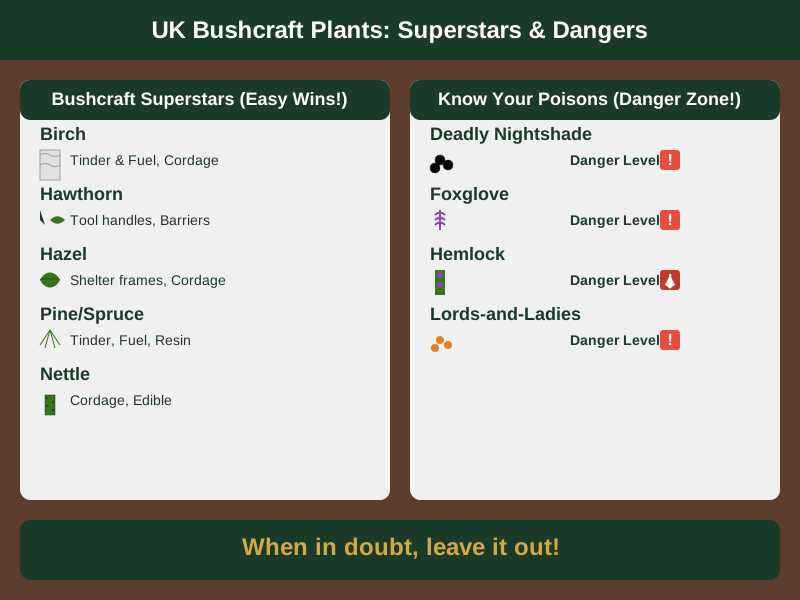
| Birch | Tinder, Fuel, Cordage | Peeling silvery-white bark | Safe |
| Hawthorn | Tool handles, Barriers | Thorns, lobed leaves | Low (berries) |
| Hazel | Shelter frames, Cordage | Large, hairy, serrated leaves | Safe |
| Pine/Spruce | Tinder, Fuel, Resin | Needles (bundles/single) | Safe (avoid Yew) |
| Nettle | Cordage, Edible | Stinging hairs, square stem | Low (sting) |
The Beginner’s Bushcrafter’s Toolkit: Essential ID Techniques
Effective plant identification relies on a multi-sensory approach, combining visual clues with habitat, texture, scent, and seasonal context. It’s not just about what a leaf looks like; it’s a whole detective process, using all your senses except taste unless you have complete certainty and a very specific reason to do so. Here are some of the key techniques we have found most useful over the years.
First up, observation is absolutely key. This is where most people start, and rightly so. When you’re looking at a plant, don’t just glance at it. Really study it. What’s the shape of the leaf? Is it broad, narrow, lobed, or needle-like? How are the leaves arranged on the stem – are they opposite each other, alternating up the stem, or in a whorl around it? What about the edges? Are they smooth (entire), serrated (toothed), or lobed? And the venation – how do the veins run through the leaf? These details might seem small, but they’re often the first clues to a plant’s identity. For example, an oak leaf is lobed, while a birch leaf is serrated. Simple, but effective.
| Leaf Arrangement | Description | Examples |
|---|---|---|
| Opposite | Leaves grow in pairs directly across from each other on the stem. | Maple, Ash |
| Alternate | Leaves grow singly at different points along the stem, alternating sides. | Oak, Birch |
| Whorled | Three or more leaves grow in a ring around the stem at the same point. | Bedstraw |
Next, habitat matters enormously. Where are you actually standing? Are you in a damp, shaded deciduous woodland, a drier, acidic coniferous forest, a sunny hedgerow, or an exposed moorland? Different plants favour specific environments. For instance, you’re far more likely to find wild garlic in damp, shaded woodland in spring than you are on an open, windswept hillside. If you’re looking for a specific plant, knowing its preferred habitat can narrow down your search significantly. Many beginners remember once trying to find a particular moss for tinder in completely the wrong type of woodland – wasted ages! Once they learned to pay attention to the environment, it became much easier. The Woodland Trust, for example, provides excellent resources on common UK tree habitats, which can really help narrow down your search.
Then there’s bark and twigs, which are absolutely vital, especially when the leaves are gone in winter. Bark can be smooth (like young beech), rough and deeply furrowed (like old oak), peeling (like birch), or scaly. Twigs have their own unique characteristics too: the way buds are formed, their colour, and even the colour of the pith (the soft inner part of the twig) when snapped. Knowing how to identify trees by their bark and twig structure in winter is a proper bushcraft skill. Many bushcrafters challenge themselves to identify trees purely by bark and silhouette when out in the colder months. It’s a brilliant way to hone your observation skills when the obvious clues (leaves) aren’t there.
Don’t forget your other senses: scent and texture. Many plants have distinctive smells. The mint family, for example, is almost always recognisable by its aromatic leaves when crushed. Wild garlic gives off that unmistakable garlicky aroma. As for texture, some leaves are fuzzy, some are smooth, some are waxy. These aren’t usually primary identification features, but they can be brilliant secondary clues, helping to confirm an identification or rule out a lookalike. Just remember, don’t sniff anything too intensely if you’re unsure, and certainly don’t taste!
Finally, seasonality is a massive factor. What you’re looking for will change dramatically throughout the year. In spring, you’ll see fresh shoots and early flowers. Summer brings full foliage and many berries. Autumn is about fruits, nuts, and changing leaf colours. And winter, as we’ve discussed, means focusing on bark, twigs, and overall tree shape. Understanding the life cycle of a plant helps you know what to expect and when. For example, you wouldn’t go looking for elderflowers in autumn, would you? But elderberries? Absolutely! Many beginners learn this the hard way trying to find specific plant parts out of season – always check your calendar!
By combining these techniques – really observing, noting the habitat, studying bark and twigs, and paying attention to scent and texture within the right season – you’ll build a much more robust identification skill. It’s a bit like being a detective; you’re gathering all the clues to paint a full picture. And the more you practice, the easier it becomes. Effective plant identification relies on a multi-sensory approach, combining visual clues with habitat, texture, scent, and seasonal context. It’s a skill that truly unlocks the secrets of the UK woodland.
How to Start Your Plant Identification Journey (Step-by-Step)
Right, so you’ve got the tools in your mental kit, but how do you actually put them into practice? It can still feel like a big leap from reading about it to doing it in the field. Here’s how we recommend you approach starting your plant identification journey, breaking it down into manageable steps.
Step 1: Get to Know Your Local Patch
Don’t rush off to the wildest, most remote woodland you can find straight away. Start close to home – your local park, a small patch of woods, or even your garden. The familiar environment will make you feel more comfortable, and you can revisit the same plants regularly. This repetition is absolutely crucial for embedding knowledge. As we always say, master your backyard before you tackle the wilderness!
Step 2: Focus on the Obvious (and Safe!)
As we’ve discussed, pick a few ’easy win’ plants and trees. Birch, Hawthorn, Hazel – these are common and have very distinct features. Concentrate on these first. Learn them inside out. What do their leaves look like? What about their bark? Do they have any unique flowers or fruits? Once you’re 100% confident with these, then you can slowly expand your repertoire. It’s about building a solid foundation, not rushing to know everything.
Step 3: Use All Your Senses (Carefully!)
Actively engage with the plants. Gently touch the bark, feel the texture of the leaves, carefully crush a non-poisonous leaf (like mint or wild garlic) and smell it. Don’t just look! This multi-sensory input helps cement the identification in your mind. Just remember the golden rule: no tasting unless you are absolutely, unequivocally certain, and even then, start small.
Step 4: Keep a Bushcraft Journal
This is one of the best habits you can develop! Carry a small notebook and pencil. When you identify a new plant, or even just revisit a familiar one, jot down notes. Sketch the leaves, describe the bark, note the habitat, and record the date and season. This active recording process reinforces your learning and creates a fantastic personal reference guide. Early journals are often filled with terrible drawings but invaluable observations.
Must-Know UK Plants & Trees for Bushcraft (Easy Wins!)
Right, let’s get down to some proper practical stuff. When you’re starting out, it’s best to focus on a few common, useful, and relatively easy-to-identify UK species. These are your ’easy wins’ – plants and trees that offer clear bushcraft applications and are generally safe to handle (with appropriate precautions, of course!).
Here are some of our top picks for beginners:
Birch (Betula spp.)
- Where to Find It: Birch is incredibly common across the UK, thriving in a wide range of habitats from open heathland to woodlands, especially on poorer, more acidic soils. You’ll often find it as a pioneer species, popping up in disturbed ground.
- Key Identification Features: This is one of the easiest to spot! Look for its distinctive papery, silvery-white bark that often peels horizontally in thin strips. Young birch bark can be a bit more reddish-brown, but the peeling quality is key. Leaves are small, triangular or oval, with serrated edges. It’s a graceful, slender tree.
- Bushcraft Uses: Oh, birch is an absolute superstar! Its papery bark is, hands down, one of the best natural tinders you’ll find in the UK. Even when soaking wet, the inner layers often remain dry and will catch a spark beautifully due to its high oil content. Pair it with the ignition steps in our UK firecraft skills guide and it will reliably get you a flame. It also provides excellent fuel, and its inner bark can be processed for cordage. You can even make a refreshing birch sap drink in early spring!
- Safety Note: Birch is non-poisonous and generally very safe to handle and use.
Hawthorn (Crataegus monogyna)
- Where to Find It: Hawthorn is a quintessential UK hedgerow plant, also common in scrubland, woodland edges, and as a small, bushy tree in open fields.
- Key Identification Features: Hawthorn is easily recognised by its deeply lobed, often shiny leaves (like a tiny oak leaf with deeper cuts) and, most distinctively, its sharp, woody thorns, which can be quite substantial. In spring, it’s covered in masses of white blossom (“May blossom”), followed by bright red berries (“haws”) in autumn.
- Bushcraft Uses: Those thorns aren’t just for show! Hawthorn makes an excellent barrier plant for defensive structures or to mark boundaries. The wood itself is incredibly dense and tough, making it fantastic for small tool handles, pegs, or even friction fire sets. Hawthorn makes a solid tent peg and holds up brilliantly. The haws (berries) are edible when fully ripe, but they’re quite dry and mealy, best used for jellies or fruit leathers rather than eating raw in quantity.
- Safety Note: The haws are edible, but the leaves and seeds contain compounds that are mildly toxic in large quantities, so best avoided for consumption. Stick to the wood and the barrier uses.
Hazel (Corylus avellana)
- Where to Find It: Hazel is super common in UK woodlands, especially as undergrowth, and frequently used in hedgerows. It’s often coppiced, meaning it’s cut back to the ground periodically to produce multiple straight poles.
- Key Identification Features: Look for its large, rounded, soft, hairy leaves with serrated edges and a distinct point. The bark is smooth and greyish-brown, often with horizontal lenticels (small lines). In late winter/early spring, you’ll spot its distinctive yellow catkins (male flowers) hanging from the branches.
- Bushcraft Uses: Hazel is a bushcrafter’s dream for its incredible flexibility and straight growth when coppiced. It’s perfect for shelter frames, wattle and daub walls, weaving baskets, and crafting tool handles. The inner bark can also be processed for cordage. Many beginners remember their first proper shelter build using hazel poles – it feels incredible to use materials you identified yourself just hours before. The nuts are, of course, delicious if you can get to them before the squirrels! If you’re planning a lean-to or tarp frame, drop these poles into the layouts in our basic UK shelter techniques guide.
- Safety Note: Hazel is non-poisonous and completely safe for all its bushcraft applications and for eating its nuts.
Pine/Spruce (Pinus/Picea spp. - common conifers)
- Where to Find It: Conifers like Scots Pine (native) and various Spruce species (widely planted) are found in plantations, forests, and on heathlands across the UK.
- Key Identification Features: Needles! Pine needles are long (several centimetres) and grow in bundles (usually two or three per bundle for Scots Pine). Spruce needles are shorter, sharply pointed, and grow individually around the twig, feeling square when rolled between your fingers. Both have distinctive cones.
- Bushcraft Uses: Conifers are brilliant for fire craft. The resin (sap) is highly flammable and makes an excellent fire extender or glue. Dead, dry pine needles can be used as tinder, and the wood, especially dead standing branches, makes great fuel. The straight branches are also good for shelter poles. Pine resin is often used to waterproof seams on a natural shelter – it is incredibly effective.
- Safety Note: Generally safe. The needles can be used to make a vitamin C rich tea, but ensure you know which conifer you’re using. Some species, like Yew, are highly poisonous, but Yew has flat, dark green needles and red berries, looking very different from Pine or Spruce.
Nettle (Urtica dioica)
- Where to Find It: Common nettles are absolutely everywhere in the UK – roadsides, woodlands, fields, gardens, especially in nutrient-rich soil.
- Key Identification Features: You’ll know it by its serrated, heart-shaped leaves that grow in opposite pairs up a square stem, covered in stinging hairs. It’s the stinging that gives it away instantly!
- Bushcraft Uses: Don’t let the sting put you off! Young nettle tops, cooked thoroughly, are a highly nutritious and delicious wild edible, tasting a bit like spinach. But for bushcraft, its fibrous stem is a fantastic source of cordage. It takes a bit of processing, but the fibres are surprisingly strong. they learned to make nettle cordage on a course years ago, and it’s a wonderfully satisfying skill to master.
- Safety Note: The sting is well-known, but it’s not poisonous in the sense of ingesting it. Always wear gloves when harvesting for cordage or for cooking. Once cooked, the sting is neutralised.
Learning these five species will give you a brilliant foundation for practical bushcraft in the UK. Birch bark is nature’s fire starter, reliably igniting even in damp conditions due to its high oil content, and the others offer equally valuable resources. Get out there, find them, and start familiarising yourself with their unique features!
The Danger Zone: Common Poisonous Plants to Avoid
While learning useful plants is exciting, truly confident bushcraft in the UK demands that you also know the common poisonous plants that could cause real harm. This isn’t about fear-mongering; it’s about being properly informed and respecting the power of nature. Always remember the golden rule: when in doubt, leave it out. Seriously. Don’t risk it. For wider risk checks before any outing, run through the steps in our health & safety guide for UK bushcraft beginners.
Here are some of the most important ones to be able to recognise:
Deadly Nightshade (Atropa belladonna)
- Where to Find It: Deadly Nightshade prefers shaded, disturbed ground, often found in woodlands, clearings, and along walls, particularly on chalky soils in central and southern England. It’s not as common as some other plants on this list, but incredibly dangerous.
- Key Identification Features: This is a bushy plant, growing up to a metre tall. It has large, oval, dark green leaves. Its flowers are bell-shaped and purplish-brown, but the most distinctive (and dangerous) feature are its shiny, black, cherry-sized berries that appear in late summer. They look quite appealing, which is part of the risk.
- Lookalikes: Can sometimes be confused with Hairy Nightshade (Solanum nigrum), which is also toxic (though less so). The key is the large, shiny black berries on Atropa belladonna.
- Absolute Rule: The ‘Deadly Nightshade’ is aptly named; all parts of the plant are highly toxic, and its attractive berries pose a significant risk to children. Just one or two berries can be fatal. If you see it, admire from a distance and move on.
Foxglove (Digitalis purpurea)
- Where to Find It: Foxgloves are incredibly common and beautiful, gracing woodlands, hedgerows, and moorland edges across the UK, especially on acidic soils.
- Key Identification Features: You can’t miss a foxglove in flower! It has a tall, distinctive spike of large, bell-shaped, purple (sometimes white) flowers, often with dark spots inside. The leaves are large, oval, hairy, and grow in a rosette at the base of the plant.
- Lookalikes: The leaves can sometimes be confused with comfrey, which has traditional medicinal uses (though it’s also toxic if misused internally). However, comfrey leaves are generally broader and have a more prominent vein pattern, and of course, no tall flower spike like foxglove.
- Absolute Rule: All parts of the foxglove plant are highly toxic, containing cardiac glycosides that can severely affect the heart. Even handling the plant can cause skin irritation in some people. Never ingest any part of it. There is a well-known story of someone who once almost boiled comfrey leaves for tea, thinking they were foxglove – a lucky escape that hammers home how important it is to be 100% certain.
Hemlock (Conium maculatum)
- Where to Find It: Hemlock loves damp ground, often found along ditches, riverbanks, roadsides, and waste ground, particularly in southern parts of the UK.
- Key Identification Features: This is a tall, stout plant, often growing over a metre. Its leaves are finely divided and fern-like, similar to parsley or wild carrot (which is where the danger comes in). The key distinguishing feature is its smooth, hollow stem, which is covered in distinctive purple or reddish blotches or spots. It also has a rather unpleasant ‘mousey’ smell when crushed.
- Lookalikes: This is a major one. Hemlock is commonly confused with edible wild carrot, cow parsley, and even parsley itself. The purple-spotted stem and unpleasant smell are your crucial warning signs.
- Absolute Rule: Hemlock is extremely poisonous. Ingesting even a small amount can be fatal, causing paralysis and respiratory failure. If you see a plant that looks like wild carrot but has a spotted stem, assume it’s hemlock and avoid it entirely. According to the UK National Poisons Information Service, plant poisonings are a significant concern, with common plants like hemlock being among the most dangerous.
Lords-and-Ladies / Cuckoo Pint (Arum maculatum)
- Where to Find It: Very common in shaded woodlands, hedgerows, and damp areas across the UK.
- Key Identification Features: In spring, it has distinctive, glossy, arrow-shaped leaves, often with dark purple blotches. The flower is a pale green ‘spathe’ (hood) enclosing a central purple ‘spadix’. In late summer/autumn, it produces a striking cluster of bright red or orange berries on a stalk, which are very attractive but highly toxic.
- Lookalikes: The leaves can sometimes be mistaken for wild garlic when young, but wild garlic has long, strap-like leaves and smells strongly of garlic. Lords-and-Ladies has a very different leaf shape and no garlic smell.
- Absolute Rule: All parts of Lords-and-Ladies are toxic, especially the berries. They cause severe irritation to the mouth and throat if ingested. Keep children and pets away from the berries.
Learning these dangerous plants is just as important as learning the useful ones. It’s a fundamental part of staying safe and responsible in the British outdoors. Remember, if you’re ever unsure about a plant, especially if you’re considering consumption, please refer to our [Free Bushcraft Starter Checklist] for a quick safety reminder, and always err on the side of caution.
Beyond the Basics: Next Steps for Confident ID
So, you’ve got the basics down, you know a few useful plants, and you’re wise to the dangers. Brilliant! But the journey of learning plant and tree identification for bushcraft is a lifelong one. There’s always more to discover, and the key is to keep practising and expanding your knowledge safely.
One of the best ways to deepen your understanding is through recommended books – proper, physical field guides. While apps can be a quick reference, nothing beats the detail, accuracy, and tactile experience of a good book. For UK plant identification, we’d highly recommend:
- “Collins Complete Guide to British Wildlife” by Paul Sterry & Bob Press: A fantastic all-rounder that covers plants, trees, fungi, and animals.
- “Wild Flowers of Britain and Northern Europe” by Richard Fitter, Alastair Fitter, and Marjorie Blamey (published by Collins): This is a classic, packed with detailed illustrations and descriptions.
- “The Tree Guide” by Owen Johnson & David More (published by Princeton University Press): Superb for tree identification, especially with its detailed drawings of leaves, bark, and winter twigs.
These aren’t just books; they’re companions for your outdoor adventures. The Botanical Society of Britain & Ireland (BSBI) also offers a wealth of identification resources and local groups for enthusiasts.
Another absolutely brilliant way to learn is by joining local groups and courses. Look for foraging walks led by experienced guides, or sign up for bushcraft courses that have a strong emphasis on plant and tree identification. Learning from someone who can point things out in person, answer your questions on the spot, and share their own experiences is invaluable. It helps you build confidence much faster than trying to figure it all out alone. Learning from experienced mentors is invaluable when starting out – they can pick up on subtle cues you might completely miss in a book. You can often find details of local groups and events on sites like the Wildlife Trusts or through local council ranger services.
And then, it’s all about practice, practice, practice. The more time you spend outdoors, actively observing and trying to identify plants, the better you’ll become. Start in familiar environments – your local park, a nearby woodland, even your garden. Go back to the same spot in different seasons and see how the plants change. Take photos, make notes, and try to identify everything you see. It’s this consistent, safe practice that truly embeds the knowledge. You can even share your discoveries and questions on bushcraft forums or in the comments of our other bushcraft guides!
Finally, let’s talk about using apps wisely. Yes, there are some clever plant identification apps out there now. They can be helpful tools for a quick suggestion, but here’s the thing: never rely on them solely, especially for edibles or anything with a safety implication. They’re not infallible, and they can make mistakes. Always cross-reference their suggestions with your field guide and your own observations of the plant’s habitat and characteristics. Think of them as a helpful hint, not a definitive answer. While apps can aid identification, hands-on experience and expert guidance remain the gold standard for mastering UK plant and tree identification. My own journey started with books and then moved to spending countless hours in the woods, making mistakes, correcting them, and learning from others. That’s the real path to confident identification. If you’ve got any questions about specific resources or anything else, please don’t hesitate to get in touch – We’re always happy to help!
Related Reading
Mastering Foundational UK Bushcraft Skills: A Beginner’s Practical Guide See how plant ID underpins fire, shelter, and water work in the core skills roadmap.
UK Firecraft Skills: From Spark to Sustained Flame Turn birch bark and resinous conifers into reliable ignition with step-by-step damp-weather drills.
Sources & Further Reading
- The Woodland Trust: Provides comprehensive information on UK trees, their habitats, and conservation efforts, vital for understanding woodland ecosystems.
- Royal Horticultural Society (RHS): A leading source for general plant information, cultivation advice, and details on plant toxicity in the UK.
- Botanical Society of Britain & Ireland (BSBI): Offers extensive resources for plant identification, recording, and connecting with local botanical groups.
Note: This article covers general principles and tips. For advice specific to your situation, get in touch.
Frequently Asked Questions
Is it safe to eat wild plants in the UK if I’m not an expert?
Generally no. Misidentification is a serious risk, and the consequences can be severe. I would stick to species you can identify with complete confidence and only after checking them against trusted guides and, ideally, an experienced person.
What’s the easiest way to tell common trees apart in winter?
In winter, shift your attention away from leaves and onto bark, buds, twig arrangement, and the overall shape of the tree. Learning those cues for a few common species such as oak, birch, and pine will give you a strong start. It is slower at first, but it makes your ID skills far more reliable year-round.
Can I use plant identification apps?
Yes, as a prompt rather than a verdict. They can be useful for a first guess sometimes, but we would never rely on them alone for edibles or anything with a safety implication. Cross-check with a proper field guide and your own observations every time.
How quickly can I learn to identify plants for bushcraft?
You can learn a few useful plants quite quickly, but broad competence takes steady practice across seasons. I would aim for a small, reliable set first and add to it gradually. The important thing is repetition, not speed.
What’s the single most important safety rule when foraging or identifying plants?
The golden rule is: When in doubt, leave it out. Never use or eat a plant unless you are completely sure what it is and that the intended use is safe. Stepping back is always the right decision when certainty drops.
Taking the Next Step in Your Bushcraft Journey
Start with a few easy, useful species and revisit them in different seasons until they become familiar rather than theoretical. That is what turns plant ID from interesting reading into a reliable bushcraft skill.
If you want a simple next-step checklist for the wider skillset around it, our [Free Bushcraft Starter Checklist] is there as a starting point. If you’ve got questions about specific resources or anything else, please don’t hesitate to get in touch.
Starting to forage? Download the free UK Foraging Quick ID Guide — a pocket reference for common edible and poisonous plants.