What to Learn After Basic Bushcraft (Skill Order That Works)
Once the basics stop feeling new, the next challenge is usually knowing what to improve first. This guide builds on our ultimate UK bushcraft guide for beginners and lays out a practical path from basic competence to a more capable, intermediate level in UK conditions.
Why a “Progression Path” Matters in UK Bushcraft
A structured progression path in bushcraft is about far more than just ticking off a list of skills; it’s about transforming isolated techniques into a cohesive, practical understanding of how to thrive in the outdoors, especially here in the UK. You see, it’s one thing to know how to tie a few knots or strike a spark, but it’s an entirely different beast to apply those skills effectively when it’s blowing a gale on a Scottish hillside or pouring down in a Welsh valley.
The truth is, generic bushcraft advice often falls flat when confronted with the unique challenges of our British environment. Our weather, for instance, is notoriously fickle – one minute sunshine, the next a sudden downpour, as anyone who’s checked the Met Office forecast for the UK knows all too well. (Source: Met Office). This variability demands a different approach to everything from fire lighting to shelter building. We’ve got varied terrain, from ancient woodlands to open moorlands, and specific flora and fauna that require a tailored approach to foraging and resource identification. Honestly, many bushcrafters have found that ignoring these local conditions is a recipe for a miserable time, or worse.
A structured path helps you build confidence and competence by showing you how skills interlink and when to apply them. It’s about developing that crucial problem-solving mindset. A friction fire setup demonstrated online might look impressive, but the specific wood required is often soaking wet in the UK, and the technique needs a perfectly dry, still environment – a rare luxury in the British rain. It is a good lesson that a generic tip is useless if it doesn’t adapt to local conditions. Jumping ahead to “flashy” skills without a solid foundation, or without understanding how they fit into the bigger picture of UK bushcraft, can be frustrating, inefficient, and even dangerous. It’s like trying to run a marathon when you haven’t even mastered walking properly. You need to build that competence layer by layer, ensuring each skill is strong enough to stand up to real-world, British conditions. If you are keen to solidify these foundational skills before diving deeper, our Free Bushcraft Starter Checklist is the perfect place to begin.
UK Bushcraft Skill Progression: Beginner vs. Intermediate
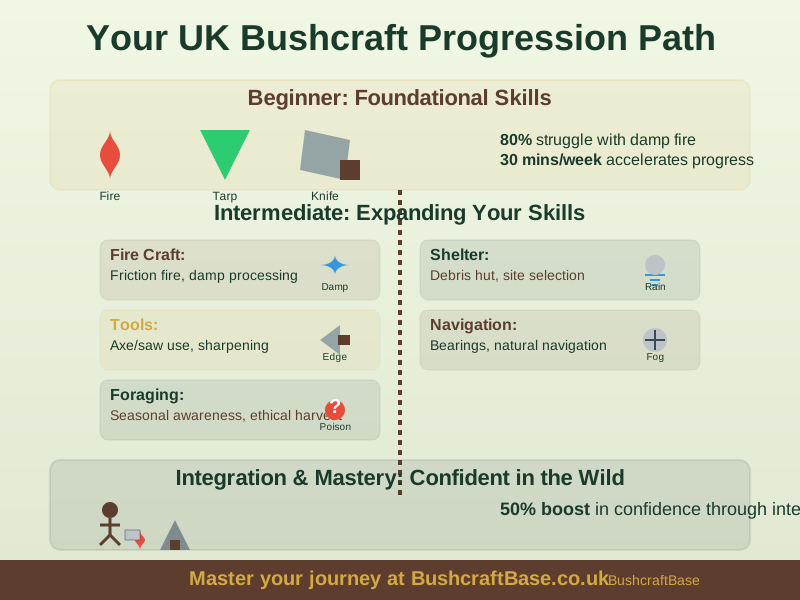
| Skill Area | Beginner Focus | Intermediate Focus | Key UK Challenge |
|---|---|---|---|
| Fire Craft | Ferro rod, basic tinder | Friction fire, damp processing | Persistent damp, varied wood |
| Shelter | Tarp setup, basic lean-to | Debris hut, site selection | Wind, rain, condensation |
| Tools | Knife safety, basic cuts | Axe/saw use, sharpening | Maintaining edge in wet, grit |
| Navigation | Map orientation, compass basics | Bearings, natural navigation | Low visibility, complex terrain |
| Foraging | Safe ID (2-3 plants) | Seasonal awareness, ethical harvest | Poisonous lookalikes, land access |
Stage 1: Solidifying the Foundations (What You Likely Know)
Solidifying your foundational bushcraft skills means moving beyond simply knowing of a skill to being able to reliably execute it under various conditions, which is absolutely crucial for safe and confident progression in the UK outdoors. These are the building blocks, the bedrock upon which all more advanced techniques rest. You’ve probably already got a grasp on these, but the key here is mastery, not just acquaintance.
Let’s quickly recap what these core beginner skills typically involve:
- Basic Fire Lighting: This means getting a fire going with a ferro rod, matches, or a lighter, reliably. Can you do it when everything’s a bit damp? Can you find and process tinder when the obvious stuff is saturated?
- Simple Shelter: Erecting a tarp or building a basic lean-to that actually keeps you dry and out of the wind. Understanding how to use natural features for protection and how to site your shelter properly for drainage and wind direction.
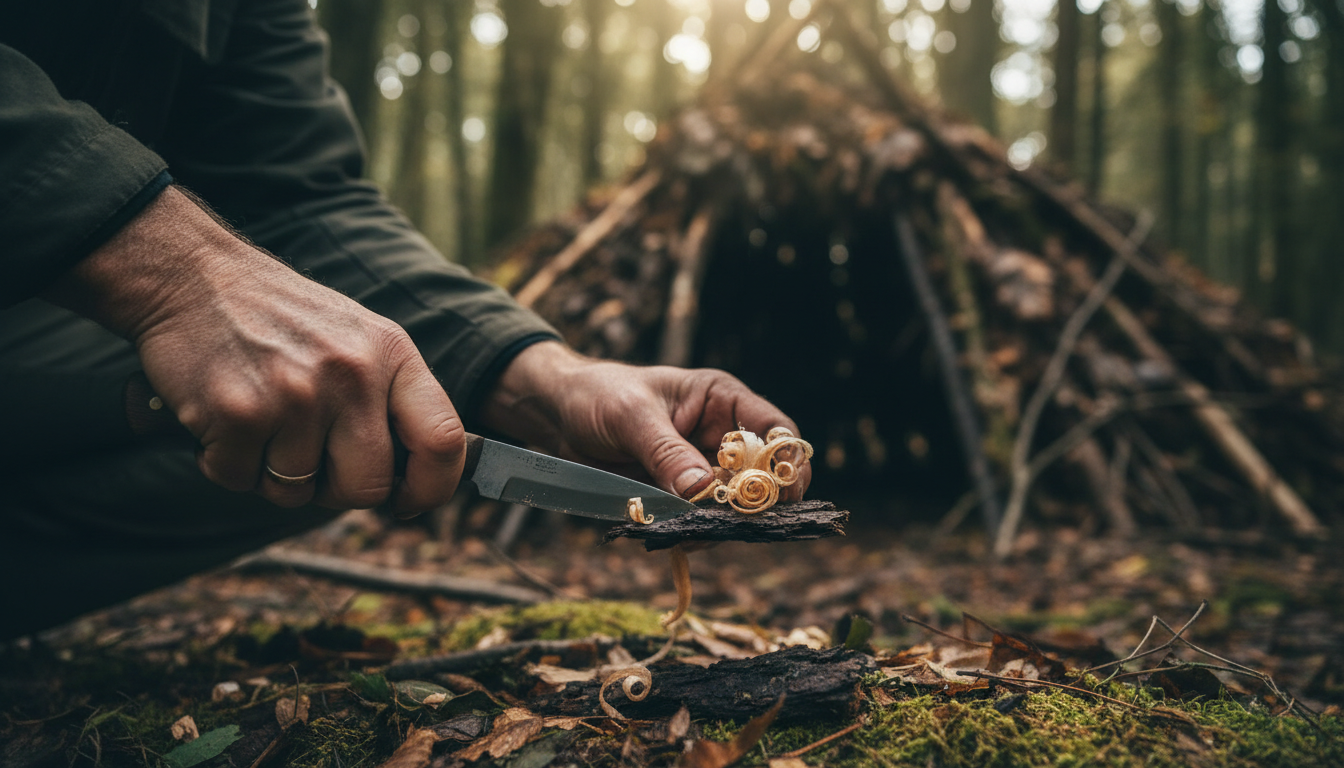
- Knife Safety and Basic Use: Knowing how to handle your knife safely, performing basic cuts (feather sticks, splitting small wood), and understanding different grips.
- Water Purification Basics: Boiling water, using a filter, or purification tablets. Knowing where not to collect water from.
- Knot Tying Essentials: Mastering a few key knots like the bowline, sheet bend, and taut-line hitch, and knowing when to use them.
The goal at this stage isn’t just to do these things, but to do them reliably, even when the conditions aren’t ideal. Can you get a fire going in the rain? Can you set up a waterproof shelter quickly as dusk falls? Many beginners think they have mastered fire starting with a ferro rod, only to find themselves shivering and frustrated on a particularly damp evening. Deliberate practice in breezy, wet conditions, with close attention to finding and processing truly dry tinder, is what builds genuine confidence.
Here’s a quick checklist for self-assessment. Be honest with yourself!
- Can I consistently light a fire with a ferro rod in varying UK weather conditions (wind, damp)?
- Can you set up a basic, weatherproof tarp shelter in under 15 minutes?
- Am I confident in using my knife safely for various tasks, including making feather sticks?
- Do I know at least three reliable methods for purifying water in the field?
- Can I tie a bowline, sheet bend, and taut-line hitch quickly and correctly, and know their uses?
If you’re unsure about any of these, that’s your cue to revisit them. Getting these basics spot-on is crucial. Grab our Free Bushcraft Starter Checklist – it’s designed to ensure you’re not missing any vital first steps.
Stage 2: Stepping Up – Intermediate Skill Sets
Intermediate bushcraft in the UK involves adapting foundational skills to challenging environments, mastering multi-purpose tools, and developing a deeper understanding of the natural world around you, which collectively builds genuine resilience and self-reliance. This is where things get really interesting, where you start to weave together different elements and truly feel like you’re becoming part of the landscape, rather than just visiting it.
Let’s break down some of the core intermediate skill sets:
Advanced Fire Craft
Moving beyond the ferro rod is a big step. This stage is about understanding fire on a deeper level.
- Friction Fire: Think bow drill or hand drill. Now, let me be straight with you: friction fire is challenging, especially in the damp UK. But it’s absolutely achievable with the right knowledge, materials, and loads of practice. It teaches you so much about wood selection, tinder processing, and sheer persistence. Success with a bow drill ember on a drizzly day in the UK comes down to meticulously dry-storing your spindle and hearth board, and processing tinder to a fine, fluffy consistency.
- Tinder Processing in Damp UK Conditions: This is a huge step up. It’s not just about finding dry stuff; it’s about making any natural material viable. Shaving inner bark, processing dead plant stalks, understanding punk wood – these are vital for our climate. Many bushcrafters have found that focusing on the ‘inner dry’ of dead standing wood, even when the outside is soaked, is a trick worth mastering.
- Maintaining a Fire: Efficiently feeding a fire, understanding heat transfer, and using different lays (like a Dakota fire pit for concealed cooking or a reflector fire for warmth) become second nature. Learning how to properly lay a fire to maximise heat output and minimise smoke, especially in windy conditions, is a skill that takes time to perfect.
Shelter Building Evolution
You’re moving beyond just throwing up a tarp.
- Natural Debris Shelters: Building a proper debris hut or a lean-to entirely from natural materials. This involves understanding insulation, waterproofing (using leaves, moss, bark), and structural integrity. The key here is layering – think of it like building a natural duvet. You need a good foot or two of compacted debris to really keep the warmth in.
- Understanding Site Selection: For UK terrain and weather, this is crucial. Looking for natural windbreaks, identifying well-drained ground, understanding tree fall risks, and recognising microclimates are key. A good site can make the difference between a comfortable night and a miserable one. We always look for a spot slightly elevated, away from deadfall, and ideally with some natural overhead cover or a prevailing wind block.
- Improving Insulation and Waterproofing: Learning to make your natural shelters genuinely warm and dry, using thicker layers of debris, and understanding how condensation forms. A vapour barrier or a simple air gap can drastically improve comfort, especially when it’s chilly and damp.
Tool Mastery & Maintenance
This is about respecting your tools and making them last.
- Sharpening Techniques: Beyond a simple pull-through sharpener. Learning to use a sharpening stone (Japanese waterstones or diamond stones) to get a razor edge, and crucially, how to field sharpen your knife or axe to keep it effective when you’re out. Many bushcrafters favour a simple ceramic rod for field touch-ups – it keeps things razor sharp with minimal fuss.
- Responsible Use of Axes and Saws: Safe handling, felling small deadwood (where permitted and safe), splitting larger logs, and understanding the mechanics of leverage. This is where safety really steps up – a blunt axe is more dangerous than a sharp one! Always keep a safe working distance and clear your area before swinging.
- Understanding Wood Types: Knowing which woods are good for carving (lime, sycamore), which burn hot (oak, ash), and which are good for friction fire sets (lime, willow). For example, many bushcrafters have found that sycamore is brilliant for carving spoons due to its fine grain, while a good bit of seasoned oak will give you a long-lasting, hot fire.
Wild Edibles & Foraging (UK Focus)
This is a skill that connects you deeply to the land, but it comes with crucial safety warnings.
- Safe Identification of Common, Easily Identifiable UK Edibles: Start with the obvious: blackberries, hazelnuts, wild garlic, nettles, dandelions, elderflower. Focus on species with no poisonous lookalikes or very distinct features. Always use multiple reputable UK-specific field guides (like those from Collins or Roger Phillips) and, ideally, learn from an experienced forager. Never eat anything unless you are completely sure what it is. The Woodland Trust offers great basic guidance for beginners.
- Understanding Seasonal Availability: Knowing when to find what. Wild garlic in spring, berries in late summer, nuts in autumn. This helps you plan foraging trips. It’s also important to understand the plant’s life cycle, because you want fresh shoots of nettles, not the tough, old ones.
- Ethical Harvesting: Only take what you need, leave plenty for wildlife and other foragers, and respect private land. This aligns perfectly with Leave No Trace principles. Forestry England and Natural Resources Wales both offer guidance on responsible foraging in public woodlands (Source: Forestry England / Natural Resources Wales).
Navigation Fundamentals
Getting comfortable with knowing where you are and where you’re going.
- Map Reading (OS Maps): This is non-negotiable for the UK. Mastering Ordnance Survey (OS) maps – understanding contours, grid references, scale, and all the symbols. There’s a brilliant amount of information on the Ordnance Survey website to get you started. We always advise carrying a physical map, even if you rely on a GPS, because batteries die!
- Compass Use: How to take a bearing, orient a map, and use your compass effectively with your OS map. Understanding magnetic declination (the difference between true north and magnetic north) is crucial in the UK to avoid getting off track, as it can vary across the country.
- Basic Natural Navigation Techniques: Using the sun, stars (if visible!), and terrain features to get a general sense of direction. This is a great backup skill. Many bushcrafters have found that simply observing the sun’s arc and the growth patterns of moss on trees (though not foolproof!) can give you a decent rough bearing.
Water Procurement & Purification
Beyond simply boiling what you find.
- Natural Filtration Techniques: Building a simple filter from natural materials (sand, gravel, charcoal) to remove sediment before boiling or chemical treatment. It won’t make water safe to drink on its own, but it’ll make it a lot more palatable and efficient to purify further.
- Identifying Reliable Water Sources: Understanding watersheds, looking for springs, and knowing which water sources are generally safer than others in the UK. (e.g., fast-flowing upland streams vs. stagnant lowland pools). Aim for moving water, high up in the catchment, and away from any obvious human or animal activity.
This stage is about building a broad, practical skillset. When building a natural debris shelter in a Scottish pine forest, many beginners fail to consider wind direction or drainage properly. It often rains, and the result is a damp night. The lesson is to apply navigation skills to find a sheltered spot, use good tool skills to process better insulation, and rely on solid fire craft to get a small fire going for warmth and morale. That’s the integration you’re aiming for.
Stage 3: Integration and Application – Thinking Like a Bushcrafter
The true mark of an intermediate bushcrafter isn’t just knowing a bunch of individual skills, but the ability to seamlessly integrate multiple skills to solve practical problems and adapt to changing conditions in the UK outdoors. This is where you move from being a skill collector to a genuine problem-solver. It’s about thinking several steps ahead and reacting resourcefully when things don’t go to plan – which, let’s be honest, is often the case in the British countryside!
At this stage, your practice shifts from isolated drills to scenario-based application. Instead of just making a feather stick, you’re making a feather stick to get a fire going quickly because an unexpected shower has just soaked your kindling.
Here are some ways to start thinking like a bushcrafter:
Scenario-Based Practice:
- Planning a simple overnight camp: This isn’t just about throwing up a tarp. It’s about choosing your site using navigation and observation skills, building a shelter that’s appropriate for the weather, gathering firewood responsibly, ensuring you have safe drinking water, and cooking a simple meal over your fire.
- A day hike with navigation challenges: Deliberately choose a route with tricky terrain or areas where natural navigation might be useful. Practice identifying landmarks, taking bearings, and estimating distances. What if your compass breaks? Can you still get back? The National Parks UK website has some solid advice on staying safe while navigating.
- A foraging trip: Plan to find specific edibles, identify them, and then perhaps use them in a simple camp meal.
Problem-Solving: This is where the rubber meets the road. What do you do when X goes wrong?
- Unexpected rain: Can you quickly adapt your fire-lighting technique or improve your shelter’s waterproofing?
- Can’t find dry tinder: Can you process damp materials effectively or use alternative fire starters?
- Lost your way briefly: Can you use your map and compass, or natural navigation cues, to reorient yourself without panicking?
- An injury: Do you have a basic first-aid kit and the knowledge to use it?
Resourcefulness: This is about using natural materials creatively and effectively. Can you make cordage from nettles? Weave a simple container from bark? Turn a fallen branch into a useful tool? It’s amazing what you can achieve with a keen eye and a bit of ingenuity.
Observation Skills: This is perhaps the most overlooked intermediate skill. It’s about reading the environment around you.
- Weather Signs: Learning to predict changes in weather by observing clouds, wind direction, and animal behaviour. Observing subtle shifts in wind and the way certain clouds are forming can help you avoid a soaking.
- Animal Tracks: Not just identifying them, but understanding what they tell you about the local wildlife and their movements.
- Plant Life Cycles: Knowing what plants are doing at different times of the year – when they’re fruiting, flowering, or dying back.
Imagine a trip in the Brecon Beacons where a sudden fog rolls in, making visibility almost zero. Map and compass skills are vital, of course, but what really helps is having already observed the lay of the land, noting prominent features before the fog hits. Spotting a change in wind direction and particular cloud formations earlier in the day can give you a clue about impending weather. Combining observation skills with navigation knowledge keeps you on track and safe. It’s about building a holistic understanding.
Gear for the Next Level (UK Considerations)
When you’re progressing in bushcraft, it’s natural to start thinking about gear, but the key is to focus on practicality and UK relevance, rather than just buying the latest gadget. At the beginner stage, you get by with the basics, but as you step up, specific pieces of kit can genuinely enhance your capabilities and comfort – especially when dealing with our often-chilly and wet British climate.
Beyond the Basics: When to Upgrade or Add?
- Sleeping System: A better sleeping bag and mat are often the first things we recommend. Our UK temperatures can drop significantly, even in summer, especially in upland areas. A good 3-season sleeping bag and an insulated sleeping mat make a huge difference to a comfortable night’s sleep. Many bushcrafters have found that a good quality sleeping system means the difference between a miserable night and a restorative one, which is vital for morale and safety.
- Wood Processing: While a good knife can do a lot, a quality folding saw or even a small, well-balanced axe becomes invaluable for processing larger deadwood for fires or shelter construction. Brands like Bahco (for saws) or Gransfors Bruk (for axes) are often favoured by UK bushcrafters for their reliability.
- Navigation Tools: Beyond your basic map and compass, consider a robust, waterproof map case, and perhaps a small, reliable GPS device (like a Garmin eTrex) as a backup, especially if you’re venturing into more remote areas. Remember, technology can fail, so your map and compass skills remain non-negotiable.
UK-Specific Gear
- Waterproofs: This is non-negotiable for the UK. A truly reliable waterproof jacket and trousers are essential. Look for breathable fabrics like Gore-Tex or eVent. As the Ramblers Association often advises, good waterproofs are your best friend in British weather.
- Sturdy Boots: Good quality, waterproof hiking boots with ankle support are a must for navigating our often-muddy and uneven terrain. Look for a stiff sole for stability and good grip for slippery conditions.
- Knives: While any good bushcraft knife will do, many UK bushcrafters favour Scandinavian-style knives (like Mora knives) for their robust blades and ease of sharpening in the field. They offer brilliant value for money and are incredibly versatile.
Multi-tools vs. Dedicated Tools
This is a common debate. Multi-tools (like Leatherman or Gerber) are brilliant for versatility and lightweight carry, offering pliers, screwdrivers, and often a small blade. However, for dedicated tasks like heavy wood processing or fine carving, a specific, well-designed tool (a dedicated axe, saw, or carving knife) will always outperform a multi-tool. It’s about balancing your needs and pack weight. For example, a small carving knife will give you far more control than a multi-tool blade when making a spoon.
Budget-Friendly Options
You don’t need to break the bank. Look for second-hand gear from reputable outdoor shops, or check out military surplus stores for robust, often overlooked kit. Decathlon can also offer surprisingly good value for money on items like tarps and basic waterproofs. Most people start with cheap, basic gear and upgrade gradually as their skills develop and they venture into more challenging environments. The biggest difference most owners find isn’t in having the most expensive kit, but in having reliable, well-maintained gear that is appropriate for the specific conditions they expect. It’s about knowing why you need a piece of gear, not just having it.
Common Pitfalls on the Progression Path (And How to Avoid Them)
As you progress in bushcraft, it’s easy to stumble into a few common traps, but being aware of them is the first step to sidestepping them entirely. The most common pitfall for aspiring intermediate bushcrafters is mistaking enthusiasm for expertise, leading to overconfidence and potential safety risks in the UK outdoors. Many of these are extensions of the common mistakes beginners make, but with higher stakes. Overconfidence is a common trap, and these lessons are often learned the hard way.
Here are some of the pitfalls we have seen, and experienced ourselves, and how to avoid them:
- Overconfidence: Thinking you know it all after mastering one or two skills. Bushcraft is a lifelong learning journey. Always maintain a beginner’s mindset and a healthy respect for the environment. Just because you can start a fire with a bow drill once, doesn’t mean you can do it every time, in every condition. Be humble, and keep learning!
- Ignoring the Weather: Relying on “fair weather” skills. Our UK weather is famously unpredictable. Always prepare for the worst, even if the forecast looks good. Practise your skills in less-than-ideal conditions – that’s where true competence is built. We have often seen reports of people caught out by a sudden cold snap or unexpected rain, simply because they weren’t prepared for a change.
- Poor Safety Practices: Neglecting knife/axe safety, unsafe foraging, or not telling anyone your plans. As you handle more advanced tools and explore more complex skills, safety becomes even more important. Always work within your limits. A nasty cut from an axe often comes from rushing and getting complacent, which is a harsh reminder that safety rules are there for a reason. A good first aid kit and basic knowledge are non-negotiable.
- Not Practicing Consistently: Skills degrade without use. Bushcraft isn’t like riding a bike; you need to keep those muscles and that muscle memory active. Even short, regular practice sessions are better than infrequent, long ones. Regular practice is key – even short sessions like tying knots in the living room for a few minutes help maintain skills.
- Focusing on Gear Over Skill: Believing expensive kit replaces knowledge. While good gear helps, it’s your skills and understanding that truly matter. A fancy knife won’t light a fire if you don’t know how to process tinder. Master your existing kit before investing in more. As the old saying goes, “The more you know, the less you carry.”
Remember, every mistake is a learning opportunity. The key is to learn from them safely and move forward.
Related Reading
The Ultimate UK Bushcraft Guide for Beginners: Start Your Wilderness Journey Before you can progress, you need a solid foundation. Revisit our comprehensive beginner’s guide to ensure you’ve mastered the basics.
Essential Health & Safety for UK Bushcraft Beginners: Stay Safe in the Wild As you tackle more advanced skills, safety becomes even more critical. Refresh your knowledge of the key risks and how to manage them in the UK.
Your Next Steps: Making it Happen
You’ve now got a clear roadmap for progressing your UK bushcraft skills, moving beyond the basics into a more integrated and confident approach to the outdoors. The value of this structured approach, focusing on mastery and practical application in our unique British environment, really can’t be overstated. It’s how you build true competence and confidence.
So, what next? Our biggest piece of advice is to practise consistently. Even short sessions count – half an hour in the garden practising knots, an hour in a local woodland honing your fire-lighting in damp conditions, or simply studying your OS map for an upcoming walk. These small, regular efforts add up dramatically over time.
Consider finding local groups or experienced mentors if you can. Learning from others who are further along the path can accelerate your progress and introduce you to techniques you might not discover on your own. Just make sure they’re teaching safe, ethical practices relevant to the UK. You can also explore more topics on our blog for further inspiration!
And always, always remember the importance of Leave No Trace principles. As you become more capable in the outdoors, your responsibility to protect it grows. Leave the land as you found it, or even better. If you want to know more about our approach, you can check out our /about/ page.
This journey is incredibly rewarding. It’s about connecting with nature, building resilience, and discovering what you’re truly capable of. Many bushcrafters report that there is nothing quite like the feeling of being truly comfortable and competent in the wild, knowing you can handle whatever the British weather throws at you. You’ve got the roadmap now – the next step is making sure you’re on the right track. If you’re keen to ensure your foundations are absolutely rock-solid before you launch into these intermediate skills, why not grab our Free Bushcraft Starter Checklist? It’s a handy way to make sure you’ve nailed all the essentials. If you have any questions, don’t hesitate to /contact/ us!
Sources & Further Reading
- Met Office: For reliable UK weather patterns and forecasts.
- Woodland Trust: Offers guidance on foraging and identifying UK flora.
- Ordnance Survey: Provides comprehensive map reading guides and resources.
- Forestry England / Natural Resources Wales: Guidelines for responsible woodland use and foraging.
- Ramblers Association: Advice on walking kit and safety in the British outdoors.
Note: This article covers general principles and tips. For advice specific to your situation, get in touch.
Frequently Asked Questions
How long does it typically take to move from beginner to intermediate bushcraft skills in the UK?
I would not set a fixed timetable, because progress depends far more on frequency and quality of practice than on calendar time. If you are practising regularly and deliberately, noticeable progress over 1 to 3 years is realistic for most people. Short, repeated sessions usually move you on faster than occasional big trips.
Is friction fire really achievable in the UK? It seems impossible in the damp.
Yes, but it is hard enough that I would treat it as a long-term project rather than a core fire method. Success in the UK usually comes down to excellent tinder processing, careful wood choice, and keeping your set dry before you use it. Work on it as a skill-builder, not as the only plan for staying warm.
What’s the single most important skill to focus on after the absolute basics?
If we had to pick one, we would choose reliable fire-making in poor conditions. Close behind that is map-and-compass navigation. Those two skills have an outsized effect on safety and confidence because they help you get warm and get home when the day stops going to plan.
Should I buy lots of new gear to become an intermediate bushcrafter?
No. I would focus on mastering your existing kit first, then upgrade only when you can name the limitation you are trying to solve. Better insulation, a proper saw, or more reliable waterproofs are sensible purchases when your practice shows a real need for them.
How can I practice foraging safely without poisoning myself?
Start with a very short list of species that are easy to identify and hard to confuse, then learn them properly with more than one UK field guide. If possible, go out with an experienced forager before you eat anything you have found yourself. I would also keep foraging separate from hungry decision-making; if you are unsure, leave it alone.
Where to Go From Here
The useful way to approach progression is to narrow your focus, not widen it. Pick one or two weak areas, practise them until they hold up in poor conditions, then build from there.
If you want to check that your foundations are properly in place before pushing on, our Free Bushcraft Starter Checklist is a simple way to review the essentials.