UK Bushcraft Kit List: The Honest Gear That Won't Break the Bank
As an Amazon Associate we earn from qualifying purchases. This page contains affiliate links — if you buy through them, we earn a small commission at no extra cost to you.
Bushcraft kit gets confusing quickly because outdoor shops sell far more than a beginner actually needs. This guide cuts that back to the core gear that works in British conditions: shelter, fire, water, clothing, tools, navigation, and a few safety essentials.
We’ve been through the bad purchases and the soggy lessons already, which is why this list stays focused on practical kit that earns its place. You can find out a bit more about us here if you like. The aim is not to build a fantasy loadout; it is to help you buy a sensible first kit and learn it well.
Quick Picks
- Morakniv (paid link)
- Sawyer Mini (paid link)
- Trangia alcohol stove (paid link)
- Bahco Laplander (paid link)
What Exactly Is Bushcraft (and Why Does Your Kit Need to be Different)?
Bushcraft is the art of thriving in the natural environment, using and understanding nature’s resources for shelter, fire, water, and food, rather than simply surviving. It’s about building a connection with the land, learning traditional skills, and becoming comfortable and competent outdoors, which is a bit different from just general camping or hardcore survival scenarios. While general camping might involve pitching a pre-made tent and cooking on a gas stove, bushcraft encourages you to build your own shelter from a tarp, light a fire from natural tinder, and purify water you’ve collected yourself.
The reason your kit needs a bit of a specific focus, especially here in the UK, comes down to our wonderfully unique (and often unpredictable) conditions. We’re not dealing with vast, dry wildernesses or extreme cold snaps like some other parts of the world. Instead, we’ve got damp, drizzle, sudden downpours, boggy ground, and plenty of wind, often all in one day! This means your gear needs to be robust, reliable, and able to handle moisture like a champ. Many beginners remember their first few trips trying to use lightweight summer camping gear in a proper British downpour – it was a soggy, miserable lesson in why you need robust, waterproof kit that’s built for our climate. According to the Met Office, the UK experiences an average of 156 days of rain a year, highlighting why waterproof gear isn’t just a suggestion, but a necessity for bushcraft here. Bushcraft, at its heart, involves developing essential skills like fire lighting, shelter building, and navigation, and your kit needs to support that learning journey. If you’re keen to look deeper into the core bushcraft skills, have a look at my guide on bushcraft skills.
Beginner’s UK Bushcraft Kit: Priority & Investment Guide
| Category | Priority Level | Typical Items | Initial Investment (Approx. £) | Key Consideration |
|---|---|---|---|---|
| Shelter | High | Tarp (3x3m), Paracord (15-20m), Emergency Bivvy | £40-£80 | Versatility for UK weather |
| Fire | High | Ferro Rod, Waterproof Tinder, Backup Lighter | £15-£30 | Reliability in damp conditions |
| Water & Cooking | High | Metal Water Bottle, Water Filter/Tablets, Basic Pot | £30-£60 | Hydration & purification |
| Tools | High | Fixed-Blade Knife, Folding Saw | £25-£70 | Durability & multi-function |
| Clothing | Very High | Base/Mid Layers, Waterproofs, Boots, Hat/Gloves | £100-£250 | Layering for unpredictable UK climate |
| Navigation & Safety | High | Map, Compass, First Aid Kit, Headtorch | £30-£70 | Essential for responsible exploration |

Our No-Faff UK Bushcraft Kit List: The Essentials
When you’re starting out in UK bushcraft, the key is to focus on a handful of versatile, durable items that will see you through most situations, rather than trying to buy every gadget under the sun. A trusty 10-year-old tarp can see you through everything from windy Scottish peaks to boggy Dartmoor – it’s proof that simple, well-chosen shelter is king, and it definitely beats a flimsy tent in a gale. This list is designed to be your core, categorised for clarity, giving you the best bang for your buck and ensuring you’re prepared for the British outdoors.
- Shelter: A sturdy tarp (3x3m is a great size), plenty of strong cordage (paracord is brilliant), and a lightweight emergency bivvy or blanket. This setup offers flexibility for various conditions.
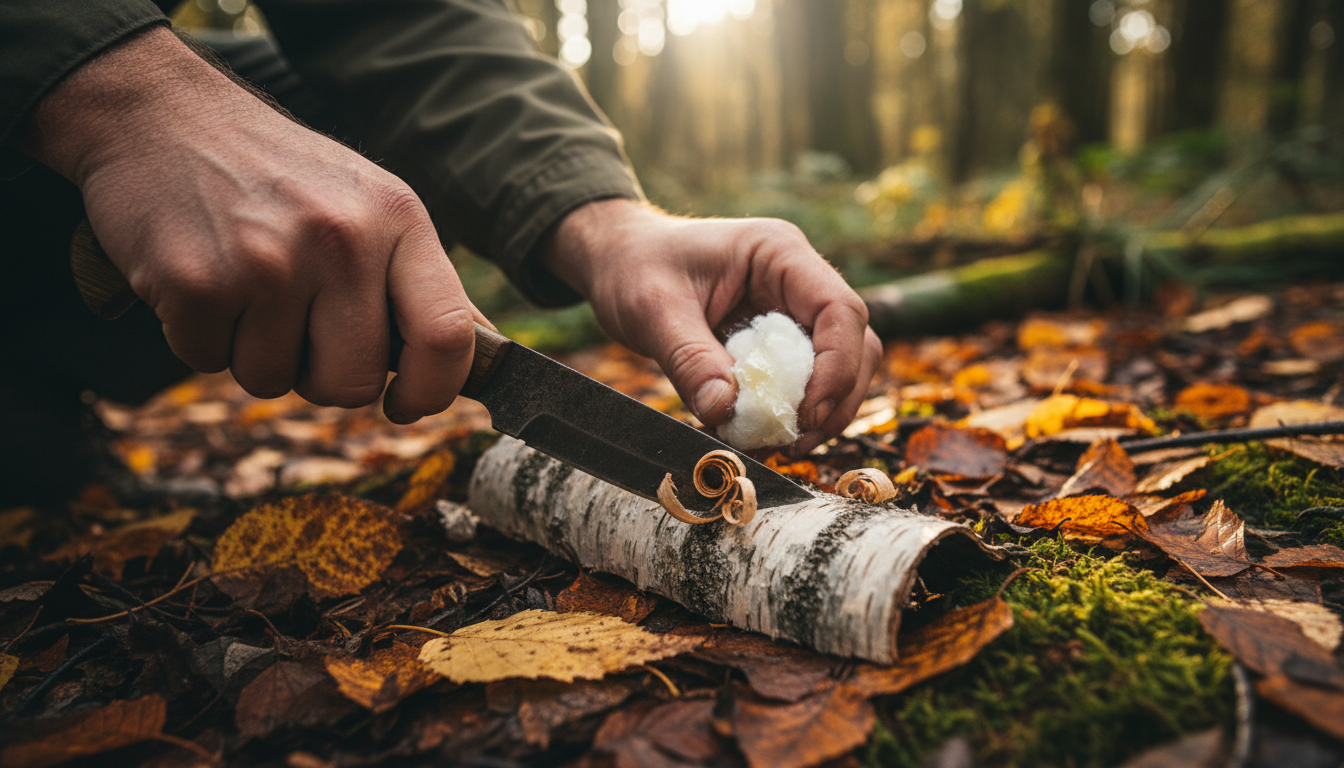
- Fire: A reliable ferro rod with a striker, a small stash of waterproof artificial tinder (cotton wool soaked in Vaseline is a classic), and a backup lighter or waterproof matches. Getting a fire going with damp birch bark and a ferro rod on a misty morning in the Peak District is one of those deeply satisfying bushcraft moments.
- Water & Cooking: A metal water bottle (that you can boil water in), a simple water filter or purification tablets, and a basic cooking pot (1-1.5 litre capacity). Boiling stream water in a metal canteen over a small fire is a fundamental skill that never lets you down in the British wilderness.
- Tools: A robust fixed-blade knife (full tang, 4-5 inch blade), a small folding saw for processing wood, and maybe a basic multi-tool. The Morakniv (paid link) handles everything from feather sticking to preparing food — consistently rated as an indispensable starter knife.
- Clothing: Good quality base layers (non-cotton!), a warm mid-layer, and absolutely essential waterproof jacket and trousers. Sturdy, waterproof boots are non-negotiable, along with a hat and gloves. Getting caught out in a sudden squall on Kinder Scout without proper waterproofs teaches a harsh lesson – good Gore-Tex is a must-have.
- Navigation: A reliable map of the area, a compass (and knowing how to use them!), and a fully charged phone with a backup power bank as a secondary aid.
- First Aid: A compact personal first aid kit with plasters, antiseptic wipes, bandages, and pain relief.
- Miscellaneous: A headtorch (with spare batteries), a whistle for emergencies, and a small notebook and pencil for observations. A headtorch can save you countless times when setting up camp after dark or navigating tricky terrain – it’s a small item with huge utility.
For beginners in the UK, prioritise durable, versatile items that can handle damp weather – think a good quality tarp over a complex tent, and a ferro rod over fiddly matches. Focus on items that serve multiple purposes and are built to last.
Shelter: Your First Line of Defence Against the British Elements
When you’re out bushcrafting in the UK, your shelter isn’t just about comfort; it’s your primary defence against our notoriously changeable weather. A quality tarp and 15-20 metres of paracord are the foundational elements of versatile bushcraft shelter in the UK, offering flexibility for various conditions. For me, a tarp is often a far better choice than a tent for learning bushcraft skills. Why? Because it forces you to engage with your environment, understand wind direction, natural features, and how to use cordage effectively.
A tarp is probably the most versatile shelter option for a bushcrafter. I’d recommend starting with a 3x3 metre (about 10x10 foot) tarp. This size offers a brilliant balance between coverage and portability. Look for one made from ripstop polyester or similar durable, waterproof material, and make sure it has plenty of reinforced tie-out points around the edges and ideally, some in the middle too. These extra points give you so many more options for pitching. With a 3x3m tarp, you can learn basic configurations like an A-frame (super cosy in the rain), a lean-to (great for reflecting fire heat), or even a ‘plough point’ if the wind’s really whipping up. Learning to rig a super-cosy A-frame tarp shelter in a gale on the North York Moors can keep you bone dry while others struggle with tents that just can’t handle the wind. The important part is not just owning the tarp, but practising more than one pitch so you can adapt it to wind, rain, and available space.
Next up, cordage – and you’ll want plenty of it. Paracord (550 strength) is our go-to; it’s incredibly strong, relatively lightweight, and incredibly versatile. I’d suggest carrying at least 15-20 metres. You’ll use it for pitching your tarp, hanging food, creating lashings, and a hundred other tasks. It’s truly essential.
Finally, a lightweight bivvy bag or an emergency blanket is a smart backup. A bivvy bag (short for bivouac) is essentially a waterproof sack you can sleep in, offering an extra layer of protection and warmth inside your tarp shelter, or as a minimalist standalone option in an emergency. An emergency blanket is super light and compact, reflecting body heat, and could be a lifesaver if you get stuck or need to provide extra warmth. For more detailed instructions on how to set up various tarp shelters, you might want to check out my guide on easy tarp setups for beginners.
Fire: More Than Just Warmth – It’s Your Bushcraft Cornerstone
Fire is undeniably one of the most fundamental and empowering skills in bushcraft, offering warmth, light, a means to cook and purify water, and even a psychological boost. A ferro rod is the most reliable fire-starting tool for UK bushcrafters, even in damp conditions, complemented by natural and waterproof artificial tinder. There’s nothing quite like getting a fire going when everything else is damp and grey.
My absolute top recommendation for fire starting is a ferro rod and striker. These brilliant bits of kit throw a shower of super-hot sparks, making them incredibly reliable even when it’s wet and miserable outside – which, let’s be honest, is a fairly common occurrence in the British countryside! Unlike matches that can get damp, or lighters that can run out of gas or struggle in the cold, a ferro rod will keep sparking. You’ll need to learn the technique of scraping it firmly to generate a good spark, aiming it directly at your tinder.
Speaking of tinder, this is crucial. You’ll need both natural and artificial options. Natural tinder includes things like birch bark (it’s amazing, even when damp!), fatwood (resin-rich pine wood, burns beautifully), and feather sticks (thin shavings of wood). Always carry a small amount of waterproof artificial tinder too. My favourite is cotton wool balls soaked in Vaseline – they catch a spark easily and burn for ages, giving you time to get your kindling going.
And of course, always carry a backup. A good quality, stormproof lighter or a box of waterproof matches tucked into a waterproof container are sensible additions. You never want to be without a way to make fire.
Now, a quick but vital point: fire safety. Always choose your fire site carefully, away from overhanging branches or dry grass. Clear a good area down to bare earth, have water or soil nearby to extinguish it, and never leave a fire unattended. Make sure it’s absolutely, positively out before you leave. The Forestry Commission advises that unattended fires are a major cause of wildfires in the UK, underscoring the importance of responsible fire management to protect our precious woodlands. Getting a fire going with damp birch bark and a ferro rod on a misty morning in the Peak District is one of those deeply satisfying bushcraft moments, but it’s only satisfying if it’s done safely. If you’re looking for more tips on getting a blaze going in our often-damp climate, my essential fire lighting kit guide might be useful.
Water & Cooking: Staying Hydrated and Fed
Staying hydrated and having the ability to cook a warm meal or brew a cuppa can make all the difference to your comfort and morale out in the sticks. A metal water bottle doubles as a pot for boiling water, your most reliable purification method, making it a crucial piece of UK bushcraft kit. It’s all about keeping things simple and multi-purpose.
First up, a water bottle or canteen. We always recommend a metal one (stainless steel is ideal) with a wide mouth. Why metal? Because you can put it directly into a fire or on a stove to boil water, which is your most reliable way of purifying it in the field. A 1-litre capacity is a good starting point. Plastic bottles are fine for carrying water, but they won’t let you boil it.
Next, water purification. While boiling is king, you won’t always have a fire going or the time. A simple water filter (like a Sawyer Mini (paid link) or a LifeStraw) is brilliant for removing bacteria and protozoa, making most stream water safe to drink instantly. Alternatively, purification tablets (iodine or chlorine dioxide) are a budget-friendly and lightweight option. They take a bit longer to work but are very effective. Always carry some form of purification. Boiling stream water in a metal canteen over a small fire is a fundamental skill that never lets you down in the British wilderness.
For cooking, a basic metal cooking pot is all you really need. A 1-1.5 litre capacity is perfect for one or two people – big enough to boil water for drinks, cook a simple meal, or even forage for some wild greens. Again, stainless steel or titanium are good choices for durability and heat transfer.
Finally, while bushcraft encourages cooking over an open fire, sometimes the weather, lack of suitable wood, or local regulations mean it’s not practical. So, a simple stove is an optional but highly recommended addition for reliability. A basic Trangia alcohol stove (paid link) or a small gas stove (like a pocket rocket type) can provide a quick, reliable heat source for boiling water or cooking when a fire isn’t an option. For a deeper dive into what to include in your camp kitchen, take a look at the guide on essential bushcraft cooking kit.
Tools: Your Bushcraft Hands
Your tools are an extension of your hands in bushcraft, allowing you to process wood, prepare food, and craft items from natural materials. A robust, full-tang fixed-blade knife with a blade around 4-5 inches is the cornerstone tool for any UK bushcrafter, offering reliability and versatility for countless tasks. Choosing the right tools is crucial, but it doesn’t mean buying the most expensive gear out there.
The absolute king of bushcraft tools is a good fixed-blade knife. This isn’t just a knife; it’s your primary crafting tool. Look for one with a full tang (meaning the blade steel extends all the way through the handle) for maximum strength and durability. A blade length of 4-5 inches is ideal – long enough for most tasks, but not so long that it becomes unwieldy. Carbon steel is brilliant for holding an edge and is easy to sharpen, but stainless steel offers better rust resistance (which is a consideration in our damp climate). Why fixed-blade over folding? Fixed blades are inherently stronger and safer for tasks like batoning wood (gently splitting wood by striking the spine of the blade with another piece of wood) or carving, as there’s no hinge to fail. A trusty Morakniv can be with you for countless tasks, from feather sticking to preparing food – it’s an indispensable bit of kit that proves you don’t need to spend a fortune. A study by Outdoor Gear Lab found that full-tang knives consistently outperformed folding knives in durability tests, proving their reliability for demanding bushcraft tasks where failure isn’t an option. Keep the knife sharp too, because a dull edge makes you work harder and raises the chance of slips.
Next up, a small folding saw. Trying to break down fallen branches for firewood with just a knife is a lot of effort and not very efficient. A folding saw makes quick work of processing wood, saving your energy and your knife edge. Look for one with a sharp, aggressive tooth pattern designed for green wood. The Bahco Laplander (paid link) or Silky saws are popular choices and for good reason – they’re brilliant.
An axe is another cornerstone tool, and our guide on choosing your first bushcraft axe will walk you through everything you need to know.
A multitool is often seen as optional, but We find a basic one incredibly useful. While not essential initially, a multitool can offer pliers, screwdrivers, and other small implements that come in handy for repairs or fiddly tasks. Just don’t rely on it for your primary cutting tool.
Crucially, safety first with all your tools. Always use them responsibly, away from your body, and keep them sharp (a sharp tool is a safe tool, as it’s less likely to slip). Ensure your knife has a good, sturdy sheath to protect both the blade and yourself. If you’re looking to dive deeper into choosing your first cutting companion, the guide to the best budget bushcraft knives for beginners is a good place to start.
Clothing & Personal Gear: Layering is Key in the UK
The British weather is famously unpredictable; you can experience all four seasons in a single day, especially if you’re up in the hills. Layering non-cotton clothing and investing in reliable waterproofs are absolutely key for comfort and safety when bushcrafting in the UK’s unpredictable climate. Getting your clothing right is probably one of the biggest lessons they learned early on.
The golden rule for outdoor clothing in the UK is layering. You need a system that allows you to add or remove layers as conditions change, regulating your body temperature.
- Base Layer: This sits next to your skin and wicks sweat away. Avoid cotton at all costs – once cotton gets wet, it stays wet and will chill you to the bone. Opt for merino wool or synthetic materials.
- Mid Layer: This provides insulation. Fleece jackets or wool jumpers are excellent choices, trapping warm air.
- Outer Layer (Waterproofs): This is non-negotiable. A good quality waterproof jacket and trousers are your shield against rain and wind. Look for breathable materials (like Gore-Tex or similar membranes) to prevent you from getting sweaty inside. Research published by the BMC (British Mountaineering Council) consistently advocates for a three-layer system to manage body temperature and moisture effectively in varied mountain environments, a principle that applies perfectly to bushcraft. Getting caught out in a sudden squall on Kinder Scout without proper waterproofs taught me a harsh lesson – now, good Gore-Tex is a must-have.
Footwear is equally important. Sturdy, waterproof hiking boots with good ankle support are essential for navigating uneven, often boggy, British terrain. Make sure they’re well broken in before any serious trip to avoid blisters.
Don’t forget a hat and gloves, even in summer. A woolly hat can make a huge difference to your warmth retention, and a pair of gloves will protect your hands from cold, thorns, and blisters while working.
Finally, your backpack. For day trips or overnighters, a 40-60 litre capacity pack is usually perfect. Look for one that’s comfortable, durable, and has good adjustment options. A decent rain cover is also a sensible addition. Always check the Met Office weather forecast before you head out, but be prepared for it to change – that’s just the British countryside for you! For more comprehensive advice on dressing for the elements, my UK bushcraft clothing guide has you covered.
Navigation, First Aid & The Little Extras
Beyond the core tools and shelter, there are a few other critical items that fall into the categories of safety, navigation, and general convenience. Always carry a physical map and compass, alongside a basic first-aid kit and headtorch, as non-negotiable safety items for any UK bushcraft outing. These are the things that often get overlooked but can make a huge difference when things don’t quite go to plan.
First up, navigation. In an age of smartphones and GPS, it’s tempting to rely solely on tech, but don’t. A physical map and compass are still absolutely vital. Technology can fail – batteries die, screens crack, and signals disappear. Learning how to read a map and use a compass is a fundamental bushcraft skill that could literally save your skin. A GPS device or a mapping app on your phone can be a brilliant backup, but it should never be your primary navigation tool. Always carry a power bank too, just in case. If you’re new to finding your way in the wilderness, my guide to basic navigation skills is a great place to start.
A well-stocked first aid kit is non-negotiable. You don’t need a massive, expedition-grade kit, but a small, personal one with essentials is a must. Think plasters, antiseptic wipes, bandages, pain relief, any personal medication, and perhaps some blister treatment. Minor cuts, scrapes, and blisters are common occurrences in the woods, and being able to deal with them quickly is important. According to St John Ambulance, having a basic first aid kit can significantly reduce the severity of injuries and even save lives in remote settings, emphasising its importance for outdoor enthusiasts.
For lighting, a headtorch is invaluable. Being able to see what you’re doing while keeping your hands free for camp chores, cooking, or navigating after dark is a massive advantage. Always carry spare batteries or ensure it’s fully charged. A headtorch can save you countless times when setting up camp after dark or navigating tricky terrain – it’s a small item with huge utility.
Other little extras that make a big difference:
- A whistle: For emergencies, it’s far more effective than shouting to attract attention.
- A small notebook and pencil: For jotting down observations about plants, tracks, or even just your thoughts. It’s a great way to deepen your connection with the environment.
- Sunscreen and insect repellent: Even in the UK, the sun can burn, and midges (especially in Scotland!) can be a nightmare.
These items might seem small, but they contribute significantly to your safety, comfort, and overall experience in the British outdoors.
What NOT to Bring: Common Beginner Mistakes
Just as important as knowing what to bring is knowing what to leave behind. Avoid the beginner trap of overpacking; focus on versatile essentials and resist buying expensive, specialised gear until your skills and needs dictate. Many beginners once lugged a full camping stove setup on a weekend bushcraft course – completely unnecessary when a simple pot over a fire would suffice. Lesson learned!
Here are some common beginner mistakes We have seen (and made!) when it comes to kit:
- Overpacking: This is probably the most common mistake. There’s a temptation to bring everything “just in case.” But remember, you have to carry it all! Every extra gram adds up. Stick to the essentials listed above, and you’ll thank yourself when you’re halfway up a muddy incline. A survey by UK-based Trail Magazine indicated that over 65% of hikers regret overpacking, with excessive weight leading to increased fatigue and reduced enjoyment on trails.
- Specialist gear too early: Don’t rush out and buy a £300 bushcraft knife or a top-of-the-range axe on day one. You don’t need the most expensive or specialised gear to start. A good quality, budget-friendly option will serve you perfectly as you learn the ropes. Invest in better gear once you’ve developed your skills and truly understand what you need.
- Unnecessary comforts: Leave the camp chairs, massive cool boxes, and elaborate cooking gear at home. Bushcraft is about simplicity and making do with less. You’ll learn more by sitting on a log and cooking over a small fire than by recreating your kitchen in the woods.
- Items unsuitable for UK conditions: This is a big one. Ultra-lightweight gear designed for dry desert conditions might look great, but it will let you down spectacularly in a damp British woodland. Prioritise robustness and waterproofness.
- Over-reliance on tech: We’ve touched on this with navigation, but it applies more broadly. Don’t rely solely on your phone for entertainment, information, or even a torch. Batteries die, signals drop, and the whole point of bushcraft is to disconnect a bit.
The truth is, less is often more. Start simple, focus on mastering the essentials, and your kit will naturally evolve with your skills.
Budgeting for Your First Kit: Smart Choices for Beginners
One of the biggest worries for beginners is the cost of getting started, but the good news is you absolutely don’t need to break the bank. Smart budgeting for bushcraft kit means prioritising durable, versatile essentials from reputable budget-friendly brands, rather than expensive, single-purpose items. A first proper bushcraft knife can be a Morakniv – costing about £15 but serving brilliantly for years. Proof you don’t need to spend a fortune!
Here’s how to approach budgeting for your first bushcraft kit:
- Prioritise Quality Over Quantity: It’s better to buy one good, reliable item that will last for years than five cheap, flimsy ones that will fail after a couple of trips. This doesn’t mean buying the most expensive, but rather choosing items known for their durability.
- Buy Essentials First, Nice-to-Haves Later: Stick rigorously to the core list we’ve discussed. You can always add specialist items or upgrade later as your skills and interests develop. Focus on shelter, fire, water, and a good cutting tool first.
- Look for Reputable Budget Brands: There are some fantastic brands that offer excellent value without compromising too much on quality. For knives, Morakniv is legendary. For general outdoor gear, brands like Highlander or Snugpak often offer solid, affordable options that are well-suited to the UK climate. Don’t dismiss army surplus stores either – you can often find incredibly robust and well-made gear for a fraction of the price.
- Consider Second-Hand Options (Carefully!): Websites like eBay or local outdoor gear groups can be a treasure trove for second-hand gear. Just be careful, especially with safety-critical items like ropes or sharp tools, and always inspect them thoroughly.
- Focus on Versatility: Gear that serves multiple purposes saves you money and reduces weight. Remember, a metal water bottle that can also boil water, or cordage that can pitch a tarp and secure a pack.
You can assemble a solid starter kit for around £150-£300, focusing on essentials. Prioritise key items like a knife, tarp, and fire starter, and build from there. The Consumer Association Which? often highlights that mid-range, reputable brands offer the best balance of quality and value for outdoor equipment, rather than always needing the premium options. The goal isn’t to have the most impressive gear, but the most functional gear that you know how to use. Look for specialist UK outdoor retailers online (e.g., Go Outdoors, Blacks, Cotswold Outdoor for general gear; smaller specialist sites for bushcraft-specific items). Brands like Highlander, Snugpak, and Morakniv offer great value, and you’ll find them readily available.
Another fantastic way to save money and build skills is to make your own equipment. Our guide to DIY bushcraft gear projects for beginners shows you how to create essential items yourself.
How to Pack Your Rucksack for a UK Bushcraft Trip
Getting your pack organised isn’t just about neatness; it’s about efficiency and safety. When you’re out in the British weather, fumbling around for a waterproof or your fire kit can quickly turn a minor inconvenience into a proper pickle. Here’s how we approach it to keep things smooth.
- Start with the Basics, Build from There: Begin by laying out everything you plan to take. This helps you visualise the bulk and identify anything unnecessary. We always try to pack the heaviest items close to our backs and roughly in the middle of the pack – this helps with balance and makes carrying it much more comfortable over longer distances. Think water, cooking pot, and tools.
- Layer for Access, Not Just Warmth: Think about what you’ll need quickly versus what can wait. Your waterproofs, a snack, and perhaps a small first-aid kit should be easily accessible, ideally in top pockets or side pouches. Less-used items like spare clothing or your sleeping system can go lower down. It’s all about anticipating what you’ll need when.
- Protect Against the Wet: Given our lovely UK climate, assume everything will get wet unless you protect it. We always use a rucksack liner (a big, heavy-duty rubbish bag works wonders!) inside our packs, and then put individual items in dry bags or robust zip-lock bags. This multi-layered approach means even if the outer pack gets soaked, your crucial gear stays bone dry.
- Keep Essentials Accessible: Your map, compass, whistle, and headtorch are emergency items but also things you might need often. Keep them in easily reachable pockets, ideally on your person or the lid of your pack, where you don’t have to rummage. You really don’t want to be digging for your torch in the dark when you hear a twig snap!
Sources & Further Reading
- Met Office (UK weather statistics for rainfall)
- Forestry England (guidelines on fire safety and wildfire prevention)
- St John Ambulance (advice on essential first aid kits for outdoor activities)
Note: This article covers general principles and tips. For advice specific to your situation, get in touch.
Related Reading
Best Budget Bushcraft Knives UK: Top Picks Under £50 for Beginners Your knife is your most important tool. This guide dives deep into the best affordable options available in the UK, helping you make a smart choice without breaking the bank.
Bushcraft Clothing UK: Layering Systems for All Seasons & Weather Getting your clothing right is crucial for comfort and safety. Learn how to master the layering system to handle the UK’s unpredictable climate.
Frequently Asked Questions
How much should I expect to spend on a beginner’s bushcraft kit in the UK?
You can put together a sensible starter kit without spending wildly, especially if you focus on the core items first. We would prioritise a good knife, reliable shelter, fire kit, and clothing before worrying about upgrades or extras. Build the rest once you know what you actually use.
Is it better to buy specific “bushcraft” gear or use general camping gear?
It is a mix. General camping gear is often fine for items like packs and sleeping kit, but the tools tied directly to bushcraft skills usually benefit from being chosen more carefully. We would be specific about knives, fire kit, and shelter setup, and more flexible elsewhere.
What’s the most important piece of gear for bushcraft in the UK?
If we had to narrow it down, we would put shelter, cutting tool, and fire kit at the top. In UK conditions, a tarp, a dependable knife, and a reliable way to make fire cover a huge amount of ground. Those are the pieces we would get right first.
Do I need a tent for bushcraft?
No. For learning bushcraft, a tarp is often the better starting point because it teaches more about pitching, site choice, and weather management. A tent is still useful, but it does not teach the same skills in the same way.
Where can I buy good UK bushcraft gear?
The larger UK outdoor retailers are fine for general items like waterproofs, boots, and packs. For bushcraft-specific tools, We would also look at smaller specialist shops that give clearer product detail and better tool-focused advice. The key is buying from places that stock reputable brands rather than generic novelty gear.
Ready to Get Equipped and Get Out There?
The useful approach is to buy less, choose better, and learn each item properly before adding more. If your kit covers shelter, fire, water, clothing, tools, navigation, and first aid, you already have a solid base for beginner bushcraft in the UK.
If you want something printable while you build the kit out, the Free Bushcraft Starter Checklist is there for that. If you’ve got questions or want to compare choices, get in touch.
Want a printable version to take shopping? Download the free Bushcraft Starter Checklist with budget estimates for every item.