Bushcraft UK: What It Actually Is (And What Instagram Gets Wrong)
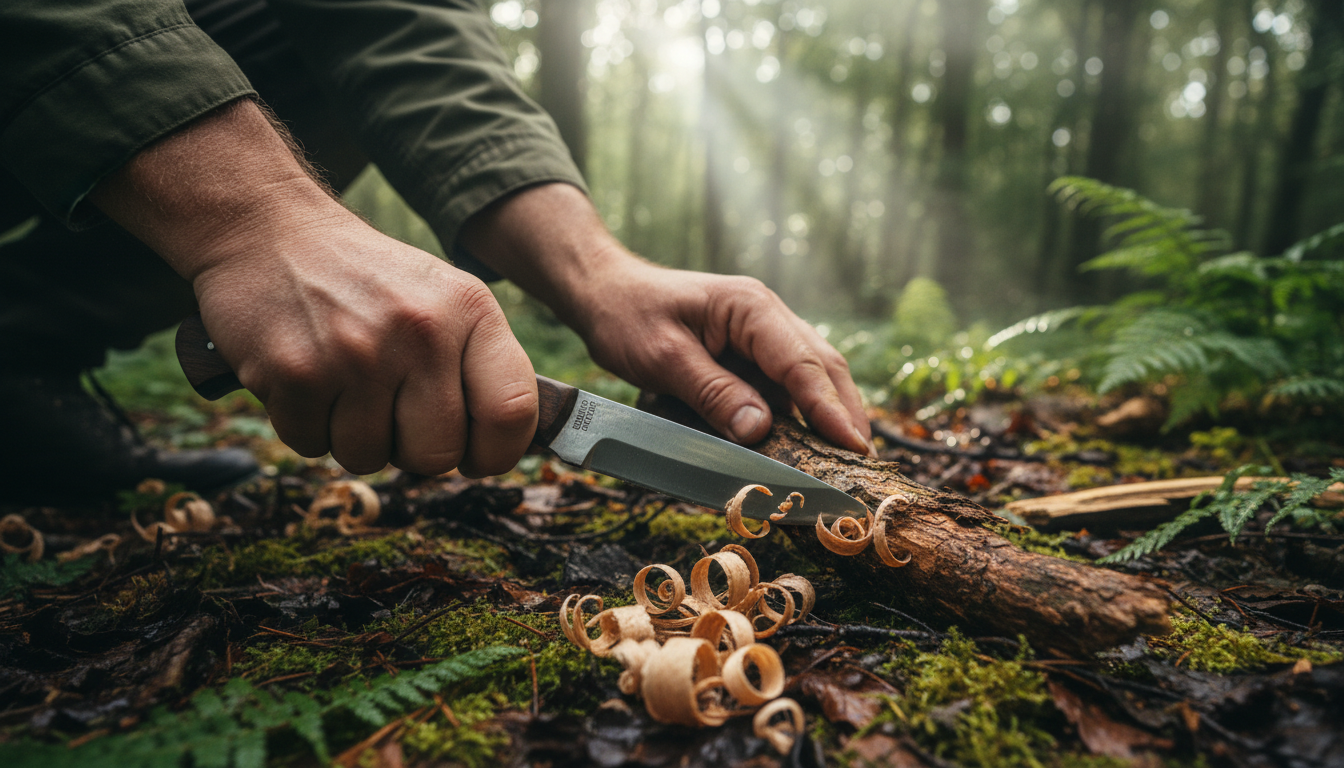
Bushcraft in the UK is about learning to work with the outdoors rather than just passing through it. The practical side matters, but so does the mindset: start with a few core skills, keep your kit simple, and build confidence through regular practice. This guide sits alongside our ultimate UK bushcraft guide for beginners and gives you a grounded starting point for British conditions.
So, What Is Bushcraft, Really? (And Why It Matters Here)
Bushcraft, at its heart, is the art of living in harmony with nature, using practical skills and knowledge to live comfortably and sustainably outdoors. It’s about understanding the natural world around you, learning to work with it rather than against it, and becoming more self-reliant in the process.
Now, it’s really important to differentiate bushcraft from “survival.” While there’s certainly an overlap, bushcraft is far more about proactive engagement and appreciation — building a deep connection with your environment — not just reacting to emergencies. Think of it as knowing how to make a cup of tea by the campfire because you want to, rather than being forced to boil water to avoid dehydration. It’s a journey of learning, observation, and resourcefulness. You’re aiming for comfort and sustainability, not just bare endurance.
The core philosophy revolves around self-reliance, a profound respect for nature, resourcefulness, and keen observation. It’s about looking at a patch of woodland and seeing not just trees, but potential shelter materials, fire fuel, or even edible plants. And believe me, once you start seeing the world through that lens, it completely changes your outdoor experience — even a walk to the shops becomes a scouting mission for birch bark.
Why is this particularly relevant to the UK? Well, we have such a rich history and diversity in our landscapes. From ancient woodlands managed for centuries to vast moorlands and rugged coastlines, understanding bushcraft here connects us to a heritage of living off the land that stretches back millennia. It also teaches us to truly appreciate our unique temperate climate, damp included, and the often-overlooked natural beauty right on our doorstep. According to the Woodland Trust, ancient woodlands cover only 2.5% of the UK, but they are irreplaceable habitats, highlighting the importance of respectful interaction. A simple walk in a familiar local woodland feels like a completely new adventure once you start to understand the different tree species and their historical uses. It’s about understanding and working alongside nature, using time-tested skills to live comfortably and sustainably outdoors rather than treating every outing like a survival test.
Essential Bushcraft Kit for UK Beginners
| Item | Primary Use | UK Legal/Context | Versatility Score (1-5) |
|---|---|---|---|
| Fixed-blade Knife | Cutting, preparing tinder, tool making | Legal with “good reason” for activity | 5 |
| Ferro Rod | Reliable fire lighting, even when wet | No general restrictions | 4 |
| Folding Saw | Efficient processing of larger wood | No general restrictions | 3 |
| Metal Water Bottle | Hydration, water purification via boiling | No general restrictions | 4 |
| Basic First-Aid Kit | Treating minor injuries & emergencies | No general restrictions | 5 |
| Waterproof Jacket/Trousers | Protection from unpredictable UK weather | No general restrictions | 5 |
| Sturdy Boots | Footwear, ankle support on uneven terrain | No general restrictions | 4 |

Bushcraft Skills: The Absolute Essentials for UK Beginners
When you’re just starting out in bushcraft, it’s easy to feel like there’s an endless list of skills to master. But honestly, you don’t need to learn everything at once. Focusing on a few fundamental skills will give you a solid foundation and build your confidence. These are the practical skills that will truly enhance your time outdoors, especially in the varied conditions we get here in the UK.
There are five core areas we always recommend beginners get stuck into:
Fire Lighting: This is more than just a party trick; fire provides warmth, a way to cook food, purify water, and is a massive morale booster. For beginners, we’d suggest starting with a ferro rod or even a good old lighter. The key is understanding the ‘fire triangle’ – tinder (something easily ignitable, like birch bark or cotton wool), kindling (small twigs), and fuel (larger pieces of wood). The UK’s damp climate makes finding dry materials a proper challenge, which is why mastering fire lighting in these conditions is a true rite of passage. Many beginners remember their first few attempts in the rain; they were utterly drenched and just couldn’t get anything going. It was frustrating, to say the least! But then they learned the trick of looking for dead, dry wood still attached to standing trees, or under overhangs. That breakthrough moment, seeing a flame catch in truly damp conditions, is incredibly rewarding — and worth celebrating. Keep friction fire methods (like a bow drill) as a future goal; focus on reliable methods first. For a deeper dive into this, check out our other guides on bushcraft skills.
Shelter Building: A good shelter protects you from the elements, whether that’s wind, rain, or even just the chill of the night. Basic principles involve choosing a good location (away from falling branches, out of a hollow where cold air collects), creating a sturdy structure, and providing insulation. For a beginner, a simple tarp setup is brilliant for quick protection, but learning to use natural materials like fallen branches and leaves for a lean-to or debris hut is incredibly satisfying. Always consider the prevailing wind and rain direction in the UK — you want to be sheltered from the worst of it, not inviting it in for a cuppa.
Knot Tying: You’d be amazed how useful a few solid knots are. They’re essential for securing your tarp shelter, hanging food, or even making repairs. We’d recommend learning the bowline (great for a non-slip loop), the clove hitch (for attaching a rope to a pole), and the reef knot (for joining two ropes of similar thickness). Fumbling with a loose tarp in a downpour is no fun — many have been there, with the soggy sleeping bag to prove it. Learning just these three will cover most of your initial needs and save you a lot of faff!
Navigation (Basic): While a GPS on your phone is handy, understanding how to navigate without electronics is a crucial bushcraft skill. Start with map and compass basics — learning to orient your map and take a bearing. But also, pay attention to natural navigation cues relevant to our UK landscapes: the sun’s position, the prevailing wind often shaping trees, and even the moss growth on tree trunks (though this can be unreliable in the UK — moss can easily lead you astray if you rely on it too heavily). It’s about building an awareness of your surroundings. Even just spending time looking at an Ordnance Survey map of your local area before you go out can make a huge difference to your confidence.
Water Sourcing & Purification: Safe drinking water is non-negotiable. Knowing how to identify potential water sources and, crucially, how to make that water safe to drink is vital. Boiling is the simplest and most effective method for killing pathogens. A metal water bottle over a fire works a treat. Filter systems are also brilliant, but always have a backup plan. Remember, even crystal-clear mountain streams can harbour nasty bacteria — they learned that after a rather unpleasant few days in the Lakes — so purification is never something to skip.
Mastering basic fire lighting in damp UK conditions is a rite of passage, teaching patience, resourcefulness, and a deep respect for the elements. If you’re keen to dive deeper into these fundamental skills, have a look at our guide to mastering foundational UK bushcraft skills.
Your First Kit: What You Actually Need (and What You Don’t)
One of the biggest pitfalls for beginners is getting caught up in “gear acquisition syndrome” — buying loads of fancy, expensive kit you don’t really need. Our philosophy for UK bushcraft beginners is all about the “minimum viable kit.” You want robust, multi-functional tools that are practical for our varied weather, not a mountain of gadgets that’ll just sit in your garage.
Here’s what we consider truly essential to get you started:
- A Good Knife: A fixed-blade knife is the cornerstone of bushcraft. It’s incredibly versatile for everything from preparing tinder to making feather sticks. Crucially, in the UK, you need to understand the legal carry rules. A folding knife with a blade under 3 inches (7.62 cm) that doesn’t lock is generally legal to carry in public. For a fixed blade or a locking folder, you need a “good reason” to carry it (e.g., going to or from bushcraft activities). Always choose a sturdy, full-tang knife made from good quality steel — cheap knives are a false economy and potentially dangerous.
- Ferro Rod or Reliable Lighter: As we talked about, a reliable way to make fire is key. A ferro rod (ferrocerium rod) sparks hot and works even when wet. A good old Bic lighter is also brilliant, especially in a waterproof case — Keeping one in every jacket pocket is a sensible backup.
- Small Saw or Folding Saw: For processing larger pieces of wood for fire or shelter, a saw is far safer and more efficient than trying to hack at it with a knife. A folding saw like a Bahco Laplander is a popular choice for good reason — it’s compact and effective, though don’t expect it to fell an oak in 30 seconds.
- Metal Water Bottle: Not only for carrying water, but a single-walled metal bottle can be placed directly into a fire to boil water for purification or making a brew. Super versatile — plus it doubles as a drum around the campfire if you’re feeling musical.
- Basic First-Aid Kit: Accidents happen, even small ones. A compact kit with plasters, antiseptic wipes, pain relievers, and any personal medications is non-negotiable. You can find good advice on what to include from organisations like the British Red Cross.
- Waterproof Jacket and Trousers: The UK weather is famously unpredictable — “four seasons in one day” isn’t just a saying, it’s a meteorological fact. Good quality waterproofs will keep you comfortable and safe from exposure. Layering is key — wear several thinner layers rather than one thick one, so you can adjust to temperature changes.
- Sturdy Boots: You’ll be spending a lot of time on your feet, often on uneven, muddy terrain. Waterproof, ankle-supporting boots are a must — trust me, twisted ankles are a proper mood-killer on a weekend trip.
What should you avoid initially? Overly specialised gear like huge survival knives (often illegal to carry without specific reason), expensive multi-tools you don’t yet understand, or extensive food supplies for a simple day trip. Start small, learn what you genuinely use, and then gradually expand your kit — your wallet will thank you, and you’ll avoid looking like you’re preparing for the apocalypse on a Tuesday afternoon in Surrey. You can find good quality gear at outdoor specialists like Cotswold Outdoor or through reputable online stores. Many beginners remember one early trip where they’d packed every gadget under the sun, only to find themselves fumbling with a complicated water filter when a simple boiling method would have been quicker and easier. Meanwhile, their trusty fixed-blade knife was doing 90% of the work. For UK bushcraft beginners, prioritise robust, multi-functional tools like a quality fixed-blade knife and a reliable fire starter over a long list of gadgets. If you want a more comprehensive breakdown of kit, have a look at our essential UK bushcraft kit list.
Tackling the Big Questions: Safety, Legality & Common Fears in the UK
It’s completely normal to have worries when you’re starting out — “Am I allowed to be here?”, “What if I get lost?”, “What if I can’t make a fire?” These are common fears, and honestly, they show you’re thinking responsibly, which is a great trait for a bushcrafter! Let’s tackle them head-on, focusing on the UK context.
Safety First: Your Responsibility
Bushcraft is inherently about learning to be self-reliant, which means taking responsibility for your own safety — no one’s going to hold your hand if you decide to whittle your knee instead of that stick. For a complete breakdown of safety protocols, our dedicated guide on essential health and safety for UK bushcraft beginners is a must-read.
- Risk Assessment: Before you even head out, think about what could go wrong and how to mitigate it. What’s the weather forecast? Are there any known hazards in the area? Sounds a bit formal, but “what could ruin my day?” is a good starting point.
- Knife Safety: A sharp knife is a safe knife (it’s less likely to slip). Always cut away from your body, keep your fingers clear, and sheath your knife when not in use. Getting a nasty nick because you are rushing and not paying full attention to where your knife is going is a proper learned-it-the-hard-way moment that reminds most people to slow down.
- Fire Safety: This is really matters, especially in the UK where dry spells can lead to devastating wildfires. Always clear a wide area around your fire down to bare earth. Have water or a spade nearby to extinguish it. Never leave a fire unattended, and always ensure it’s cold out before you leave — if you can’t touch the ashes, it’s not out. Check local bylaws and fire bans — more on that in a moment.
- Respecting Wildlife: Observe animals from a distance. Don’t disturb nests or habitats. Store food securely to avoid attracting unwelcome visitors — nothing ruins a trip like a squirrel making off with your lunch. For example, the RSPB provides excellent guidance on responsible wildlife observation.
Legality: Understanding the UK Countryside Code
This is where many beginners get a bit nervous, and rightly so. The UK has unique access laws that are crucial to understand — getting them wrong can land you in hot water.
- The Countryside Code: This is your bible for responsible outdoor access. It outlines how you should behave in the countryside to protect it, respect others, and enjoy your visit. You can find the full code on the GOV.UK website. Essentially, it boils down to:
- Respect everyone: Be considerate to people living and working in the countryside.
- Protect the environment: Leave no trace. Take your litter home. Don’t damage plants or trees.
- Enjoy the outdoors: Plan ahead and be prepared. Follow signs.
- Access Rights: Generally, in England and Wales, you have a right to roam on “access land” (often moorland, mountains, heaths, downs, and common land) but not usually on private woodlands or farmland without permission. In Scotland, access rights are more extensive but still come with responsibilities. Always stick to public footpaths and bridleways where required — and if you’re not sure, ask. Farmers are usually friendlier than they look.
- Fire Regulations: This is a big one. You cannot light fires on most access land or in woodlands without explicit landowner permission. Even on private land you own, you need to be incredibly careful and check local bylaws. Many areas have outright fire bans during dry periods. Our advice is to assume you can’t light a fire unless you’ve thoroughly researched and obtained permission. Always check GOV.UK for general fire safety advice and local council websites for specific bylaws — better safe than explaining to a very angry ranger why half the New Forest is smouldering.
- Leave No Trace: This set of seven principles is fundamental to bushcraft. It means leaving the environment exactly as you found it, or even better. Pack out everything you pack in, minimise your impact, and respect wildlife — basically, don’t be that person who ruins it for everyone else.
Understanding and adhering to the UK’s Countryside Code and local fire regulations is absolutely key for responsible bushcraft, ensuring both your safety and the preservation of natural spaces. If you’re looking for more detailed safety guidelines, our essential health and safety guide for UK bushcraft beginners covers everything you need.
Common Fears: Reframing the Challenge
Those worries about getting lost or failing at a skill? They’re just part of the learning curve — and honestly, they never completely go away, they just get smaller.
- Getting Lost: This is why basic navigation skills are so important. Start in familiar areas. Tell someone where you’re going and when you expect to be back. Carry a fully charged phone (for emergencies, not navigation!). A good practice is to always carry a physical map and compass, even if you have a GPS — batteries die, phones break, but a map won’t suddenly decide to update its operating system mid-hike.
- Failing at Skills: Bushcraft is all about practice. Your first fire might be a smoky mess, and your first shelter might be a bit draughty. That’s absolutely fine! Every “failure” is a learning opportunity — a first debris hut might collapse in the night and leave you looking like a hedgehog. The satisfaction comes from figuring it out. Many of these early struggles are common, and you can learn how to sidestep them in our guide to avoiding the 10 most common beginner mistakes. Even experienced bushcrafters mess up fires sometimes, especially when trying a new technique or when conditions are particularly tricky — it is all part of the journey, and it keeps you humble.
Related Reading
The Ultimate UK Bushcraft Guide for Beginners: Start Your Wilderness Journey This is our comprehensive parent guide, covering everything you need to know to start your bushcraft adventure, from gear to fundamental skills.
Finding Your Tribe: UK Bushcraft Mentors, Clubs & Online Communities Learning is often better together. Discover how to connect with fellow bushcraft enthusiasts and experienced mentors across the UK.
Sources & Further Reading
- Woodland Trust: For information on UK ancient woodlands and conservation efforts.
- GOV.UK: Official source for the UK Countryside Code and fire safety regulations.
- British Red Cross: Provides essential guidance on creating a practical first-aid kit.
Note: This article covers general principles and tips. For advice specific to your situation, get in touch.
Your Next Steps: Building Your Bushcraft Journey
So, you’ve got a clearer idea of what bushcraft in the UK is about, and you’re probably itching to get started — brilliant! The key now is to take sensible, achievable steps to build your skills and confidence. No need to run off to the Highlands with just a knife and a dream just yet.
- Start Small, Practice Close to Home: You don’t need to head deep into the wilderness straight away. Many basic skills can be practiced in your garden or a local park (where permitted — no fires in the park without checking regulations, unless you fancy explaining yourself to the local council). Practise knot tying in your living room, learn to identify trees on your daily walk, or even try making feather sticks on your patio. The consistency of practice is far more important than the grandeur of the location initially — plus it’s easier to pop back inside for a cuppa if it all goes pear-shaped.
- Find a Mentor or Local Group: Learning from experienced individuals is invaluable. They can share practical tips, demonstrate techniques safely, and introduce you to local nuances. Search online for local bushcraft groups or outdoor clubs in your area — there’s probably more around than you think. Meeting like-minded people can really accelerate your learning and make it a lot more fun. If you’re struggling to find groups, sometimes contacting us via the /contact/ page might help — we might know someone in your neck of the woods, or at least point you in the right direction.
- Recommended Reading: While hands-on experience is king, a good book can provide a solid theoretical foundation. For UK beginners, We’d highly recommend something like Ray Mears’ “Bushcraft Survival Skills” or a similar practical guide that covers native flora and fauna. These books are packed with wisdom and stunning photography — perfect for keeping the inspiration alive when you’re stuck inside on a rainy day. You can also find plenty of useful articles and tips right here on the /blog/.
- Consider a Beginner’s Course: If you’re serious about getting a strong start, a professional beginner’s course with qualified instructors is a fantastic investment. You’ll learn correct techniques, receive immediate feedback, and often gain access to private woodlands where you can practice skills like fire lighting and shelter building legally and safely. Many brilliant schools operate across the UK — it’s worth shopping around to find one that matches your style. Attending a first proper course often completely changes a beginner’s approach — having an expert show them the right way to do things saves years of trial and error (and quite a few singed eyebrows). You can often find a good selection of UK-based courses listed on sites like the Institute for Outdoor Learning or similar directories, or check out our finding your UK bushcraft tribe guide for recommended courses and communities.
- Keep Practising! The most effective way to progress in bushcraft is consistent, practical application, whether that’s practising fire lighting in your garden or joining a guided walk in a local woodland. Bushcraft isn’t about rushing; it’s about a lifelong journey of learning and connecting with the natural world — and honestly, that’s half the beauty of it.
How to Plan Your First Bushcraft Day Trip
Right, so you’re ready to get out there and put some of these skills into practice? Brilliant! Planning your first proper bushcraft day trip doesn’t have to be complicated, but a bit of forethought will make all the difference to your enjoyment and safety — plus it stops you standing in a car park at 6 AM wondering why you only brought a packet of digestives and a vague sense of optimism.
- Choose Your Location Wisely: Start with somewhere familiar and accessible, perhaps a local park (checking rules first!) or a public woodland with clear paths. Don’t go deep into unknown territory on your first outing — save the proper wilderness for when you’ve got a few trips under your belt. Look for places where you can legally practice some basic skills without causing a fuss — and if you’re not sure, ask. Most landowners are reasonable people.
- Define Your Goal: What one or two skills do you want to focus on? Maybe it’s just practicing knot tying, identifying a few trees, or trying to make some feather sticks. Don’t try to do everything at once — you’ll just end up frazzled and not really learning anything properly. A focused goal makes the trip more achievable and rewarding — plus you get to feel properly smug when you nail it.
- Pack Smart (Your Minimum Viable Kit): Take only your essentials: knife, fire starter, water bottle, basic first-aid, waterproofs, and sturdy boots. Leave the heavy, complicated stuff at home — you don’t need a £300 axe for a day in the local woods. Less gear means less faff and more focus on learning — and your back will thank you.
- Tell Someone Your Plans: This is non-negotiable. Let a trusted friend or family member know exactly where you’re going, what you plan to do, and when you expect to be back. This simple step is a huge safety net — and it stops your mum from calling out mountain rescue when you’re just running late because you got distracted by a particularly interesting fungus.
- Check the Weather Forecast: The UK weather can turn in an instant, so always check the forecast just before you head out. Be prepared for rain, even if it’s sunny when you leave — if you don’t pack waterproofs, you’re basically inviting a downpour. Good waterproofs and extra layers are your best mates in British weather.
- Leave No Trace: Plan how you’ll pack out everything you pack in. Think about your impact on the environment — where you walk, what you touch. Leave the area looking exactly as you found it, or even better. After all, we want these places to be there for the next generation of bushcrafters, don’t we?
Frequently Asked Questions
Is bushcraft legal in the UK?
Yes, but legality depends on what you are doing and where you are doing it. Skills like fire lighting, overnight camping, cutting wood, or building shelters usually require explicit permission, and access rights vary across the UK. We would work on the assumption that anything higher impact needs checking before you go.
What’s the difference between bushcraft and survival?
Bushcraft is proactive. You plan ahead, carry kit, and use skills to stay comfortable and low-impact outdoors. Survival is reactive and emergency-driven, usually with the aim of getting through an unexpected problem and out safely.
Can I practice bushcraft skills in my local park?
Yes for low-impact practice, no for anything that changes the site or creates risk. Knot tying, map reading, observation, and tree identification are usually fine. Fire lighting, cutting wood, and building shelters almost certainly are not, so check the local rules first.
What’s the single most important tool for a UK bushcraft beginner?
If we had to choose one, we would pick a good knife that is appropriate for the work and lawful for the context in which you are carrying it. It is central to preparing tinder, carving, and many small camp tasks. Learn to use it safely and keep it sharp before you think about adding more tools.
How do I find UK-specific bushcraft courses?
Look for instructors who teach in UK conditions and are clear about safety, land access, and low-impact practice. Check reviews, qualifications, and what the course actually covers before booking. A good beginner course should teach core skills properly rather than just giving you an entertaining day out.
Where to Go From Here
The useful way to begin is to keep it small and repeatable. Learn a few skills well, practise them close to home, and pay as much attention to safety and legality as you do to gear.
If you want a simple way to check your foundations before heading out, the Free Bushcraft Starter Checklist at /free-checklist/ covers the main gear, safety points, and first steps.