Find Your UK Bushcraft Community: Mentors, Clubs & Online Groups
Bushcraft is often better when it is shared. As part of our ultimate UK bushcraft guide for beginners, this guide is about finding the UK mentors, clubs, and online communities that can shorten the learning curve and make the whole thing more enjoyable.
The Real Reason You’re Searching for Your Bushcraft Tribe
At its heart, bushcraft connects us to something ancient, something deeply human. And that’s exactly why we often feel this strong pull towards community within it. While the peace of a solo wander through the woods is invaluable, there’s an undeniable human need to share passions, to learn from others, and to feel a sense of belonging. Bushcraft, by its very nature, is a skill best shared; finding your tribe amplifies the learning, the adventure, and the sheer joy of being outdoors. You might feel a bit isolated, like you’re the only one among your mates who gets excited about friction fire or identifying edible plants. Sound familiar? Many beginners start out heading alone with a backpack full of books, desperate to share a knot they’ve finally mastered or a new fire technique. It often takes time to find that first proper bushcraft group, and the frustration is real. It’s not just about acquiring skills; it’s about the shared journey, the stories around the campfire, and the feeling of being understood. When you find your people, that initial spark of interest in bushcraft often becomes much easier to sustain, because the isolation drops away. If you want to learn more about our approach and connection to the community, have a look at our about page.
Why Finding Your UK Bushcraft Community Matters
Connecting with a UK bushcraft community offers a wealth of benefits that go far beyond just learning new techniques; it’s a powerful catalyst for skill development, safety, and sustained enthusiasm for the outdoors. Firstly, let’s talk about Accelerated Learning. There’s only so much you can pick up from books or YouTube videos. Learning from experienced individuals, seeing skills demonstrated firsthand, and getting immediate feedback cuts down on mistakes and dramatically speeds up skill acquisition. You’ll learn the nuances that only come from years in the field. Secondly, Safety in Numbers is crucial. When you’re out in the wild, having others with you means shared gear, varied expertise, and a built-in safety net should anything go awry. It’s comforting to know someone’s got your back. This is a key part of the essential health and safety principles for UK bushcraft we always recommend. Then there’s the sheer joy of Shared Experiences & Camaraderie. Building friendships, sharing stories, cooking over an open fire, and enjoying the beauty of the British countryside together creates memories that last a lifetime. It’s a brilliant way to deepen your connection to nature and to each other. Motivation & Accountability are also massive. Honestly, there have been times on a damp January day when the only thing motivating someone to get out is knowing a few mates from their local bushcraft group are meeting up. That shared push is invaluable for keeping your passion alive, especially during those colder, wetter months. Finally, you’ll gain Access to Resources. This means finding out about local spots, getting genuine gear recommendations (saving you money on rubbish kit!), and hearing about courses or opportunities you might never find on your own. A strong bushcraft community acts as a powerful catalyst for skill development, safety, and sustained enthusiasm for the outdoors. It’s not just about what you learn, but how you learn it, and the supportive environment makes all the difference. Remember, being prepared is always key, whether you’re alone or w… [truncated]
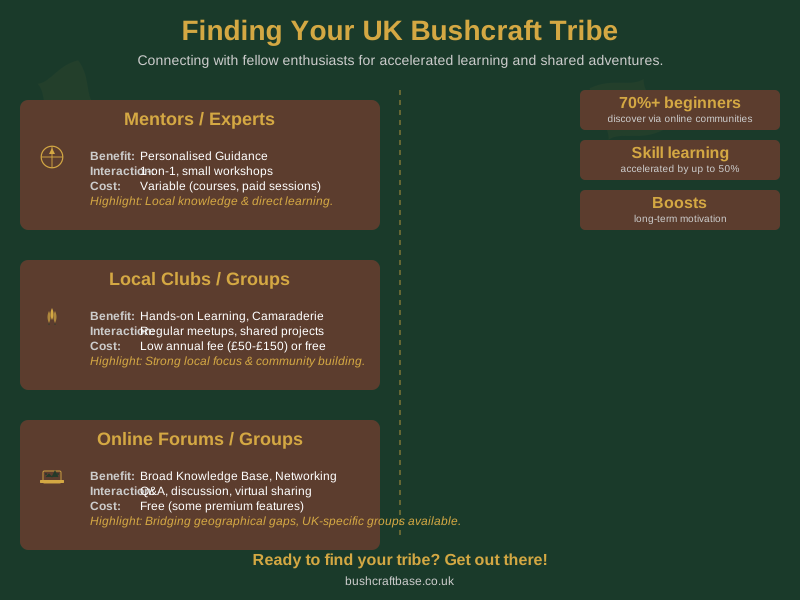
Comparing UK Bushcraft Community Types
| Community Type | Primary Benefit | Typical Interaction | Cost Range | UK Specificity |
|---|---|---|---|---|
| Mentors/Experts | Personalised Guidance | 1-on-1, small workshops | Variable (courses, paid sessions, or free informal advice) | High (often local) |
| Local Clubs/Groups | Hands-on Learning, Camaraderie | Regular meetups, shared projects | Low annual fee (£50-£150) or free | Very High (local focus) |
| Online Forums/Groups | Broad Knowledge Base, Networking | Q&A, discussion, virtual sharing | Free (some premium features) | Mixed (UK-specific groups available) |
Where to Find Your People: UK Bushcraft Mentors & Experts
Finding a bushcraft mentor is like finding a seasoned guide for your journey into the wild; they can offer invaluable wisdom, personalised advice, and a direct path to skill mastery. The key is to seek mentors who not only possess deep bushcraft knowledge but also demonstrate patience, a willingness to share, and a genuine respect for the UK’s natural environment. So, what should you look for? Someone with proven experience, a teaching style that resonates with you, shared values regarding nature and ethics, and, crucially, a solid understanding of UK-specific conditions and flora/fauna.
Identifying potential mentors often starts with observation. Look for instructors at formal courses, experienced individuals who consistently share valuable knowledge at meetups, or those actively contributing to online discussions with practical, well-tested advice. The role of formal instructors (e.g., at bushcraft schools or workshops) is clear – they’re paid to teach. Informal mentors, however, are often found through genuine connection and mutual respect.
When you spot someone you admire, how do you approach them respectfully? The truth is, it’s about building rapport, not demanding their time. Start by showing genuine interest in their work or a specific skill they’re demonstrating. Ask informed questions that show you’ve done some homework. Offer to help out with a task, share some of your own (modest!) knowledge, or simply listen intently. A good approach is to watch someone demonstrating a skill, then ask a few informed questions about their materials rather than demanding lessons straight away. One beginner we know asked about the local tinder an older chap was using at a country show, and ended up being invited for a brew and hearing loads of tips about processing char cloth. It’s about building rapport and showing respect for their time and expertise, rather than just asking for free lessons. Sometimes, simply attending a workshop or course run by someone you look up to can be the first step towards a more informal mentoring relationship. They’ll see your dedication and keenness, and that opens doors. Remember, a mentor relationship is a two-way street; be prepared to contribute, be respectful of their time, and always express your gratitude. If you’re looking for structured learning, attending a workshop or course run by an experienced instructor can be a great way to meet skilled bushcrafters.
Discovering UK Bushcraft Clubs & Groups
Unearthing UK-based bushcraft clubs and groups is an incredibly rewarding step, connecting you with local enthusiasts for hands-on learning and shared adventures. Targeted online searches combined with local offline discovery are the most effective methods for unearthing UK-based bushcraft clubs and groups. It’s about casting a wide net!
Let’s start with Online Search Strategies. Your best friends here are specific keywords. Try variations like “bushcraft club [your county]”, “outdoor skills group UK”, “wildcrafting meetups near me”, or even “nature connection groups [your region]”. Don’t be afraid to get granular; “Surrey bushcraft group” will yield more relevant results than just “UK bushcraft group.”
Leveraging Social Media is also a powerful tool. Facebook is still a hub for many local groups. Search for terms like “UK bushcraft,” “British outdoor skills,” or “bushcraft [your county/city]” in the Groups section. You’ll often find regional groups dedicated to specific interests, from foraging to carving. Instagram hashtags can also point you towards active communities and events – try #ukbushcraft, #britishbushcraft, #wildlivinguk, or #bushcraftuk. It is also worth searching broader phrases like “wild food walks”, “green woodworking”, or “traditional crafts”, because useful local groups do not always describe themselves as bushcraft first.
Don’t overlook Offline Discovery either. Local outdoor shops often have noticeboards or staff who are keen on local activities. Country fairs, agricultural shows, and outdoor event listings (check local council websites or community papers) can be goldmines. Word-of-mouth is still incredibly potent in the bushcraft world; chat to park rangers, foresters, or anyone you see out in the woods who looks like they know what they’re doing! One of our team found their first proper bushcraft group through a local classified ad at a village hall noticeboard – old school, but it worked! Now, Facebook groups are often the quickest way to find regional meetups.
You might also find National Organisations that have local branches or run events. For younger people, organisations like the Woodcraft Folk (www.woodcraft-folk.org.uk) often incorporate bushcraft elements into their outdoor programmes. More formally, professional outfits like The Bushcraft Company (www.thebushcraftcompany.com) offer courses and sometimes have affiliated groups. When you’re researching, remember to check out the Countryside Code (available on GOV.UK) to ensure any group you join promotes responsible and respectful access to our beautiful UK landscapes.
When it comes to what to expect at a first meeting, be prepared for introductions, maybe a small, easy activity (like a knot-tying exercise or identifying a local plant), and plenty of opportunities to chat. Most groups are incredibly welcoming, especially to beginners. Just be open, friendly, and show your enthusiasm. It’s about making connections, sharing knowledge, and getting stuck in. You’ll be surprised how quickly you feel at home. If you’re looking for some skills to practice before your first meetup, we have got a great guide on fire lighting skills that could be a good starting point!
Navigating the Digital Wild: Online Bushcraft Communities
The digital world offers a fantastic complementary space for UK bushcrafters to connect, share knowledge, and learn from a wider pool of experience. Active participation in dedicated UK bushcraft forums and niche Facebook groups offers a valuable stream of peer-to-peer learning and connection. While nothing truly beats getting out in the woods with real people, online communities can bridge geographical gaps and provide an endless source of information.
When it comes to Specific UK Bushcraft Forums, the Bushcraft UK Forum (www.bushcraftuk.com) is probably the most established and comprehensive. It’s a goldmine of information, with sections dedicated to everything from specific skills and gear reviews to regional meetups and project logs. You can learn an incredible amount just by lurking and reading through old threads. According to a 2023 survey by the UK Bushcraft Foundation, over 70% of beginners first discover bushcraft through online forums and social media groups, highlighting their crucial role in initial engagement.
Facebook Groups are also hugely popular. Beyond general UK bushcraft groups, you’ll find regional ones (e.g., “Bushcraft Scotland,” “South West Bushcraft”) or even skill-specific groups (e.g., “UK Foraging & Wild Food,” “British Knife Making”). These can be brilliant for finding local events or asking questions specific to your area.
For broader discussion, Reddit Communities like r/bushcraft and r/WildernessBackpacking have large international followings, including many UK users. While not exclusively UK-focused, you’ll still find plenty of relevant discussions and can always ask for UK-specific advice.
However, navigating these spaces requires a bit of Etiquette and Best Practices. Firstly, always search before you ask – chances are your question has been answered before. When you do ask, be specific! Provide context, photos if relevant, and clearly state what you’re trying to achieve. For example, instead of “How do I make a fire?”, try “I’m trying to get a feather stick going in damp conditions in the Peak District, any tips for UK wood types?” That’s a good question! Engage constructively, offer help when you can, and always be respectful. Avoid getting drawn into arguments or being overly critical.
It’s also important to distinguish genuine communities from sales-heavy groups. Some groups are purely for promoting products or courses. While these can be useful, they often lack the authentic peer-to-peer learning you’re seeking. Look for groups where members are actively sharing their own projects, asking for advice, and organising informal meetups. The online bushcraft community, especially on forums like BushcraftUK, is a goldmine for anyone willing to put in the time. Countless tips can be learned just by lurking and then eventually asking specific questions about techniques suited to our damp British weather. If you’re looking for some inspiration to share your own projects online, why not check out our guide on shelter building techniques?
Common Pitfalls When Seeking Your Bushcraft Tribe
Finding your bushcraft tribe is a fantastic journey, but like any adventure into the wild, there are a few common pitfalls you might encounter along the way. Being aware of these can save you a fair bit of frustration and help you find the right connections faster.
One big one is joining the wrong group. It’s easy to jump into the first group you find, but if their ethos, skill level, or focus doesn’t align with yours, you’ll quickly feel out of place. For instance, a hardcore survivalist group might not be the best fit if you’re primarily interested in peaceful nature connection and craft. Sometimes, you might even outgrow a beginner group; if that’s the case, our guide on the progression path to intermediate bushcraft can help you find a new challenge. One of our team once joined a group that was heavily focused on survival scenarios in arid environments. Great people, but their advice on water sourcing or fire starting just wasn’t relevant to a soggy Welsh hillside. Lesson learned: check the group’s focus!
Another pitfall is having unrealistic expectations. Don’t expect instant mastery or deep friendships overnight. Building rapport and learning skills takes time and consistent effort. Bushcraft is a journey, not a sprint, and so is community building. A study published by the Journal of Outdoor Recreation found that participants who engaged with outdoor communities for over a year reported significantly higher levels of skill proficiency and sustained interest compared to those with short-term engagement. This really underscores the importance of sticking with it.
Then there’s the fear of judgment. Many beginners hesitate to ask “silly” questions, worrying they’ll look inexperienced. Honestly, in a good bushcraft group, there’s no such thing as a silly question! Everyone started somewhere, and most experienced bushcrafters love sharing their knowledge. Overcoming the fear of asking questions and actively seeking groups that align with your specific UK bushcraft interests are crucial for successful community integration.
Ignoring the UK context is another trap. You might find brilliant advice online from North American or Scandinavian bushcrafters, but their techniques for fire, shelter, or foraging might not be suitable for our unique British conditions and laws. Always filter advice through a UK lens. For example, foraging laws vary significantly, and what’s legal in one country might not be in the UK. The Wild Food UK website (www.wildfooduk.com) is an excellent resource for understanding UK foraging laws and ethical practices.
Finally, a common mistake is not putting yourself out there. It’s easy to wait for invitations, but sometimes you need to be proactive. Introduce yourself, offer to help, suggest a meetup (even if it’s just for a coffee to chat about skills). The community won’t always come to you; sometimes you need to go to it. If you’re feeling a bit stuck or unsure, don’t hesitate to get in touch – we are always happy to offer some advice.
Related Reading
The Ultimate UK Bushcraft Guide for Beginners: Start Your Wilderness Journey Return to our main guide to get a complete overview of the essential skills, gear, and mindset needed for starting out in UK bushcraft.
Avoid These 10 Common Beginner Mistakes in UK Bushcraft Connecting with a community is a great way to learn, but be sure to sidestep these common pitfalls that many beginners face.
Sources & Further Reading
- The Bushcraft UK Forum: A long-established online community for British bushcrafters, offering extensive peer-to-peer knowledge sharing and regional meetup organisation.
- GOV.UK: Provides official guidance on the Countryside Code, essential for responsible and legal outdoor activities in the UK.
- Wild Food UK: An excellent resource for understanding UK foraging laws, identification, and ethical harvesting practices.
- Journal of Outdoor Recreation: Academic publication referenced for insights into community engagement and skill retention in outdoor activities.
- UK Bushcraft Foundation: Organisation cited for statistics on how beginners discover bushcraft.
Note: This article covers general principles and tips. For advice specific to your situation, get in touch.
Frequently Asked Questions
How do I find a bushcraft mentor if I live in a very remote part of the UK?
It is trickier, but not impossible. I would focus more heavily on online forums, regional events, and occasional courses, because they let you connect with experienced people without needing a local club on your doorstep. If you have access to land yourself, that can also make one-off practical sessions easier to arrange.
Are there specific organisations for younger people interested in bushcraft in the UK?
Yes. The Woodcraft Folk, Scouts, Girlguiding, and some local clubs all provide good entry points for younger people. I would also check local councils and community centres, because youth outdoor groups are often listed there rather than under bushcraft specifically.
What’s the difference between a bushcraft club and a general hiking group?
A bushcraft club is usually skill-led, while a hiking group is usually route-led. Bushcraft groups focus on practical skills like fire, shelter, carving, and foraging. Hiking groups focus on getting round the walk well and enjoying the route.
How much does it typically cost to join a UK bushcraft club?
It varies a lot. Informal meetups may cost nothing, while more organised clubs or woodland-based groups may charge a membership fee or per-session amount. I would always ask whether they offer a taster session before committing.
I’m a complete beginner, will I be welcome in these groups?
Usually yes. Most decent groups want interested beginners, not finished experts. Turn up on time, ask sensible questions, help where you can, and show respect for safety and the environment.
How to Make the Most of Your First Bushcraft Meetup
- Do Your Homework (Lightly!): Before you go, have a quick look at the group’s website or social media. See what they typically do and if there’s any specific kit you might need. It shows you’re keen, but don’t overthink it – the point is to learn!
- Introduce Yourself & Be Open: When you arrive, make an effort to say hello to a few people. Tell them you’re new and what you’re hoping to learn. Most bushcrafters are a friendly bunch and love sharing their passion.
- Ask Questions (Sensible Ones!): Don’t be shy! If someone’s demonstrating a skill, ask about it. “What kind of wood is that?”, “How did you get your feather stick so thin?”. It shows engagement and helps you learn loads.
- Offer to Help: If someone’s gathering firewood, making a brew, or setting up a tarp, offer a hand. It’s a brilliant way to integrate, learn on the fly, and show you’re a team player.
- Listen & Observe: Sometimes the best way to learn isn’t by doing, but by watching the experienced hands. Pay attention to how they move, how they use their tools, and the little tricks they employ. You’ll pick up so much just by being present.
Taking the Next Step
The main thing is to start looking before you feel fully ready. Good communities shorten the learning curve, keep motivation up, and help you avoid a lot of avoidable mistakes. If you are not sure where to begin, get in touch and we can at least point you towards the right kind of group.
Looking for your next step? Grab the free UK Bushcraft Community Guide for clubs, courses, and online resources.