10 UK Bushcraft Mistakes Beginners Make (And How to Avoid Them)
Most beginner bushcraft mistakes in the UK start long before anything goes badly wrong. Damp kit, rushed packing, weak navigation, and poor site choices can turn a simple day outdoors into a wet, frustrating slog.
We’ve seen plenty of examples of that in the British countryside, from soaked spring walks to stubborn fire lays that refused to catch. This guide is a core part of our ultimate UK bushcraft guide for beginners, and it focuses on the 10 mistakes that catch newcomers out most often. The aim is simple: help you spot them early and avoid repeating them.
1. Mistake #1: Ignoring the UK Weather (and packing for Spain!)
In the UK, your biggest adversary isn’t usually a lack of skill, but a lack of respect for the weather; always pack for worse than you expect. Our climate is notoriously unpredictable and can quickly turn a pleasant outing into a miserable one if you’re not prepared. You know the drill — “four seasons in one day” isn’t just a quaint saying here, it’s a genuine possibility, especially in the hills and mountains. We have seen glorious sunshine turn into a freezing downpour with a biting wind in less than an hour on the Brecon Beacons, and if you’re caught out without the right gear, it can be more than just uncomfortable; it can be dangerous. According to the Met Office, the UK’s national weather service, our weather is influenced by several factors, making it highly variable. This variability means being prepared for anything is your best defence against discomfort or risk.
The critical importance of waterproofs, layers, and appropriate insulation cannot be overstated. A good quality waterproof jacket and trousers are non-negotiable. Forget those flimsy festival ponchos; you need something that will genuinely keep the rain out for hours. Layering is key, allowing you to add or remove clothing to regulate your temperature, preventing both overheating and hypothermia. And trust me, hypothermia isn’t just a winter risk; you can absolutely get it in the summer if you’re wet, cold, and exposed, particularly after a sudden downpour. The dampness here also affects everything else, from your comfort levels to your ability to light a fire (more on that in a bit!).
It is easy to get caught out heading out for what looks like a perfectly mild spring day, only for the heavens to open suddenly. “Lightweight” waterproofs are often no match, and you can end up shivering through an otherwise simple shelter build. It is a proper faff, and frankly, a bit miserable. That experience reinforces why it pays to always check the Met Office forecast, but more importantly, to pack based on the worst-case scenario, not just the best. Always have a spare warm layer and a proper set of waterproofs, even if the forecast looks optimistic. We also recommend packing spare layers and sleeping kit in dry bags, even inside a waterproof rucksack, because that extra barrier against British damp is often what saves the rest of the trip. As the old saying goes, “there’s no such thing as bad weather, only bad clothing.” And it’s spot on. If you’re feeling a bit overwhelmed about where to begin with your kit, We have put together a handy checklist which might just sort you out. (This is a great place to check out our guide to the essential UK bushcraft kit list for all seasons).
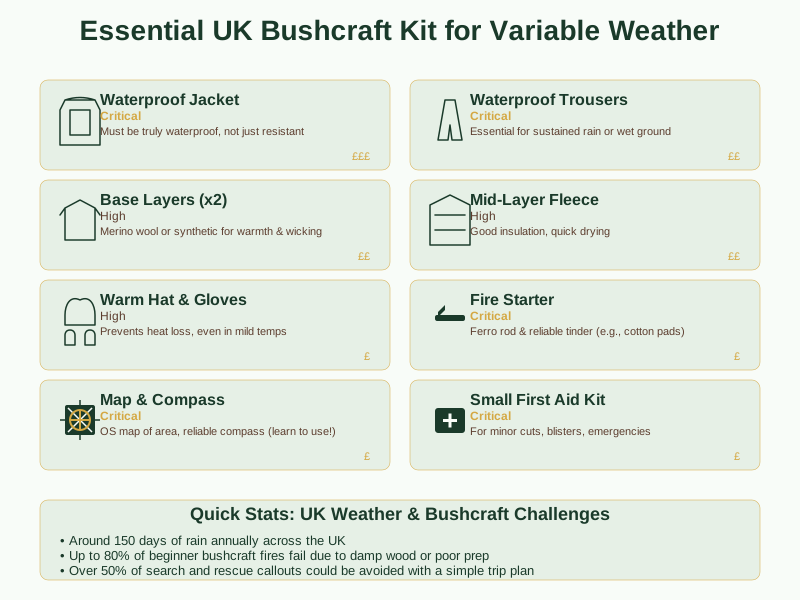
Essential UK Bushcraft Kit for Variable Weather
| Item | Importance | UK Specific Note | Typical Weight (g) | Cost Guide (£) |
|---|---|---|---|---|
| Waterproof Jacket | Critical | Must be truly waterproof, not just resistant | 500-800 | 80-300 |
| Waterproof Trousers | Critical | Essential for sustained rain or wet ground | 300-600 | 50-200 |
| Base Layers (x2) | High | Merino wool or synthetic for warmth & wicking | 150-250 per | 20-70 per |
| Mid-Layer Fleece | High | Good insulation, quick drying | 300-500 | 30-100 |
| Warm Hat & Gloves | High | Prevents heat loss, even in mild temps | 50-150 | 10-40 |
| Fire Starter | Critical | Ferro rod & reliable tinder (e.g., cotton pads) | 50-100 | 10-30 |
| Map & Compass | Critical | OS map of area, reliable compass (learn to use!) | 100-200 | 15-40 |
| Small First Aid Kit | Critical | For minor cuts, blisters, emergencies | 100-300 | 15-50 |
2. Mistake #2: Fire Faff - Using the Wrong Materials or Techniques
Many beginners struggle with fire lighting, especially in the often-damp conditions common across the UK. It’s not like the dry, tinder-rich environments you might see on TV; here, finding truly dry tinder and kindling can be a real challenge, even on a seemingly dry day. We have seen eager beginners trying to get a flame going with damp leaves or soggy twigs, only to end up with a lot of smoke, a bit of frustration, and no actual fire.
The key to effective fire-starting in the UK hinges on preparation: gather ample dry tinder, kindling, and fuel before you strike a match. This often means looking for dead, standing wood that’s been protected from the rain, or splitting larger logs to get to the dry core. A good quality lighter, waterproof matches, or a reliable ferro rod are your best friends. Don’t cheap out on these; a ferro rod that throws a good spark makes a real difference. Once you have your materials, building a proper fire structure is crucial. A teepee or lean-to design helps to funnel the heat and allows air to circulate, which is vital when you’re dealing with slightly damp wood.
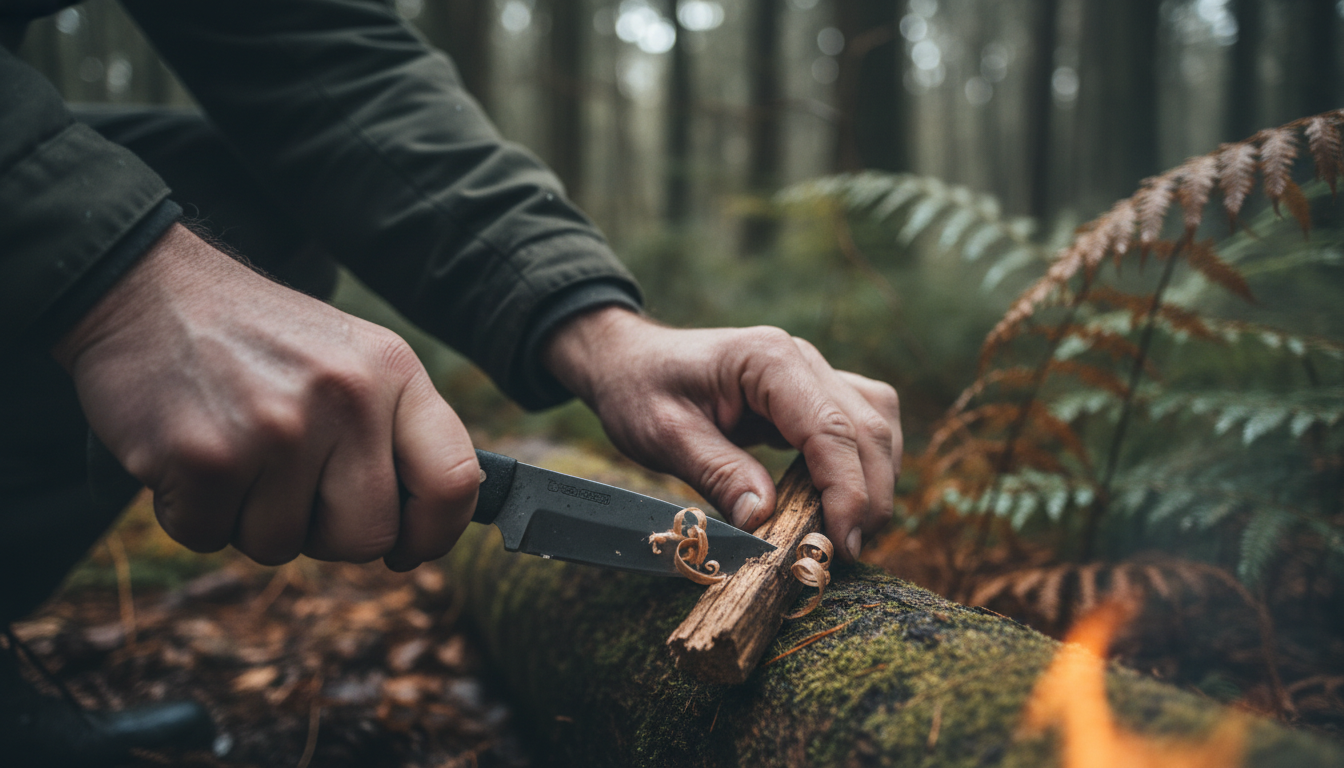
And then there’s processing wood. Forget trying to light a big log straight away. Learning to make feather sticks from the dry core of a piece of wood can provide you with super-fine, curly shavings that catch a spark beautifully, even if the outside of the wood is a bit damp. A common example is the stubborn fire attempt after a week of rain in the Scottish Highlands. You can have all the gear, but without properly processed kindling, relying on what looks “dry enough,” it becomes a proper faff, takes ages, and nearly defeats you. That experience hammered home the importance of meticulous preparation and understanding how to get the most out of damp wood. Oh, and always, always check for local fire restrictions, especially during dry spells or in specific areas like managed woodlands. Organisations like Forestry England regularly issue warnings and advice on fire safety, highlighting the serious risks of wildfires, especially in popular outdoor areas. (For more in-depth advice, have a look at our guide on UK firecraft skills from spark to sustained flame).
3. Mistake #3: Thinking All Woods Are Equal (Species & Ownership)
A common oversight for new bushcrafters is failing to understand the distinct characteristics of different UK woodlands and, crucially, the rules around land access. It’s not just a case of “a tree is a tree.” Our woodlands are incredibly diverse, with deciduous (like oak, beech, and birch) and coniferous (pine, spruce) forests offering different resources and presenting unique challenges. Knowing your trees isn’t just a nice-to-have; it tells you what wood is good for burning, what’s useful for carving, or what might be best avoided. Trying to use green wood for a fire, for instance, is a recipe for smoke and frustration, while some trees are protected or simply not suitable for beginner projects.
But even more important than tree identification is understanding land ownership and access rights; responsible bushcraft respects the land and its stewards. The “Right to Roam” in the UK is fantastic, but it’s not universal. In Scotland, you have much broader access rights (with responsibilities, of course), whereas in England and Wales, access is far more restricted, generally limited to public footpaths, bridleways, and designated access land. You can’t just wander into any woods and start building shelters or lighting fires. Trespassing is a real issue, and damaging sensitive habitats or disturbing wildlife is simply unacceptable. The GOV.UK website provides detailed guidance on the Countryside Code, which outlines your rights and responsibilities when enjoying the outdoors in England and Wales. This code is your go-to for understanding how to act respectfully in rural areas.
We have heard of beginners spending a lovely afternoon scouting a perfect spot for a weekend trip, only to realise from an Ordnance Survey map (and a quick check online with the local authority) that the land was privately owned and didn’t have public access. It is a mild disappointment, but far better than turning up with all your gear and having to sheepishly pack up after a polite word from a landowner. Always do your homework before you go; a quick check of an OS map and a search for local bylaws or Forestry England/Woodland Trust guidance can save you a lot of bother. It’s about being a respectful visitor, not an entitled one. You’ll find a full primer on the rules and etiquette in our guide to UK bushcraft laws, locations, and ethics. Always carry a printed Ordnance Survey map of the area you’re visiting. It’s not just for navigation; it clearly shows public access land and private property boundaries, which is invaluable for staying on the right side of the law.
4. Mistake #4: Overpacking or Underpacking Gear
Striking the right balance with your bushcraft kit—neither carrying too much nor too little—is a skill that often takes time for beginners to master. We have seen it all, from the “everything but the kitchen sink” approach, where someone’s struggling under a pack heavy enough for an expedition to Everest, to the other extreme of the “just a penknife and a dream” minimalist who quickly realises they’re woefully unprepared for a typical British afternoon. Both are common beginner errors and can lead to discomfort, frustration, or even danger.
The weight penalty of carrying too much is significant. Every extra kilogram slows you down, tires you out, and makes the whole experience less enjoyable. You need to differentiate between your essential “minimums” – the things you absolutely must have for safety and basic comfort – and the “nice-to-haves” that can wait until you’re more experienced or on shorter trips. On the flip side, not having critical safety items like a basic first aid kit, proper navigation tools (more on that in a bit!), or a reliable means of starting a fire can put you in a genuinely risky situation. Our guide to essential bushcraft health and safety covers this in great detail.
When it comes to UK-specific gear considerations, good quality waterproofs and a reliable fire starter are essential, as we’ve discussed. But also think about versatile tools over single-purpose gadgets. A good quality bushcraft knife and a folding saw can achieve far more than a backpack full of fiddly, flimsier items. One common mistake is setting off on an overnight trip convinced you need three different axes and two saws “just in case.” After walking a few miles with all that weight on your shoulders, you often realise you only needed one small axe and a folding saw for the entire trip. It is a hard lesson in efficiency. The ideal bushcraft kit is a curated selection of essentials that balance capability with portability, tailored to the UK environment and your planned activity. If you’re feeling inspired but a bit overwhelmed about where to begin with your kit, We have put together a handy Free Bushcraft Starter Checklist that might just sort you out.
5. Mistake #5: Shelter Building Fails (Condensation & Collapse)
Constructing a safe, dry, and effective shelter is a fundamental bushcraft skill, but beginners often encounter common pitfalls like condensation and structural issues. It’s not enough to just throw a tarp over a branch or pile up some leaves; a truly effective shelter needs to address three basic principles: insulation, waterproofing, and ventilation. Miss any of these, and you’re in for a damp, chilly, or potentially uncomfortable night.
One of the biggest problems we see beginners face, especially with tarps or even natural shelters, is condensation. You might have kept the rain out, but if you don’t have adequate airflow, the moisture from your breath and body heat will condense on the inside of your shelter, leaving you just as wet as if it had rained! Choosing a safe and appropriate site is also crucial. Avoid flood plains, areas prone to rockfall, or directly under large dead trees that could shed branches (or even collapse) in a strong wind. Look for level ground, ideally with some natural windbreak, and check overhead for “widowmakers.”
Simple, effective UK shelter designs like a lean-to or an A-frame with a tarp are brilliant starting points. They’re quick to set up and, when done right, offer excellent protection. Just remember to pitch your tarp to allow for airflow, perhaps leaving a gap at the ends or ensuring a slight breeze can pass underneath. When using natural materials, always do so responsibly; don’t strip live trees or damage the environment. A particularly miserable night can happen when you pitch a tarp perfectly to keep the rain out, but completely forget about ventilation. You can wake up feeling like you’ve slept in a cloud, absolutely soaked from condensation. Never again! We always make sure there’s a good airflow, even if it means a slightly less ‘sealed’ shelter. Before you even start building, take five minutes to look up and around your chosen spot. Check for any ‘widowmakers’ – dead branches that could fall – or unstable trees. A quick visual check can prevent a nasty accident. (For detailed instructions on how to set up some simple, effective designs, check out our guide on basic UK shelter building techniques).
6. Mistake #6: Neglecting Navigation Skills
Relying solely on technology for navigation is a significant mistake for beginners in UK bushcraft, as electronic devices can fail when you need them most. I know, I know, our phones have brilliant GPS, and there are some fantastic apps out there. But what happens when the battery dies? Or you drop it in a puddle? Or, more likely in the UK, you hit a patch with no signal, or the mist rolls in and reduces visibility to just a few metres? In these situations, your phone becomes a very expensive paperweight, and suddenly, you’re lost.
Mastering map and compass is a non-negotiable bushcraft skill in the UK, providing a reliable fallback when technology fails or the weather obscures landmarks. Understanding how to read an Ordnance Survey (OS) map – those wonderfully detailed green and pink squares – is fundamental. Learning to identify contours, grid references, and key features will give you a profound sense of where you are and where you’re going. Combine that with a good understanding of how to use a compass, and you’ll be far more self-reliant and safe. According to Ordnance Survey themselves, their maps are designed to be “your guide to the great outdoors,” and honestly, they’re spot on. They provide the level of detail you simply won’t get from a phone screen. If you want a simple, structured practice plan, the navigation basics in our foundational bushcraft skills pillar walk you through map-and-compass drills step by step.
Natural navigation aids, like the sun’s position or even the growth patterns of moss on trees (with caveats, as it’s not always reliable!), can be interesting to learn but should never replace a map and compass for primary navigation. Imagine navigating through dense Welsh woodland in thick fog without an OS map and compass — you can easily become properly disoriented. Phone signal often vanishes, and the landscape can be featureless. It is a stark reminder that these traditional skills are not just for purists; they’re essential safety tools.
7. Mistake #7: Ignoring Wildlife & Plant Identification (The Dangerous Stuff)
A lack of basic knowledge about UK flora and fauna, particularly the potentially dangerous species, can lead to serious safety issues for new bushcrafters. It’s easy to get caught up in the excitement of identifying edible plants or tracking animals, but far more important is knowing what to avoid. In UK bushcraft, a healthy respect for wildlife and a cautious approach to identifying plants – assuming ignorance until proven otherwise – is key to safety.
While the UK isn’t teeming with deadly predators, we do have common poisonous plants that can cause serious illness, or worse, if ingested or even touched. Foxglove, Deadly Nightshade, Hemlock, and Giant Hogweed are just a few examples that every beginner should be able to recognise and steer clear of. Assuming any berry or mushroom is edible without complete certainty from an expert is a recipe for disaster. When it comes to animals, ticks are a genuine concern, carrying the risk of Lyme disease, so knowing how to check for them and remove them safely is crucial. Adders, our only venomous snake, are rare and generally shy, but knowing what they look like and how to react if you encounter one is wise. The Royal Horticultural Society (RHS) offers extensive resources on poisonous plants, which is a brilliant starting point for familiarising yourself with common dangers in the UK countryside.
Beyond direct dangers, it’s vital to embrace “Leave No Trace” principles, especially concerning wildlife disturbance. Nesting birds, deer, and other animals need their space. Don’t go crashing through sensitive areas or disturbing animals, especially during breeding seasons. One common cautionary tale involves a beginner who, in his eagerness to forage, picked a handful of what he thought were wild garlic bulbs. Turns out they were Lily of the Valley, which is highly poisonous. Luckily, he realised his mistake before eating them, but it was a stark lesson in the absolute necessity of being completely certain about anything you put in your mouth. If in doubt, leave it out. (For a deeper dive into staying safe, check out our guide to essential health and safety for UK bushcraft beginners).
8. Mistake #8: Practising Skills in the Wrong Place (or Time)
New bushcrafters often underestimate the importance of choosing appropriate locations and times for practising their skills, which can lead to legal issues or environmental damage. It’s not just about what you do, but where you do it. Practise higher-impact skills like fire lighting, shelter building, and carving only where you have explicit permission and a suitable, low-risk space. If you’re unsure where overnight trips are allowed, our guide to legal wild camping spots in the UK walks through options and permission etiquette. For day practice closer to home, finding and practising bushcraft skills locally covers low-impact ideas for parks, gardens, and permitted woodlands. Always ground your plans in the Countryside Code and the access rules explained in understanding UK bushcraft land access laws and rights, and you’ll avoid both fines and awkward conversations.
9. Mistake #9: Going It Alone and Skipping Feedback
Bushcraft can be wonderfully solitary, but progressing without feedback slows you down and can ingrain bad habits. A quick session with an experienced buddy can correct knife grip, shelter angles, or fire lays in minutes. The best antidote is to connect with others – our piece on finding your UK bushcraft mentors, clubs and communities shows where to meet people who’ll happily share practical tips and keep you motivated through wet weekends.
10. Mistake #10: Jumping Ahead Without a Progression Plan
Trying bow-drill fire or advanced carving before you can reliably pitch a tarp and process dry kindling is a fast track to frustration. Build skills in layers: solid safety basics, repeatable fire and shelter, then tool control, then more advanced projects. The UK bushcraft progression path from beginner to intermediate maps a sensible order, and the foundational skills pillar keeps you focused on core competencies before levelling up.
Related Reading
The Ultimate UK Bushcraft Guide for Beginners: Start Your Wilderness Journey Your parent guide with the complete beginner roadmap, kit priorities, and mindset for enjoying UK conditions.
Essential Health & Safety for UK Bushcraft Beginners Practical risk checks, first-aid musts, and weather-aware habits to keep every trip safe while you practise the skills above.