Budget Bushcraft Knives UK: Top 5 Under £50 for Beginners
As an Amazon Associate we earn from qualifying purchases. This page contains affiliate links — if you buy through them, we earn a small commission at no extra cost to you.
Choosing a first bushcraft knife in the UK gets simpler once you narrow the job. A beginner blade needs to be safe to control, easy to maintain, and sensible for the way you actually plan to use it. This guide is part of our essential UK bushcraft kit list and focuses on knives that offer that balance without pushing past the £50 mark.
Quick Picks
- Morakniv Companion (paid link)
- Bahco Laplander Folding Saw (paid link)
- Böker Plus Mini Tracker (paid link)
- Hultafors OK4 Outdoor Knife (paid link)
Why Your First Bushcraft Knife Matters (Even on a Budget)
Here’s something that might surprise you — your first bushcraft knife isn’t just another bit of kit. It’s the difference between enjoying yourself and ending up frustrated, cold, and possibly sporting a nasty cut. We have seen it loads of times — someone turns up to a taster session with a flimsy folder they picked up for a fiver, and they can’t even manage basic feather sticking. Not their fault; they just don’t have the right tool.
A proper bushcraft knife (even a budget one) feels secure in your hand. The blade’s sturdy enough for carving, the handle doesn’t feel like it’ll slip when your hands are cold, and the grind actually works for woodcraft. Budget doesn’t have to mean rubbish — some of the most beloved knives in the community cost less than a round at the pub.
Many beginners remember their first cheap knife. It felt insecure in the hand, and trying to carve with it was a fight from the start. Swapping to a basic Morakniv meant they could focus on technique instead of just hanging on. That is still the main thing we look for in a beginner knife: a handle that stays secure and comfortable, because that reduces fatigue and lowers the chance of slips.
UK Knife Law: What You REALLY Need to Know for Bushcraft
UK knife law is the part that puts many beginners off, but the practical takeaway is fairly simple once you separate everyday carry from a genuine bushcraft trip.
Here’s what trips most people up. That “folding pocket knife” you’re allowed to carry? It needs to be under 3 inches and it absolutely cannot lock. Not even a little bit. We know — it seems backwards when a locking blade feels safer. But that’s the law, and arguing with it is about as useful as a chocolate fireguard.
The “good reason” bit is where it gets interesting for us bushcrafters. Heading to the woods for a weekend? That’s a good reason. Popping to Tesco with a machete strapped to your belt? Not so much. The key is being sensible — pack your knife away, don’t wave it about, and if plod asks what you’re up to, be honest and polite.
We have heard from bushcrafters who have had a chat with an officer while packing a rucksack near Kinder Scout. With a fixed blade tucked away and an honest explanation that they were off for a couple of days bushcraft, the officer was usually sound about it once they saw the person wasn’t some nutter heading into town. Common sense and courtesy go a long way.
Carbon Steel vs. Stainless Steel: The Budget Beginner’s Dilemma
Ah, the age-old debate. Carbon versus stainless — sounds like a boxing match, doesn’t it? Both have their fans, and both will serve you well under fifty quid. But they behave very differently, especially in our damp British climate.
Carbon Steel — The Traditional Choice
Bloody brilliant steel, carbon. Takes an edge faster than you can say “where’s my sharpening stone” and holds it like a grudge. Sharpening’s dead easy — even with a basic stone you’ll get it scary sharp. Plus it’s usually tougher than budget stainless, so you can be a bit rougher with it.
The catch? It’ll rust if you look at it funny. Especially here where it feels like it rains every other day. But here’s what most beginners don’t realise — that dark grey patina it develops? That’s not rust, it’s protection. Looks a bit rough, but it’s actually keeping your blade safe. An old carbon Opinel develops a patina that tells stories.
Stainless Steel — The Low-Maintenance Option
Stainless is… well, it’s stainless. Won’t rust even if you leave it in a puddle (don’t do that, mind). Perfect if you can’t be bothered with the whole oiling routine every time you use it.
But — and it’s a decent-sized but — budget stainless can be a right pain to sharpen. Takes ages to get properly sharp, and might not hold that edge as long as carbon. Some of the cheaper stuff can be a bit brittle too. Drop it on a rock and you might chip the edge.
Our View?
For beginners learning the ropes, We’d nudge you toward carbon steel. Provided you’re willing to spend thirty seconds drying and oiling after use. Why? Because you’ll actually enjoy using it. Sharpens easily, holds an edge well, and teaches you proper tool care from day one. Plus there’s something satisfying about maintaining your gear — makes it feel like yours.
Mind you, if the thought of regular maintenance makes you break out in a cold sweat? Decent stainless will still do the job. Just be prepared for more time at the sharpening stone.
Carbon Steel vs. Stainless Steel for Bushcraft Knives
| Feature | Carbon Steel | Stainless Steel | Beginner Suitability |
|---|---|---|---|
| Sharpening Ease | Very easy to sharpen, takes a keen edge. | Can be harder to sharpen, requires more effort. | Easier for beginners to maintain a sharp edge. |
| Edge Retention | Holds a fine edge well for detailed tasks. | May not hold a razor edge as long as carbon. | Good for learning carving techniques. |
| Rust Resistance | Prone to rust; develops a protective patina. | Highly rust-resistant, lower risk in damp. | Requires diligent maintenance in UK climate. |
| Maintenance | Requires regular cleaning, drying, oiling. | Less demanding, good for those who dislike faff. | Good for building tool care habits. |
| Budget Performance | Often offers superior performance for price. | Can be more brittle or harder to sharpen at budget. | Excellent value for learning skills. |
Top 5 Budget Bushcraft Knives Under £50 for UK Beginners
These are five options that stay affordable and cover the kind of jobs most beginners actually do. We have used them in typical British conditions, and each one earns its place for a slightly different reason.
1. Morakniv Companion (paid link)
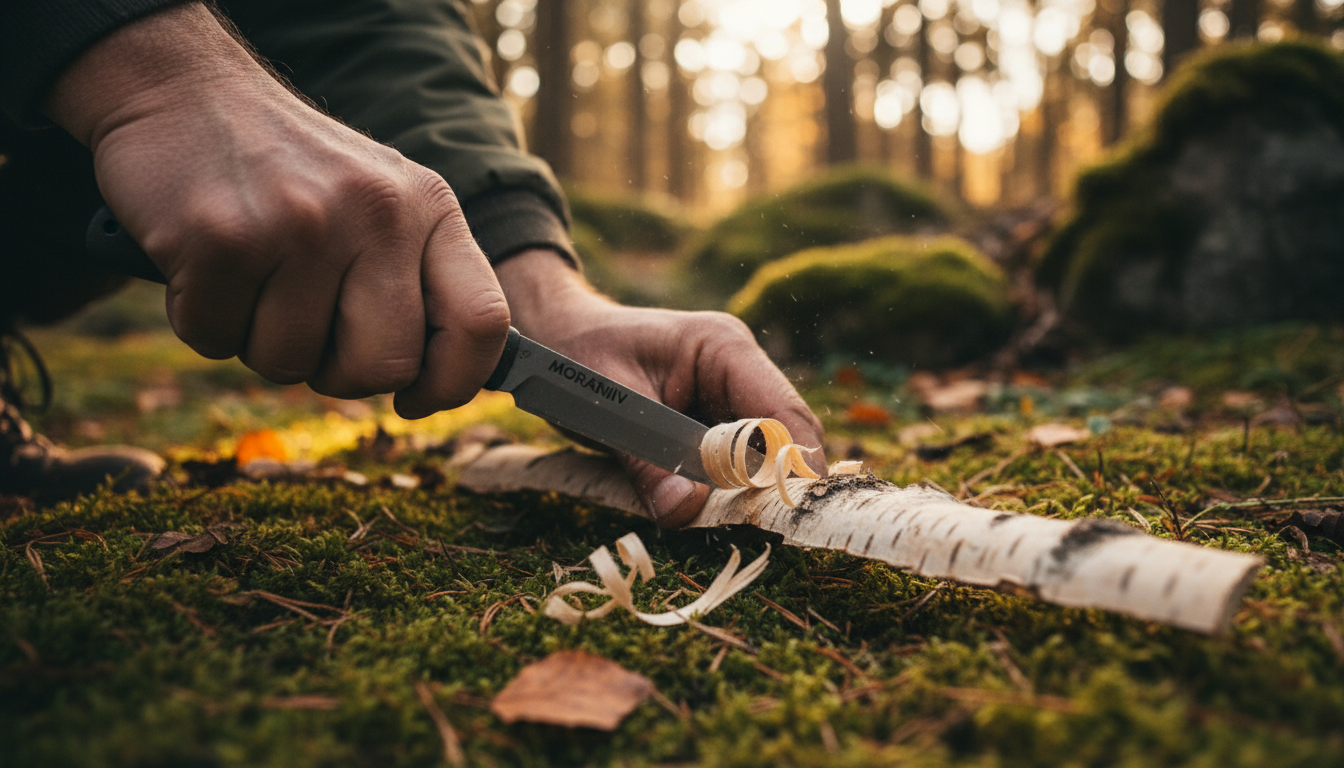
The Mora Companion — bit of a legend, this one. Swedish company that’s been at it for well over a century, and it shows. For fifteen to twenty-five quid, you’re getting a knife that outperforms stuff costing three times as much.
Comes scary sharp out the box. That Scandinavian grind means it’s dead easy to keep sharp — just lay the whole bevel flat on your stone. The rubberised handle? Brilliant. Even when your hands are freezing or covered in sap, it stays put.
Yeah, it’s not full tang. But unless you’re planning on batoning logs like you’re trying to build a log cabin, you don’t need it. For feather sticking, carving, food prep — all the stuff beginners actually do — it’s spot on. Many owners have had theirs for years and they’re still going strong.
2. Opinel No. 8 Carbon Steel
Ah, the Opinel. French classic that’s been around since Sherlock Holmes was solving crimes. There’s something properly charming about these — wooden handle, that distinctive shape, and that satisfying click when you lock it open.
Takes an absolutely wicked edge. The carbon steel is thin and keen, perfect for detailed carving work. Many beginners have done some of their best feather sticks with an Opinel. The Virobloc locking ring is clever — locks open for safety, closed for carrying.
But here’s what you need to know — that locking mechanism means it’s not legal for everyday carry. Treat it like a fixed blade, only take it when you’re heading to the woods. And the wooden handle can swell in proper wet weather. Bit of oil now and then sorts it right out.
3. Bahco Laplander Folding Saw (paid link)
Not a knife, we know. But honestly? We’d rather see a beginner with a decent saw than someone trying to baton massive logs with a small knife. Twenty-odd quid and you’ll process firewood faster and safer than any knife could manage.
Cuts through wrist-thick branches like butter. Green wood, dead wood — doesn’t matter. Folds up nice and small, locks securely, and the blade’s protected when you’re not using it. Many owners have had theirs for donkey’s years and they’re still brilliant.
Plus it’s completely legal to carry when you’re off camping or doing bushcraft. No awkward conversations with the police, no worrying about blade lengths. Just a solid tool that makes camp life easier. If you’re thinking about other cutting tools, our guide on choosing your first bushcraft axe is well worth a read.
4. Böker Plus Mini Tracker (paid link)
Right, Böker Plus. German brand, but they know what they’re doing. The Mini Tracker is 1095 high carbon steel — proper old-school bushcraft steel that takes a brilliant edge and sharpens easily in the field. Full tang construction, so you can use it hard without worrying. Kydex sheath included, which is handy.
Compact fixed blade, sits nicely in the hand. The blade shape is versatile — carving, food prep, fire prep, all sorts. That 1095 carbon steel does need a bit of attention in the damp; same routine as any carbon blade. Clean it, dry it, wipe it with oil. Thirty seconds, done.
Comes in a bit above the fifty quid mark, closer to sixty-five, but it’s a significant step up from the Mora in terms of build quality. If you’ve got the budget and want something that feels more purposeful, this is a strong option.
5. Hultafors OK4 Outdoor Knife (paid link)
Swedish brand that doesn’t get enough love, this one. Direct competitor to the Mora but with a few tricks up its sleeve. Full tang construction for starters — means you can baton smaller bits of wood without worrying.
The spine’s ground to 90 degrees, perfect for striking your ferro rod. Integrated into the sheath, which is clever. Handle’s made from Santoprene — grippy stuff that feels secure even when your hands are cold and wet.
Carbon steel blade takes a cracking edge. Needs the same care as any carbon blade — clean, dry, oil. But for twenty to thirty quid, you’re getting a proper workhorse that can take more punishment than the standard Mora.
Essential Maintenance for Your Budget Bushcraft Knife
Got your new knife? Brilliant. But here’s what most beginners don’t realise — even a budget blade will last decades if you treat it right. And in our damp climate? Proper care isn’t optional, it’s essential.
After Every Use — Clean and Dry
Sounds obvious, but you’d be amazed how many people chuck a wet knife back in its sheath. Recipe for disaster, that. Even stainless steel can pit if you leave it covered in acidic sap or food residue.
Give it a wipe down. If it’s proper mucky, warm water and washing up liquid won’t hurt it. Just make sure you dry it thoroughly — we mean bone dry. Not just a quick wipe with your t-shirt. Water gets into every nook and cranny.
Carbon Steel? Oil It
Thin film of oil makes all the difference. Food-safe mineral oil’s perfect — cheap, safe, does the job. We use the same stuff we put on our chopping boards. Just a drop on a cloth, wipe the blade, remove the excess. Takes thirty seconds.
Don’t go mad with it. You’re not trying to deep-fry the thing — just a light film to keep moisture out. We oil before any extended storage and after particularly wet trips. We learned that lesson the hard way when a first carbon blade came out of the sheath looking like it had been attacked by an orange fungus.
Storage Matters
Never, ever store a carbon steel knife in a damp leather sheath. Leather holds moisture like a sponge. If your sheath gets wet, dry it out completely before putting the knife back. For long-term storage, take the knife out entirely.
We keep ours in a dry drawer, blades lightly oiled. Some people wrap in oily rag, but we have found that’s overkill unless you’re storing for months. Just dry, clean, and lightly oiled does the trick. You could even have a go at making your own storage box as one of your first DIY bushcraft gear projects.
Related Reading
Essential UK Bushcraft Kit List: Your Ultimate Gear Guide for Beginners Your knife is just one part of your core kit. See how it fits into the bigger picture with our complete guide to essential beginner’s gear.
Choosing Your First Bushcraft Axe UK: A Beginner’s Guide to Selection & Care Ready to step up your wood processing power? Our guide to choosing your first axe is the perfect next step after mastering your knife.
Taking the Next Step
The main point is straightforward: you do not need an expensive knife to learn bushcraft well. You need a blade you can control, maintain, and use legally and responsibly for the jobs beginners face most often.
Once you have one, put it to work on the basics rather than chasing more gear. If you want a simple starting point, the Free Bushcraft Starter Checklist and the drills in our foundational bushcraft skills guide will help you practise safely and steadily.