UK Bushcraft Laws: What You Can Actually Do (And Where)
Bushcraft in the UK is less about whether you can light a fire or build a shelter, and more about whether you can do it legally, safely, and without leaving a mess behind. That means understanding access rights, knife law, local rules, and the basic ethics that stop one good spot being ruined for everyone else.
Getting started is absolutely possible, but it does demand respect for the land, the law, and other people using it. By the end of this guide, you’ll have a clearer picture of the Countryside Code, knife law basics, ethical bushcraft practice, and where a beginner can start without guessing. Learn more about our approach on the about page.
What is Bushcraft (and Why Ethics Matter)?
Bushcraft, at its heart, is the art of thriving in a natural environment with minimal modern equipment, focusing on skills, knowledge, and a deep connection with nature rather than just survival. It’s about understanding the land, its resources, and how to live harmoniously within it, rather than simply enduring hardship. In the UK, this isn’t just about learning to light a fire or build a shelter; it’s about respecting the land and its people, ensuring we can all enjoy the outdoors for generations to come.
Many people mistakenly think bushcraft is just ‘survival’, but it’s far more nuanced than that. Survival is often about getting out of a sticky situation; bushcraft is about preventing those situations by building skills and knowledge, and, crucially, about engaging with the environment in a sustainable way. The fundamental principle we always come back to is: “Take only memories, leave only footprints.” This ethos is non-negotiable in the UK, given our mix of public access rights, private land ownership, and well-used outdoor spaces. We’re a small island, and our wild places do not have much room for careless behaviour. If we all started acting like we owned the place, or left a mess behind, we’d quickly lose the precious access we have. Coming across a beautiful, secluded spot in a woodland, only to find it littered with old fire scars, plastic bottles, and discarded tent poles, is a depressingly common sight. That kind of irresponsible behaviour quickly leads to landowners restricting access for everyone. On the flip side, we have also seen groups practice bushcraft with such care and respect that you’d never know they’d been there. That’s the standard to aim for, and it’s the kind of bushcraft we are keen to encourage. If you’re looking for more practical tips on how to minimise your impact, check out our guide on responsible outdoor living in the UK.
Navigating UK Laws: What You NEED to Know
Understanding the relevant UK laws is absolutely essential for any bushcrafter, ensuring your outdoor adventures are both enjoyable and legal. It might seem a bit daunting at first, but once you get your head around a few key principles, you’ll feel much more confident.
First up, and probably the most important for general outdoor behaviour, is The Countryside Code. This isn’t a complex legal document, but a set of practical guidelines for anyone enjoying the UK countryside. It’s about respecting other visitors, protecting the natural environment, and looking after animals and plants. The main takeaways are simple: be considerate, leave no trace, keep dogs under control, plan ahead, and follow signs. It’s essentially a code of manners for the great outdoors, and it’s published by the government (you can find the full details on GOV.UK). Sticking to this code is your first line of defence against causing offence or harm.
Next, let’s talk about Land Access Rights. This is where things can get a bit fiddly in England and Wales compared to Scotland. The Countryside and Rights of Way (CRoW) Act 2000 created a ‘right to roam’ on designated ‘access land’, which includes mountains, moorland, heathland, downland, and common land. This means you generally have the right to walk, run, or climb on these areas. However, and this is crucial, it’s not a free-for-all for bushcraft activities. The CRoW Act doesn’t automatically grant rights for camping, lighting fires, or building shelters. These activities almost always require explicit permission from the landowner. It’s about ‘responsible access’ for casual recreation, not necessarily for intensive bushcraft practice. As stated by Legislation.gov.uk, the Act specifies limitations on these rights to protect the land and other users.
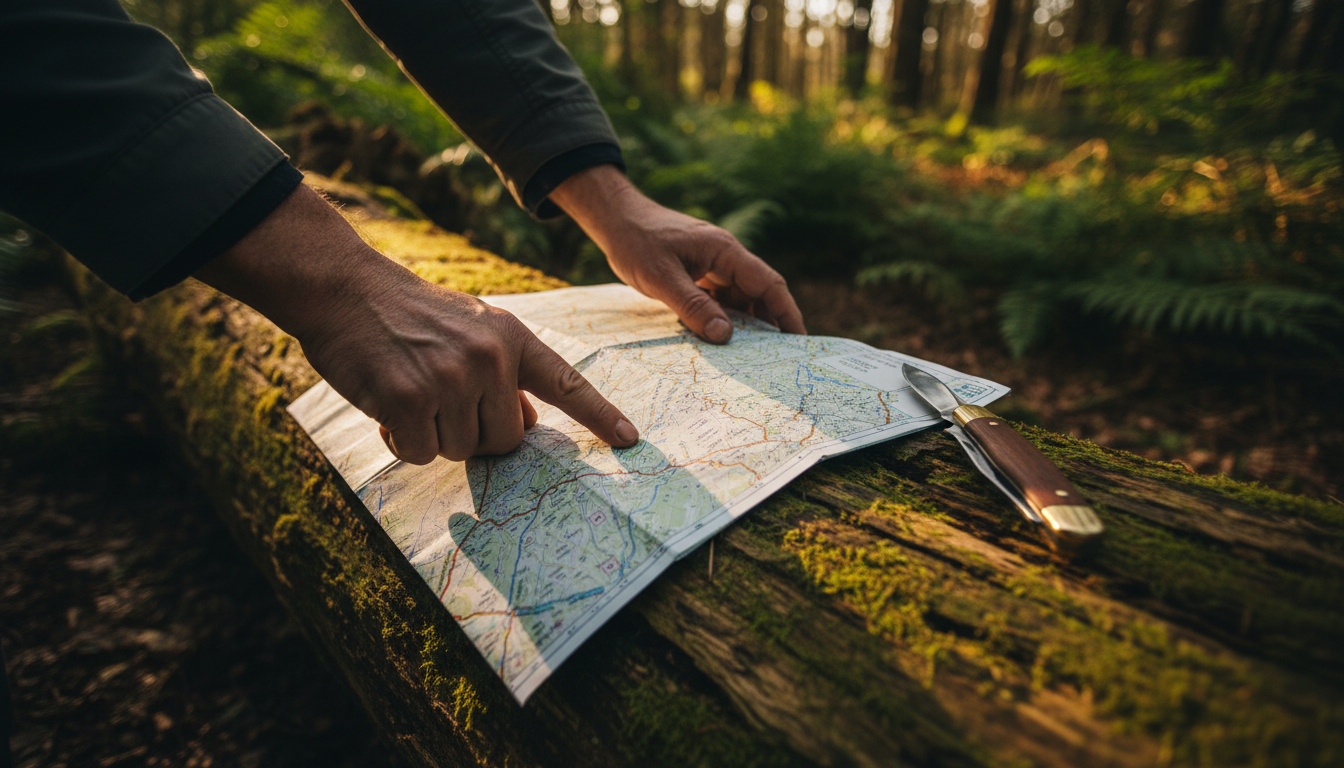
Which brings us to Trespass. Simply put, trespass is entering private land without permission. It’s generally a civil offence in England and Wales (meaning you can be sued, but not usually arrested), but it can become a criminal offence in certain circumstances, particularly if you’re causing damage or have a specific intent. The key is to know whose land you’re on. Always check maps (Ordnance Survey maps are brilliant for this, showing public rights of way and sometimes access land) and respect ‘Private Land’ or ‘No Trespassing’ signs. Accidentally wandering off a public footpath isn’t usually a huge deal if you turn around promptly, but deliberately setting up camp on private land without permission is a definite no-no and can lead to confrontation and legal issues. Many beginners have had close calls early on, thinking they were on public land only to be politely but firmly told otherwise by a farmer. It is embarrassing, but a good lesson in always double-checking those maps!
Now, for the one that causes the most confusion: UK Knife Law. This is a big one for bushcrafters, as a good knife is an essential tool. The Criminal Justice Act 1988 is the main piece of legislation here. Here’s the simplified breakdown for beginners:
- Folding Pocket Knives: It is generally legal to carry a folding pocket knife in public if the blade is under 3 inches (7.62 cm) and it does not have a locking mechanism. Think of your classic ‘Swiss Army Knife’ or a traditional penknife. You don’t need a “good reason” for carrying this type of knife.
- Other Knives (Fixed Blades, Locking Folders, Blades over 3 inches): Carrying any other type of knife in public, including fixed-blade knives (like a typical bushcraft knife), locking folding knives, or any knife with a blade over 3 inches, is illegal unless you have a “good reason.”
What constitutes a “good reason”? This is where it gets subjective, but it usually means that carrying the knife is essential for a legitimate purpose. For a bushcrafter, this could be on the way to or from a specific bushcraft course, a pre-arranged camping trip where a knife is a necessary tool, or for work purposes. However, you must be able to demonstrate this reason clearly and convincingly to a police officer if challenged. It’s not a blanket excuse to carry a fixed blade everywhere, and “I might need it” isn’t a good reason. For instance, if you are heading to a bushcraft meet-up where you know you’ll be doing carving, carry your fixed blade securely sheathed and packed in your rucksack, along with your other gear. If you are just nipping to the shops, only carry a small, non-locking folder. Keeping larger knives packed away rather than easily accessible helps show you’re transporting them for a legitimate use, not carrying them casually in public. Legislation.gov.uk outlines these specific conditions for carrying bladed articles. Always err on the side of caution.
Finally, a quick word on Fire Safety Laws. While there isn’t one single “fire law” specific to bushcraft, general regulations and local bylaws apply. Lighting fires can be restricted or even completely banned in certain areas, especially during dry spells or in designated fire-risk zones. Never assume you can light a fire anywhere. Always check local council websites, national park guidelines, and landowner permissions. Uncontrolled fires can devastate habitats and are a serious legal matter.
Here’s a quick summary of the key legal points:
- The Countryside Code: Follow it for respectful outdoor behaviour.
- Land Access: ‘Right to Roam’ on designated land is for casual access, not usually for fires, shelters, or camping without permission.
- Trespass: Avoid private land without permission.
- Knife Law: Folding, non-locking blade under 3 inches generally okay in public. Fixed blades/locking folders need a ‘good reason’.
- Fires: Always seek permission and check local restrictions.
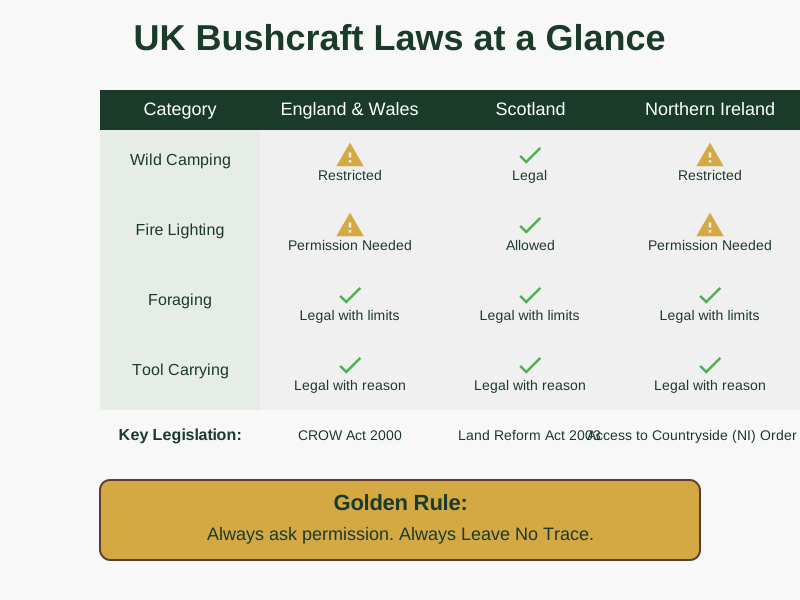
UK Bushcraft Activity Permissions at a Glance
| Activity | England & Wales (General) | Scotland (General) | Key Consideration |
|---|---|---|---|
| Walking/Hiking | Right to Roam on Access Land | Right of Access (most land) | Stick to paths, respect private property |
| Lighting Fires | Requires permission | Requires permission | Use existing pits, leave no trace, check local bans |
| Overnight Camping (Wild) | Requires permission | Generally permitted (responsible) | Away from roads/buildings, leave no trace |
| Building Shelters | Requires permission | Requires permission | Temporary, natural materials, dismantle fully |
| Carrying Fixed-Blade Knife | “Good reason” required | “Good reason” required | Securely packed for legitimate use |
| Foraging | Requires permission for most | Right to gather for personal use | Know your plants, leave plenty for wildlife |
The Bushcrafter’s Ethical Compass: Leave No Trace & Beyond
Beyond the letter of the law, a true bushcrafter operates with a strong ethical compass, guided primarily by the Leave No Trace (LNT) principles. These are a set of seven guidelines designed to help us minimise our impact on the environment, ensuring that wild places remain wild for everyone. Embracing these principles isn’t just a suggestion; it’s fundamental to responsible bushcraft practice in the UK. The Leave No Trace UK organisation provides excellent resources on these principles.
Let’s break down each principle with a practical UK bushcraft application:
- Plan Ahead & Prepare: This is absolutely essential, especially with our notoriously unpredictable British weather! Before you even leave the house, research your chosen location, understand the local regulations (are fires allowed? Can you put up a tarp?), check the weather forecast, and pack appropriate gear for all conditions. Having a well-thought-out plan means you’re less likely to get into trouble or cause an unnecessary impact. Getting caught out by a sudden downpour because you skimped on packing waterproofs leads to a miserable and potentially unsafe situation.
- Travel & Camp on Durable Surfaces: Stick to existing paths, tracks, and designated campsites. Avoid trampling vegetation or creating new trails. When you’re looking for a spot to set up a temporary shelter or have a brew, choose an area that’s already bare or solid, like compacted earth or gravel, rather than delicate moss or young plants. This minimises erosion and damage to sensitive ecosystems.
- Dispose of Waste Properly: This means “pack it in, pack it out” – every single bit of it. That includes food scraps (even an apple core takes ages to break down and can attract wildlife to an unnatural food source), toilet paper, and any packaging. If you need to go to the toilet, dig a small ‘cat hole’ at least 60 metres (200 feet) from water sources, paths, and camps, and bury your waste. This is basic respect for the environment and other visitors.
- Leave What You Find: Admire natural objects and historical artefacts, but leave them exactly where they are. Don’t take rocks, plants, or antlers, and definitely don’t disturb archaeological sites. The next person deserves to experience the same pristine environment you did. This also applies to deadwood – while you might be tempted to gather every fallen branch for your fire, remember that deadwood is a vital habitat for countless insects, fungi, and small creatures in the UK’s delicate woodland ecosystems.
- Minimise Campfire Impacts: This is a big one for bushcrafters, as fire is often central to our activities. Ethical fire-lighting in the UK means using existing fire pits where possible, keeping fires small, and ensuring they are completely extinguished – never leave a smouldering ember. Use only dead and fallen wood that can be broken by hand, and avoid cutting live trees or branches. If no fire pit exists and you have permission, create a small, contained fire on a durable surface, ideally on bare earth or a purpose-built fire tray, and scatter the ashes widely and discreetly once cold. Many beginners think they have fully extinguished a fire, only to return hours later and find a faint wisp of smoke still rising. It teaches a real lesson about checking, double-checking, and then adding more water.
- Respect Wildlife: Observe animals from a distance and never disturb them, especially during sensitive times like breeding or nesting seasons. Avoid feeding wildlife, as it can alter their natural behaviour and make them dependent on human handouts. Keep noise levels down to avoid startling animals.
- Be Considerate of Other Visitors: We share the outdoors with walkers, cyclists, horse riders, and other nature enthusiasts. Be polite, keep noise to a minimum, and yield to others on trails. Bushcraft is often a quiet, contemplative pursuit, and respecting others’ peace is part of that.
Beyond LNT, there are other ethical considerations:
- Responsible Foraging: While foraging for wild edibles is a fantastic bushcraft skill, it comes with strict ethical rules. Only ever take what you can identify with complete confidence, what’s abundant, and what you have explicit permission for. Never strip an area bare, and always leave plenty for wildlife and for the plant to recover. If in doubt, leave it out.
- Shelter Building Ethics: Any shelters you build should be temporary and low-impact. This means using only natural, fallen materials, causing no lasting damage to trees or the ground, and ideally, dismantling it completely before you leave, leaving zero trace.
- Fire Starting Ethics: As mentioned, use only deadwood, prepare your fire site properly, contain your fire, keep it small, and ensure it’s completely out and cold to the touch before you leave.
Here’s a quick LNT checklist for your next trip:
- Before you go: Have you checked local rules on fires/camping? Is your gear suitable for the weather?
- On the trail: Are you sticking to paths? Are you packing out all rubbish?
- At camp: Is your fire small and contained? Is it on a durable surface? Is your shelter temporary?
- Before you leave: Is your fire completely out and cold? Is all your rubbish gone? Have you left the area looking untouched?
Finding Your Spot: Beginner-Friendly UK Locations & Access
One of the biggest hurdles for new bushcrafters in the UK is simply knowing where you can actually go to practice your skills legally and ethically. It’s not always as straightforward as just heading into the nearest woods, but with a bit of research, you’ll find plenty of opportunities.
First, let’s reiterate about Access Land. As we discussed, the CRoW Act gives you the right to walk, run, and enjoy certain open areas like moorland and mountains. However, this doesn’t automatically grant you permission for bushcraft activities like setting up camp, building fires, or felling trees (even dead ones). Always assume you need separate permission for these specific activities unless explicitly stated otherwise.
So, where can a beginner start? Here are some types of suitable locations:
- Designated Campsites: Honestly, for your very first fire lighting or shelter building practice, a designated campsite that permits fires is your safest and easiest bet. Many private campsites are set up precisely for this, offering a legal and controlled environment. You can often practice basic skills without worrying about trespass or fire regulations. Some even have specific bushcraft-friendly areas.
- Permissive Paths and Open Access Land (with caveats): You can often find permissive paths (where landowners have granted public access) and open access land marked on Ordnance Survey (OS) maps. These maps are an absolute treasure trove for identifying public rights of way and open access areas. Look for the yellow diamonds for footpaths, purple dashes for permissive paths, and shaded areas for open access land. Remember, even on open access land, specific bushcraft activities like fires or overnight stays often require landowner permission. Don’t be afraid to try and contact landowners (often through local councils or estate offices) to ask for permission – a polite request can go a long way. If you have any questions about how to approach this, feel free to get in touch.
- Woodland Trusts / National Trust (with caveats): Organisations like the Woodland Trust and the National Trust manage vast areas of beautiful countryside and woodland across the UK. Their primary goal is conservation and public access. It’s crucial to check their specific access policies for each site, as they vary wildly. Some might permit supervised bushcraft activities or allow temporary shelters, while others will have strict ’no fire’ or ’no camping’ rules. Never assume; always check their websites or contact the local ranger.
- Wild Camping Considerations: This is a hot topic! In Scotland, you generally have a right to wild camp under the Scottish Outdoor Access Code, provided you do so responsibly, away from roads, buildings, and enclosed fields, and leave no trace. This means small groups, temporary stays, and absolutely no fires unless you have explicit permission or are on a designated site. In England and Wales, wild camping is generally not a right and almost always requires landowner permission. There are a few historical exceptions, like Dartmoor, but even there, rules can change, so always check. If you want to wild camp in England or Wales, your best bet is to find a landowner willing to grant permission.
When looking for specific beginner location types, without naming exact private spots (as these change and require specific permission):
- Large Public Forests: Places like the Forest of Dean, Grizedale Forest, or parts of Thetford Forest are managed by Forestry England (or similar bodies in Scotland/Wales). They often have designated walking trails, visitor centres, and sometimes specific areas where certain activities are permitted. Always check the specific site rules before you go, as general forestry rules might not apply to every activity.
- National Parks: The UK’s National Parks (like the Lake District, Peak District, Brecon Beacons) offer stunning landscapes. However, they are also highly protected and often have strict bylaws regarding fires, camping, and environmental impact. Research the specific park and area you intend to visit thoroughly.
- Areas with Established Public Footpaths and Open Access Land: Use your OS maps to find these. While you might not be able to build a fire, you can certainly practice navigation, natural observation, foraging identification (without harvesting), and even some knot-tying or basic shelter theory in these areas, all while staying within the law.
What to Avoid: Always steer clear of private farmland (especially with livestock), areas with clear ‘No Trespassing’ signs, sensitive nature reserves, and any land where you don’t have explicit permission. Respecting these boundaries is key to maintaining good relationships with landowners and ensuring continued access for everyone. Many beginners spend hours poring over OS maps, looking for those green-shaded access areas and public footpaths, cross-referencing with local council websites for any specific bylaws. It can feel like detective work, but finding a quiet, legal corner of a public forest where you can responsibly practice a bit of fire lighting brings an immense sense of accomplishment. The research pays off!
Common Beginner Mistakes & How to Avoid Them
It’s completely normal to make a few blunders when you’re starting out. Being aware of common beginner mistakes can save you a lot of hassle and ensure your bushcraft journey starts on the right foot.
The most common beginner mistake is assuming all open land is yours to use freely; understanding access rights and landowner permissions is crucial. Many newcomers confuse ‘wild camping’ with ‘bushcraft camping’ – thinking they can just pitch up anywhere and light a fire. Remember, permission is almost always needed in England and Wales for overnight stays or fires. Another frequent error is overestimating what’s legal regarding fires and shelters on public land. Unless explicitly stated or permitted, fires and permanent-looking shelters are generally not allowed. We know of someone who once got a stern talking-to from a ranger for building a rather elaborate lean-to in a public woodland, thinking it was just ‘practising skills’. They quickly learned the difference between temporary, leave-no-trace practice and something that looked like a permanent structure.
Carrying inappropriate knives or not understanding the law is another big one. Always default to a legal-to-carry folding, non-locking knife unless you have a specific, justifiable reason for a fixed blade, and even then, carry it discreetly and safely. Leaving traces, whether it’s food scraps, toilet paper, or fire scars, is a fundamental ethical breach that can lead to access restrictions. And finally, not preparing for the UK weather – leading to poor decisions and potentially unsafe situations – is a classic. Always pack for all four seasons, even in summer! Foraging without absolute certainty about what you’re picking is also a risky game – when in doubt, don’t eat it.
How To Responsibly Research a Bushcraft Location
Getting out there is the goal, but making sure you’re in the right place, doing the right thing, is critical. Here’s how we’d suggest you approach finding your next bushcraft spot responsibly.
- Grab Your Maps: Start with a good Ordnance Survey (OS) map – a 1:25,000 Explorer map is brilliant for detail in the UK. These maps clearly show public rights of way, open access land (shaded green), and often indicate private land boundaries. Get familiar with the symbols; they’re your secret weapon for legal access.
- Check for Access Land & Rights of Way: Look for the yellow diamonds (public footpaths), purple dashes (permissive paths), and those green-shaded areas for ‘open access land’. Remember, while you can walk on open access land, specific bushcraft activities like fires or overnight stays usually require extra permission. It’s about knowing your limits.
- Consult Local Authorities & Websites: Once you’ve got a potential area in mind, head to the local council or national park website for that specific area. They’ll often have detailed bylaws and specific rules regarding fires, camping, and other activities. This step is crucial for avoiding any unintentional run-ins with the rules.
- Consider Permissive Access & Bushcraft Courses: Many private woodlands, often managed for conservation or recreation, offer permissive access for bushcraft groups or organised courses. This can be a fantastic way to learn and practice skills legally, often with expert guidance. Sometimes, reaching out politely to a landowner can also open doors to private land access for responsible practice.
Sources & Further Reading
- GOV.UK (for Countryside Code and general UK law)
- Legislation.gov.uk (for specific Acts like CRoW and Criminal Justice Act)
- Leave No Trace UK (for ethical outdoor principles)
- Scottish Outdoor Access Code (for access rights in Scotland)
- Ordnance Survey (for mapping and land access information)
Note: This article covers general principles and tips, so always adapt advice to your own experience and conditions. For advice specific to your situation, get in touch.
Frequently Asked Questions
Can I legally camp anywhere in the UK?
No, not as a general rule. Scotland is the main exception, where responsible wild camping is usually allowed on most unenclosed land under the Scottish Outdoor Access Code. In England and Wales, assume you need permission unless a site or land manager says otherwise.
What’s the simplest way to legally practice bushcraft skills like fire lighting?
The simplest route is a campsite or training site that already allows fires. That gives you a controlled setup, clear rules, and none of the uncertainty around trespass or local bans. If you have access to private land, get the owner’s permission first and treat that as the minimum requirement, not a nice extra.
Is it illegal to carry a fixed-blade knife in the woods?
Not automatically, but you do need a clear good reason for carrying one in public. For most everyday situations, stick to a non-locking folding knife under 3 inches and leave the fixed blade packed away for specific trips, courses, or work where you can justify it. If you could not explain the reason calmly and clearly, do not carry it.
What if I accidentally trespass? What should I do?
Leave promptly and without arguing. If you speak to the landowner or manager, be polite, admit the mistake, and move on straight away. The worst response is to dig in and turn a simple error into a confrontation.
How can I be sure I’m not harming the environment when I practice bushcraft?
Use Leave No Trace as your checklist before, during, and after every trip. Ask yourself simple questions: am I standing on a durable surface, am I leaving any trace of fire or shelter work, and would the next person know I have been here? If the answer to that last one is yes, you have more tidying up to do.
Taking Your Next Steps Responsibly
The core message is simple: in the UK, good bushcraft starts long before you arrive on site. If you know the access rules, understand what needs permission, and keep your impact low, you avoid most beginner mistakes before they happen.
Start small, research properly, and practise where the rules are clear. If you’re keen to get started on the right foot, We have put together a handy checklist to help you prepare for your first bushcraft adventure, ensuring you’ve covered all your bases before heading out. And you can always find more in-depth guides and personal stories on the Bushcraft Base blog.
Keep the key laws and access rights to hand — download the free UK Land Access & Wild Camping Reference.