UK Firecraft: Mastering Fire Lighting Tools for Damp Conditions
As an Amazon Associate we earn from qualifying purchases. This page contains affiliate links — if you buy through them, we earn a small commission at no extra cost to you.
The spark dies, the lighter clicks, and the blame lands on the tool. In damp British woodland the tool is usually the wrong diagnosis.
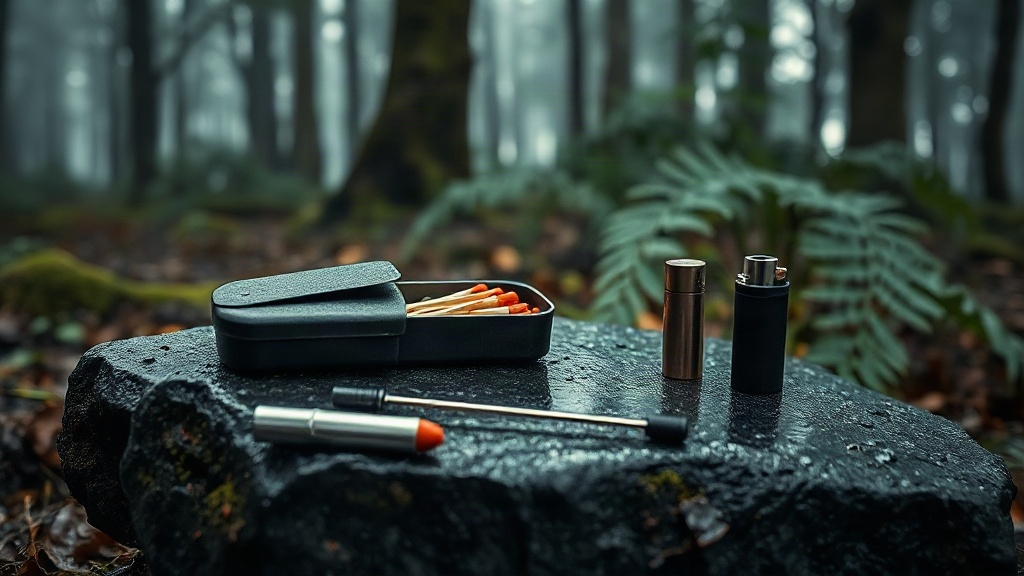
Carry three different failures, not one “best” fire starter. A butane lighter is the one you use in shelter, until the flint wheel is wet. Waterproof matches give a flame with no practice, until the striking strip is damp. A ferro rod still throws sparks when the rod itself is wet, until your hand slides or the tinder is wet. None of them lights wet fibres. The heat of the spark goes into driving water out of the material before those fibres can catch. Light a fire only where you are allowed to. This page is the tool choice. It is not a method for starting one.
The path from a nest of tinder to a flame that will take kindling is the beginner firecraft guide . How that flame is kept going, once it has caught, is UK Firecraft Skills: Spark to Sustained Flame . What follows is why each tool quits, and which quit you are actually looking at.
Three different ways the start fails
A flame and a spark fail for different reasons, and buying a dearer version of the thing that just failed does not change the reason.
A lighter burns gas. The flame is small, and wind puts it out. Many everyday lighters, including the Clipper below, make the spark with a flint wheel. Water on that wheel cuts the friction, the wheel skids, and you get a click and no spark. Drying the wheel is a different job from drying the tinder.
Waterproof matches move the problem off the head and onto the strip. The head can be coated so rain does not kill it. The strip on the packet still has to be dry, or the head has nothing to strike against. A pocket full of sound matches and a soggy packet is a kit that looks complete and is not.
A ferro rod does not burn gas and does not need a strip. Scraping it shaves off particles that arrive as sparks. Rain on the rod does not blow those particles out the way wind blows a flame out. Light My Fire’s own page for the Swedish FireSteel Army says the rod is waterproof and works when wet and windy, quotes sparks at 2,980°C, and rates it for up to 12,000 strikes. That is a claim about the rod. It is not a claim that the tinder under it is dry. A spark that hot still lands on fibres. If those fibres are wet, the heat is spent on the water. The rod did its job. The tinder did not.
So the useful question is which part got wet: the wheel, the strip, the hand, or the fibres.
Matches, when you want a flame and no practice
Matches earn their place as the backup you can hand to someone who has never used a fire steel. Open the case, strike, get a flame. That is the whole skill. They are single-use, and a box is a short supply once the kindling is fighting you.
A box of Lifesystems Stormproof Waterproof and Windproof Matches (paid link) is that backup, not a season’s supply. The matches are the easy half. Storage is where people lose them. Cardboard and a twist of foil are not a seal. A Waterproof Match Case, Metal Airtight (paid link) is a small sealed metal tin for a jacket pocket. The striking surface still has to come off the match packet and go in the tin with the matches. Leave the strip in the rucksack and the tin has only done half the job.
Check Waterproof Match Case, Metal Airtight price → (paid link)
Our matches and lighter guide is the split: carry both, because each covers the way the other dies. A lighter until the flint wheel is wet. Matches until the strip is wet. A ferro rod as the one that still sparks when both of those have had it, provided the tinder is actually dry.
If the fire is for cooking as well, the cooking kit guide is the pots and the setup. The ignition tool does not change because you intend to cook.
The rod still sparks. The tinder still has to be dry
For someone lighting fires often, a ferro rod is the tool that does not run out of fuel and does not depend on a dry strip. The Light My Fire FireSteel Army, Rusty Orange (paid link) is the Army model. On Light My Fire’s Army page the figures are sparks at 2,980°C and up to 12,000 strikes, and the rod is sold as waterproof, working when wet and windy. Use those as the maker’s numbers for that model. Do not stretch them into “it lights wet tinder”. A particle at that temperature is still a particle. Wet fibres swallow it.
Buy Light My Fire FireSteel Army, Rusty Orange on Amazon → (paid link)
The catch is the hand, not the weather report. Wet skin lets the scraper slide along the rod instead of shaving it, so you get a thin scatter or nothing. Our ferro rod guide puts the fix in that order: dry the striking hand on a sleeve or a rag before you scrape, and when the hands stay wet, pin the striker and pull the rod back rather than pushing a wet scraper down the rod. A worn, rounded scraper slides for the same reason a wet finger slides. That is maintenance. It is not a way to set fire to damp grass.
What the rod is aimed at matters more than the rod. Our tinder bundle guide is the structure: a fine, dry core the spark can land in, and a coarser outer layer that sheds rain off that core. A loose pile of grass that looks dry and feels cool is wet enough to waste the spark. Char cloth is a poor plan for a first fire in the wet, because you need a fire to make it.
The rod, the matches and the strip all die if they live loose in the rucksack. Our dry kit guide is blunt about the container: a sealable freezer bag or a tin with a real seal does the job. A purpose-made fire pouch adds pockets. It does not add a better law of moisture. What goes in the bag is in the fire lighting kit guide .
Download the Free Bushcraft Starter Checklist if you want that kit on one page before you pack.
A lighter belongs in shelter
A lighter is the lowest-skill flame there is, and the first one the weather takes. Wind puts the flame out. Rain on a flint wheel stops the spark. Cupping it with a hand works in a light breeze at the edge of a wood. It does not work in sideways rain.
The Clipper Mystery Refillable Lighters, 8 Pack (paid link) is the refillable, metal-bodied version: you can replace the gas and the flint. That is why it suits someone who uses a lighter at home or in a sheltered camp. It is a flint wheel. Keep that wheel dry, in the same sealed bag as the matches, or it fails in the same way as any other wheel. Once the weather is on you, the rod is the tool that still sparks.
Buy Clipper Mystery Refillable Lighters, 8 Pack on Amazon → (paid link)
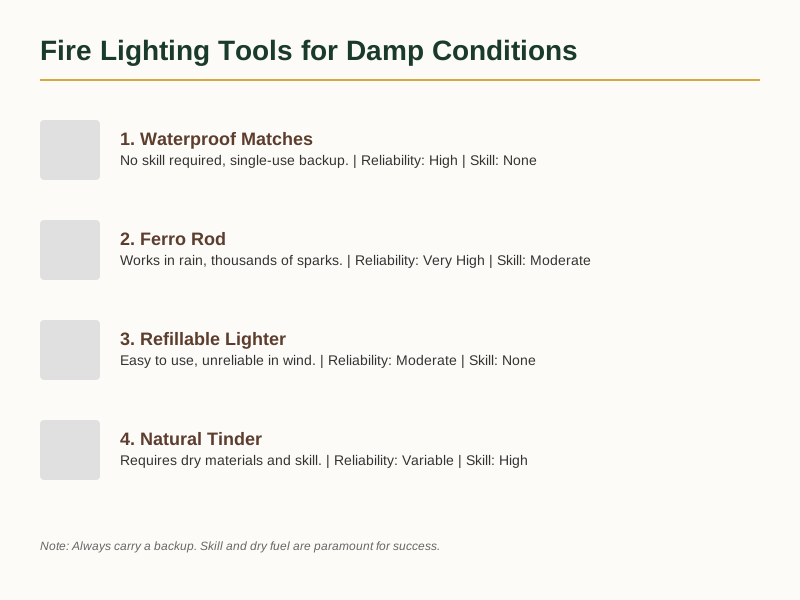
Skip the idea that one tool covers a British year. A lighter for shelter and for practice at home. Matches in a sealed tin, strip included, for the trip where nobody has practised. A ferro rod for the day both of those are wet. Natural tinder is the backup you prepare before you are cold, not the thing you hunt for once you already are. Our kindling guide is why a wet stick can still hide drier wood inside. It is not a reason to treat the woodland floor as a shop.
What to carry for the trip you are actually on
| Trip | Carry | Why it fails |
|---|---|---|
| A course, or once or twice a year | Waterproof matches in a sealed tin, strip inside, plus a lighter | The strip, not the match head |
| Regular woodland days | Ferro rod as the one that still sparks when wet, matches as the no-practice flame | A wet hand, or wet tinder |
| Shelter, garden, inside a tarp | Refillable lighter | Wind, and a wet flint wheel |
The tool does not pick the fuel. Dry, fine material first. Then a flame or a spark aimed at that material. Then kindling that is not a wet sponge piled on top. A rod rated for 12,000 strikes is wasted on a handful of damp grass.
📺 Watch: Wet woodland, a fire steel, and a pile of damp sticks that never got a chance
Before you pack the tin
Decide from the failure, not from the brand. If you only need a flame a couple of times a year, the matches and the sealed tin are the honest kit, and the strip goes in the tin. If you light fires often, the Army rod is the one that still sparks in the wet, and you still owe it dry tinder and a dry striking hand. The lighter stays for shelter.
Whatever you settle on, the rest of the kit has to match it. A flame you fought for in the rain goes out again if the next wood is wet. Download the Free Bushcraft Starter Checklist and check what is actually in the bag.
Explore More Topics
Quick answers:
Go deeper on specific topics:
- Ferro Rod Technique for Wet Hands
- Waterproof Matches vs Lighter in Damp UK Conditions
- Build a Tinder Bundle That Catches in Rain UK
- Keep Fire Lighting Kit Dry in UK Woodland
Sources & Further Reading
- Light My Fire, Swedish FireSteel Army 2in1 — sparks at 2,980°C, up to 12,000 strikes, waterproof and works when wet and windy.
As an Amazon Associate we earn from qualifying purchases. The products linked above are ones we think are worth a look.
Note: This guide provides general bushcraft advice. Always verify local regulations and safety procedures before lighting fires outdoors.