Keep Fire Lighting Kit Dry in UK Woodland
As an Amazon Associate we earn from qualifying purchases. Some links on this page are affiliate links, which means we may earn a small commission if you make a purchase.
A waterproof bag or pouch is the cheapest piece of kit you’ll carry. It’s also the one every other tool depends on.
UK woodland’s damp air and wet ground mean your fire-starting gear can fail before you strike a spark. Even when it’s not raining, persistent humidity settles into everything over a day or two outdoors. Your matches might be dry one moment and useless the next.
This isn’t about buying expensive specialist gear. The solution lies in understanding what actually keeps moisture out and building your kit around that principle.
Moisture: The Real Challenge in UK Woodland
Beyond obvious rain, ambient dampness is the hidden problem most beginners encounter. Your kit might avoid raindrops entirely yet still absorb enough moisture to fail when needed.
📺 Watch: Skinning Sticks Method Works! | Red Branch Bushcraft
Ignition sources commonly used by beginners are surprisingly vulnerable in these conditions. A standard lighter’s flint wheel exposes its mechanism the moment opened, while ordinary matches become unreliable once their heads absorb moisture. You’ll waste time coaxing flame from what’s essentially wet cardboard.
Even the best fire-starting setup fails with damp tinder. Out in the open, damp tinder won’t catch a spark regardless of your ferro rod’s quality.
For cooking as well as fire lighting, the principle holds: fire is the foundation. Keeping your kit dry isn’t optional—it’s the prerequisite.
Choosing Your Container: Practical Options
Waterproof fire pouches work, but so do inexpensive freezer bags. The mechanism is identical: no air movement means no moisture ingress.
Containers with proper silicone O-ring seals—like those rated IP67—give protection well beyond typical woodland dampness. A double-sealed freezer bag creates an airtight closure that offers similar short-term protection.
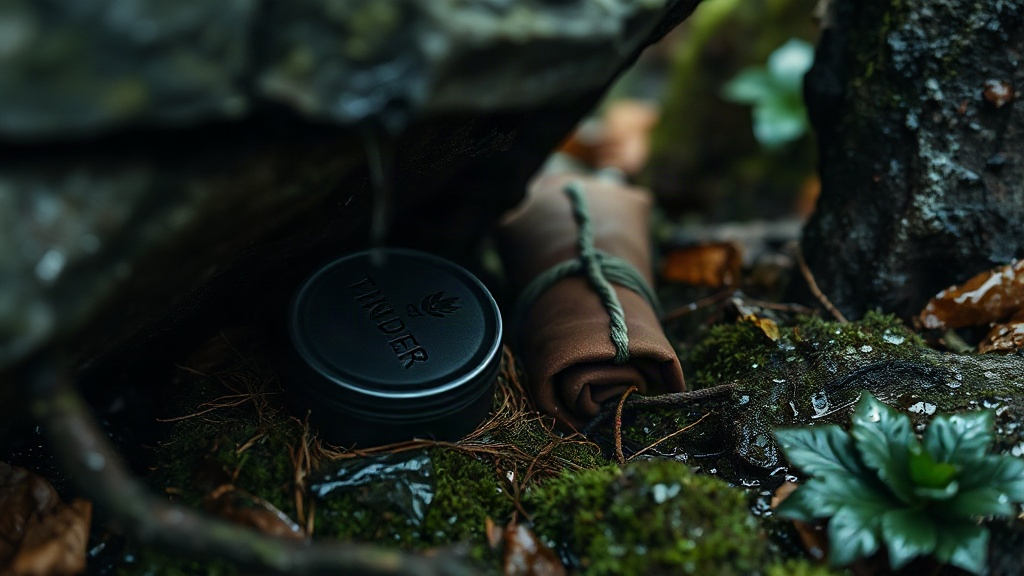
While dedicated cases provide positive sealing, a rigid tobacco tin with a press-fit lid can serve reasonably well for everyday dampness if you already have one. The seal isn’t as reliable as dedicated waterproof cases, but it’s been used in bushcraft kits for decades.
Premium fire pouches often add organisational dividers and sometimes built-in strikers. This convenience is useful if you want everything in one place, but you’re not getting additional moisture protection for the higher price—just better organisation.
The core principle: You need an airtight system, not necessarily a waterproof one. Both sealed bags and cases with silicone O-rings stop moisture reaching your kit.
Ignition Options: Understanding the Trade-offs
With dry kit secured, you need reliable ignition. Ferro rods produce sparks that work regardless of damp air since they create ignition from compressed metal rather than moisture-sensitive chemistry.
Lighters offer immediate convenience with no technique required, making them ideal for beginners. However, they struggle in windy conditions where flames blow out easily.
The practical approach isn’t choosing one over the other but recognising their complementary roles. A lighter serves well for learning and convenience, while a ferro rod provides reliable backup when conditions deteriorate.
Tinder Choices and Storage
Your ignition source needs something dry to catch. Birch bark’s natural oils provide some water resistance, while char cloth—cotton or linen charred in a tin—ignites from sparks and holds embers well. Cotton wool pads coated in petroleum jelly offer a reliable DIY option that burns hot enough to ignite damp kindling.
Some users include hand sanitiser as an improvised option—its high-alcohol content makes it flammable, though it’s not a primary solution. Alcohol-based hand sanitizers are flammable due to their alcohol content.
Whatever tinder you choose, store it sealed with your ignition source. Separated storage risks having a working ignition source with nothing dry to catch.
Assembling Your Dry Kit
Aim for a sealed container holding ignition source and tinder, kept off the ground with airflow to reduce condensation. Here’s what you need:
- Dry container — sealed freezer bag or Waterproof Match Case, Metal Airtight (paid link)
Check Waterproof Match Case, Metal Airtight price → (paid link)
- Primary ignition — lighter or ferro rod
- Backup ignition — the alternative to your primary choice
- Tinder — stored inside the container
- Proper storage — keep the kit off the ground in a dry location
Storage location matters as much as the container itself. An airtight bag in a soaked outer pocket will eventually equilibrate with surrounding moisture. Keep your dry kit where water won’t pool—inside your rucksack’s main compartment or under shelter.
Download the Free Bushcraft Starter Checklist to audit your current kit and identify potential gaps.
Common Questions Answered
What’s the minimum protection for fire kit storage?
While a standard plastic bag offers some protection, a freezer bag with a proper double seal provides significantly better moisture exclusion. The seal is crucial—without it, air and moisture gradually penetrate over time.
Should I choose ferro rod or lighter?
Carry both. Use the lighter for learning and convenience, keeping the ferro rod as backup for challenging conditions. Each has strengths that complement the other’s weaknesses.
How can I make reliable fire starters?
Work petroleum jelly into cotton wool pads until saturated, or dip them in melted candle wax. Both versions burn hot enough to ignite damp kindling and store well in sealed containers.
Where’s the best place to store fire kit outdoors?
Keep it off the ground under cover with airflow to reduce condensation. Your rucksack’s main compartment typically offers better protection than external pockets that can fill with rain.
Container Comparison
| Container Type | Moisture Protection | Cost | Pros | Cons |
|---|---|---|---|---|
| Dedicated Waterproof Case | High (IP67) | Modest | Rigid, positive seal | Stiff lid in cold weather |
| Freezer Bag (Double Sealed) | High (Short term) | Budget | Cheap, flexible | Not rigid, seal can fail |
| Tobacco Tin | Moderate | Free (if owned) | Rigid, durable | Less reliable seal |
| Premium Fire Pouch | High | Premium | Organised, includes striker | Higher cost for convenience |
Your Dry Kit Investment
The dry kit is the one investment that makes every other skill in this series possible. A sealed freezer bag provides moisture protection comparable to premium pouches, while a Waterproof Match Case, Metal Airtight (paid link) offers reliable containment.
What matters most is developing the habit of keeping your kit sealed before you need it. Discovering damp matches when you’re wet and trying to start a fire is when you least want troubleshooting surprises.
Get your container sorted and the habit established, and you’ve eliminated the most common reason fires fail before they start.
Use the checklist below as your pre-trip kit-audit sheet to ensure everything’s covered—container, ignition sources, tinder, and storage practices.
Download the Free Bushcraft Starter Checklist —working through it properly before your next trip saves frustration in the field.
Further Guidance
For complementary tool selection, see UK Firecraft: Mastering Fire Lighting Tools for Damp Conditions .
References
As an Amazon Associate we earn from qualifying purchases. The kit linked above is gear we think is worth a look.
Note: General guidance only, verify details with a qualified professional or official source.