How to Prepare Kindling from Wet Wood UK
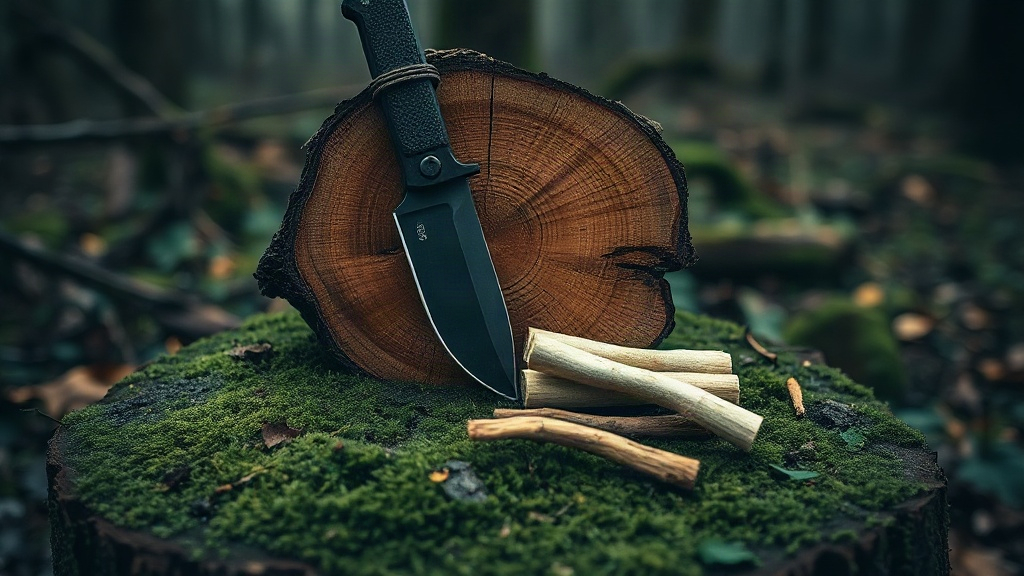
Wood only becomes reliably combustible when its moisture content drops below 25%. After two days of typical UK rain, surface moisture on fallen wood often exceeds 40%, creating a barrier that sparks cannot penetrate. The solution isn’t finding drier wood, but accessing the dry core that rain hasn’t yet reached.
Online advice to “find dry wood” is practically useless in British woodland, where dead standing wood is damp on the outside and fallen wood is often saturated throughout. The real skill is creating dry kindling from wet materials by splitting logs to expose their untouched heartwood.
This technique requires no special tools and works reliably even in December rains. It’s the method to reach for before your lighter.
Why Wet Wood Fails to Ignite
UK woodland is frequently damp, even in summer. Morning dew or overnight showers leave exposed surfaces wet, and dead wood that appears promising is often saturated on its exterior. This consistently trips up beginners who hunt for mythical dry twigs that snap cleanly. The reality is that surfaces in a UK wood are damp by default.
📺 Watch: Master the Art of Starting a Fire with Wet Wood
Understanding the progression from tinder to fuel is crucial. Tinder catches the spark, kindling transfers the flame, and fuel wood sustains the fire. The failure point is usually wet kindling—small twigs that smoulder briefly before dying. The core premise here is to stop searching for dry twigs and instead split wet logs to use the dry heartwood inside as your kindling source.
Accessing Dry Heartwood Through Splitting
Instead of searching for dry material, create it by force. Moisture penetrates wood radially from the bark inward. A log sitting in rain absorbs water slowly through its surface, while the heartwood at the centre remains dry for a considerable time. Splitting it open exposes this dry core immediately.
In practice, splitting a wet branch reveals dry heartwood that rain hasn’t reached. This provides usable kindling that catches sparks reliably and establishes your fire.
The Batoning Technique
You need only a sturdy locking knife or small hatchet. The technique involves using a hardwood baton to strike the knife spine, driving it through the log.
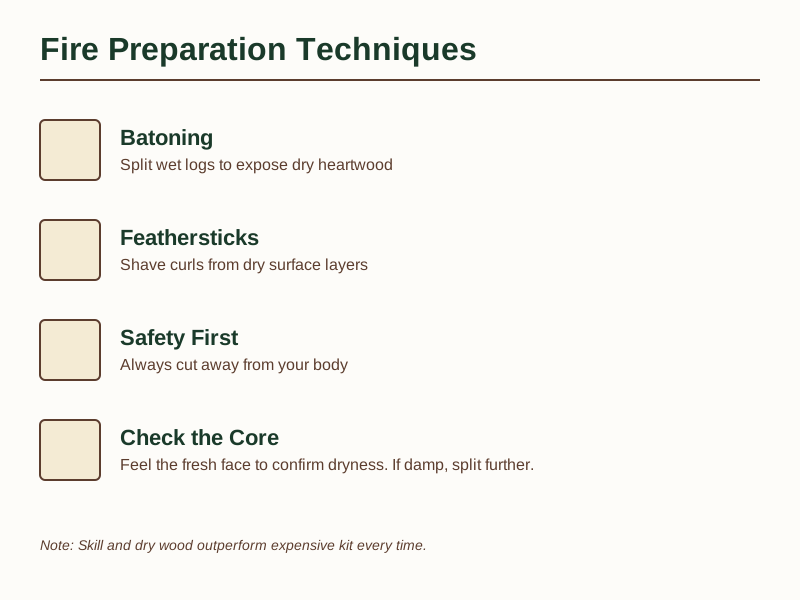
Place the log on a stable surface like a stump. Set your knife spine-down on the log and hold the handle firmly. Strike the spine with controlled blows, working across the log in a straight line. When the blade passes through, twist it slightly to lever the log open.
The result is two halves with exposed dry heartwood faces. Split these further or break off shavings from the dry face for kindling. These fragments ignite readily and provide a reliable column of dry material.
Wood Selection and Safety
Most common UK species work well—birch splits easily and burns hot, while oak provides consistently dry heartwood even in large rounds. If unsure, split and feel the fresh face; if dry, it’s usable.
Safety is paramount with sharp blades and impact forces:
- Cut away from your body
- Ensure no one is in the baton’s strike arc
- Use a locking knife or fixed blade only
- Have a first aid kit accessible
Carrying a first aid kit is strongly recommended when using cutting tools. On managed land, batoning is standard practice; on public ground, carry only appropriate knives and use them sensibly.
When Feathersticks Work Better
Feathersticks offer an alternative approach—shaving thin curls from a wood surface, leaving them attached. This works best when the surface is partially dry, such as wood under a canopy or sheltered from direct rain.
To make one: hold a thumb-thick piece stable and use a sharp knife to shave diagonal cuts, creating fine curls that stay attached. A sharp blade is essential—dull blades crush rather than cut.
Feathersticks excel when you have partially dry surface wood and limited tools. However, when everything is genuinely soaked, splitting wet logs remains the only reliable method for accessing dry fuel. These methods are context-dependent tools, not competitors.
Legal and Safety Framework
Fire in the UK countryside requires landowner permission and awareness of conditions. Never light fires on open heathland, peat, or during fire bans. You remain responsible for any consequences.
UK knife law permits carrying non-locking folding blades with blades under 3 inches in public without good reason. Fixed blades and lock knives require lawful reason for carry. Batoning where you have legitimate access is normal practice; carrying blades for protection is unlawful.
Field Techniques Compared
The most effective method for saturated logs, where no dry surface exists, is batoning, as it accesses the dry heartwood inside soaked wood. For situations where you have a partially dry surface and limited tools, feathersticks are best, as they create fine tinder from dry surface layers. While a manual log splitter is efficient for large rounds in a garden or fixed fire pit, it is heavy to carry and impractical for woodland use. An effective tinder bundle, however, provides a reliable ignition source regardless of the wood condition.
Common Questions Answered
Can I use a log splitter for kindling?
Manual log splitters efficiently expose dry heartwood but are impractical for woodland use due to weight. For field work, a knife and baton provide the same function with greater portability.
Which wood makes the best kindling?
Dry heartwood from any split wet log works well—birch and alder split easily, oak burns hot but requires more effort. For feathersticks, any wood with a dry surface suffices, with hazel and birch producing excellent curls.
How do I test wood dryness?
Knock two pieces together: dry wood sounds hollow, wet wood sounds dull. Examine end grain—dry wood shows small cracks and lighter colour. When splitting wet logs, the freshly exposed face should feel dry to the touch.
Mastering wet-wood preparation makes you independent of weather forecasts. Splitting logs works when everything is saturated, while feathersticks handle partially dry conditions. With a locking knife, ferro rod, and waterproof tinder, you can build fires in any British weather.
Practise these techniques until they become second nature—faster than searching for dry twigs ever was. For field-ready skills, use the checklist below as your blade-and-baton drill card before relying on the technique outdoors.
Free Bushcraft Starter Checklist – Build a fire lighting kit that works in British conditions.
Further Guidance
Our UK Firecraft: Sourcing Tinder and Kindling in Wet Woodlands provides complementary techniques.
References
Note: General guidance only, verify details with qualified professionals.