UK Firecraft: Choosing and Building Fire Lays for UK Woodland
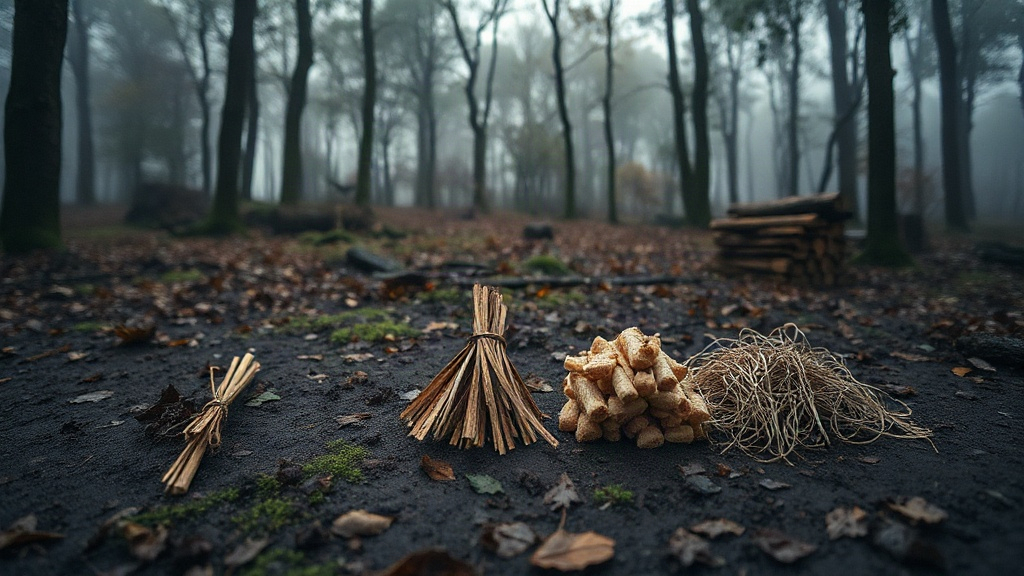
The log cabin has a reputation as the grown-up fire: neat walls, a bit of shelter from the wind, something you can cook beside. On wet British soil that reputation is the wrong problem.
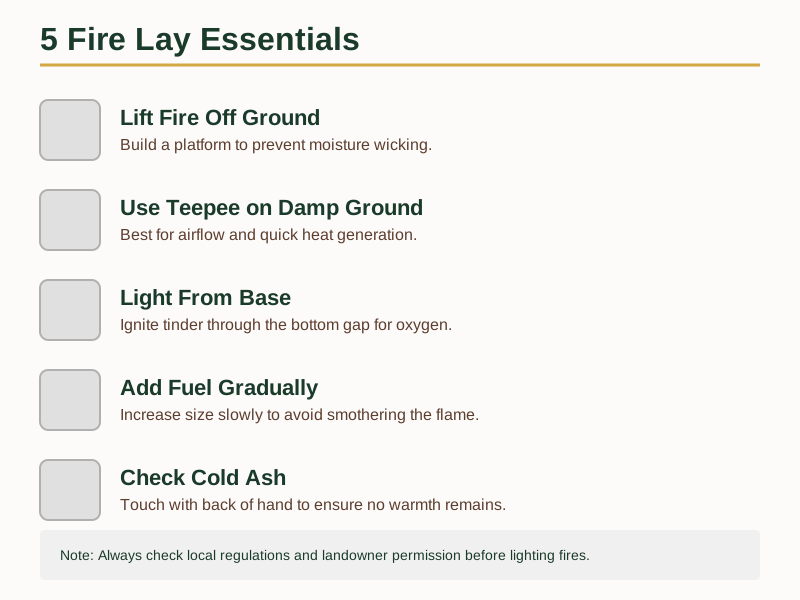
On damp ground, lift the flame. Do not build a cabin that sits in the wet. A teepee leaves a gap at the base and a chimney in the middle, so the rising heat pulls air in underneath and the ignition stays off the soil. A log cabin laid straight onto that soil wicks moisture up into the wood and walls the air off. Wet fuel is a different problem from wet soil, and a slow overnight fire is a third. Pick the problem you actually have. This page will not tell you how to build any of them, stick by stick. A shape is a choice. A build sequence in a wet wood is how small fires become the ones nobody meant to start.
In England, GOV.UK’s outdoor fire leaflet, updated 25 May 2022, says avoid open fires in the countryside and only have them in safe, designated areas. The same page says that, on average, 26,500 fires a year are started on grass, heathland and moorland in England, about 73 a day. That count is grass, heath and moor, not a woodland statistic, and the leaflet applies to England. It does not set the rule for Scotland or Wales. If a fire is already beyond a bucket of water, GOV.UK says do not try to fight it: leave, and report it. The lays below are for a place you are already allowed to have a fire. They are not a way to start one on open ground.
The tools are the fire lighting kit guide . The order from a spark to a flame that will take wood is the beginner firecraft guide .
Air from below, water from the soil
A flame needs air, and the air it wants comes in low, because hot gas rises and fresh air follows. Anything you sit on wet soil fights that. The soil conducts heat away, and water in the soil moves into the lowest sticks. The flame spends itself drying its own floor.
That is the whole mechanism. A shape that opens the underside and holds the first flame up is working with it. A shape that seals the underside and rests on the damp is working against it. Skill with a ferro rod does not cancel a bad floor.
Wet soil: teepee, off the ground
Our teepee and log cabin guide is the call for sodden ground. Sticks leaned into a cone give the chimney. Air enters at the foot. The first flame is up in the middle, not smeared across a wet square of earth. A log cabin on that same earth does the opposite: the lowest course drinks, and the walls stop the cross-draught the cone was using.
The log cabin is not useless. On dry ground, or on a base that is already up off the soil, the walls are a stable way to hold a longer burn. The failure is using it as the default because it looks tidy. If the ground is wet and you have not lifted the fire, choose the teepee. If you cannot lift it, do not light it.
Download the Free Bushcraft Starter Checklist if you want the kit list in one place before you are standing on that soil.
Wet wood: upside down. Wet leaves or snow: a platform
Surface damp on the fuel is not the same as a wet floor. Our upside-down lay guide puts the bigger wood at the bottom and the dry, fine material at the top, so the fire burns downward. Heat and embers fall onto the next layer and dry its face before that layer has to burn. It asks for more fine material at the start. It will not revive wood that is rotten. Rot is not “a bit damp”. Rot is gone.
Snow and a mattress of wet leaves fail in a third way. They look flat, then they collapse. Loose snow melts out from under the flame and the fire drops into the water it made. Wet leaves steam and settle. Our platform guide is a raft: a packed base that holds the fire up, not a loose pile that gives way. Pack it until it stops being a sponge. This page is not the packing method, and it is not a reason to light a fire on peat or on heather. If the ground is springy and dark, walk away. Peat burns underneath, out of sight.
The star lay is a dry-wood fire
Our star lay guide throttles the burn to the centre. The logs point in like spokes, the fire eats the tips, and you push the logs inward instead of rebuilding. That is a fuel-saving shape, and it keeps the flame in one place, which matters next to bracken and heather when the weather has been dry. It needs wood that is already dry enough to burn without being nursed, and it needs ground that is not going to put the centre out. It is the wrong lay for the day you are fighting damp. It is also not a fire you leave. GOV.UK’s England advice is still the frame: designated areas, and if it gets away, you leave and you report it. You do not sit it out because the shape was efficient.
For cooking, the cooking kit guide is the pots. A star or a teepee does not change which pot you brought. It changes whether you have a coal to put the pot near, and only after the flame has actually settled. Piling the pot on a flame that is still drying its own wood puts the fire out.
Which problem you are solving
| What is wrong | Shape | Why |
|---|---|---|
| The soil is wet | Teepee, lifted off the ground | Air in at the base, flame up off the damp |
| The soil is wet and you only have a log cabin in mind | Do not lay it on the soil | The walls sit in the water and block the air |
| The sticks are wet on the outside and sound inside | Upside down | Heat falls onto the next layer |
| Snow, or a mat of wet leaves | Platform, packed | A loose base collapses into meltwater |
| The wood is dry and you want a slow centre | Star | Only the tips burn, and you feed them inward |
| The ground is peat, or the vegetation is brown and brittle | None | Do not light it |
The popular mistake is one lay for every trip. The log cabin photographs well and shields a bit of wind, so it gets taught as the all-rounder. On a dry evening it can be. On the evening the ground is sodden, it is the lay that seals its own air supply. Start from the floor, then the fuel, then how long you need the flame. The spark is the last decision, and it is covered in the kit guide, not here.
Before any of this is relevant
England’s leaflet is blunt, and it is only England’s. Avoid an open fire in the countryside. Use a safe, designated area. Glass left in a wood can focus sunlight. A cigarette end is an ignition. A fire you cannot put out with a bucket of water is a fire you leave, and you report it straight away. Scotland and Wales are not folded into that sentence. Their land managers publish their own rules, and a lay that works on damp soil does not make a fire allowed.
If the site is designated, the ground is not peat, and the fuel matches one row of the table, you still stay with it until it is out. Grey ash is not a finished fire. Heat sits under ash, and on organic soil it can keep going after the flame has gone. That check belongs with the land manager’s instructions for the place you are in, not with a guessed distance or a guessed depth of clearing.
The Bushcraft Starter Checklist is the kit and the questions to settle before you are choosing a shape at all.
Explore More Topics
Quick answers:
Go deeper on specific conditions:
- Teepee vs Log Cabin Fire Lay for Damp Ground UK
- Star Fire Lay for Slow Burning Overnight UK
- Upside Down Fire Lay for Wet Conditions UK
- Platform Fire Lay on Snow or Wet Leaves UK
Sources & Further Reading
- GOV.UK: Fire safety outdoors (accessible version) — England, updated 25 May 2022. 26,500 grass, heathland and moorland fires a year, about 73 a day. Open fires only in safe, designated areas. Do not tackle a fire you cannot put out with a bucket of water.
Note: General guidance only, verify details with a qualified professional or official source.