UK Bushcraft Laws: Your Rights & Responsibilities

Bushcraft access rules in the UK are rarely simple, because the answer changes with the nation you’re in, the land you’re standing on, and the activity you want to practise. Walking through an area, lighting a fire, putting up a tarp, and foraging all sit under different expectations. This guide breaks down those differences so you can make sensible decisions before you head out.
The Lay of the Land: Understanding UK Access Rights
Understanding the general legal principles governing land access in the UK is the foundational first step for any responsible bushcrafter, as these principles set the stage for how specific activities, like shelter building or fire-starting, might be regulated. Unlike some countries where a broad “right to roam” is a given for almost all land, the UK’s approach is a bit more nuanced and varies significantly between its constituent nations.
First off, let’s talk about trespass. In UK law, trespass is generally a civil matter, not a criminal one. This means that if you walk onto private land without permission, you’re not usually committing a crime that would lead to arrest, but the landowner can ask you to leave. If you refuse, they can use reasonable force to remove you, and if you cause damage, they can sue you for it. Think of it like this: if you walk into someone’s garden uninvited, you’re trespassing. They can tell you to leave, and you should. If you then break their garden gnome, that’s a different kettle of fish entirely, and you could be liable for damages. The key takeaway here is that entering private land without permission is generally not permitted, but the legal consequences are usually less severe than a criminal offence — unless, of course, you’re doing something anti-social or causing damage.
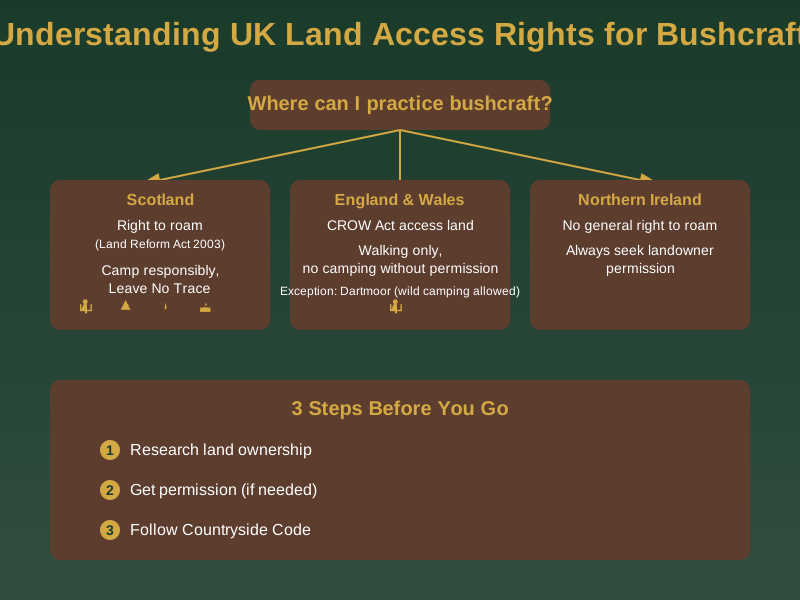
Across the UK, we have different access frameworks. England and Wales operate under the Countryside and Rights of Way (CRoW) Act 2000, which designates certain “access land” for public use. Scotland has a much more liberal approach with the Land Reform (Scotland) Act 2003, granting a statutory ‘right of responsible access’. Northern Ireland, on the other hand, has less defined statutory access rights, relying more heavily on landowner permission and informal agreements. We’ll dive into the specifics of each in a moment, but it’s crucial to remember that a blanket rule simply doesn’t exist.
Wherever you are, the Countryside Code (or its Welsh equivalent) is your guiding star for responsible behaviour outdoors. It’s not a law in itself, but it outlines best practices for respecting the countryside, protecting the environment, and ensuring everyone can enjoy outdoor spaces safely. It covers things like closing gates, keeping dogs under control, taking litter home, and being careful with fire. This code is mentioned by GOV.UK and is the practical baseline for responsible access across the nations.
Finally, it’s vital to distinguish between public rights of way (PROWs) and general access land. Public rights of way — footpaths, bridleways, and byways — are routes where you have a legal right to pass. You can walk, cycle (on bridleways and byways), or ride horses along these specific paths. However, your right is generally limited to the path itself, and you usually don’t have the right to wander off it, picnic, or set up camp. Access land, created by the CRoW Act in England and Wales or the Land Reform Act in Scotland, is different. This is land where you generally have a wider right to roam, but with specific caveats on activities. Many beginners genuinely think a public footpath means they can just wander into the adjacent field and set up a bivvy. They quickly learn that isn’t the case. Always check your maps and understand what kind of access you have. For more about our approach, have a look at the about page.
UK Land Access Overview for Bushcraft
| Nation | General Access Principle | Wild Camping (Responsible) | Fire Lighting (Responsible) | Temporary Shelter Building |
|---|---|---|---|---|
| England & Wales | CRoW Act (designated access land) | Generally Needs Permission | Generally Needs Permission | Generally Needs Permission |
| Scotland | Land Reform Act (responsible access) | Generally Permitted | Generally Permitted | Generally Permitted |
| Northern Ireland | Landowner Permission Key | Generally Needs Permission | Generally Needs Permission | Generally Needs Permission |
Your Rights & Responsibilities in England & Wales
Navigating land access for bushcraft in England and Wales primarily involves understanding the Countryside and Rights of Way (CRoW) Act 2000, which designates certain areas as “access land” and outlines specific implications for outdoor activities. The CRoW Act was a real a massive help when it came in, opening up significant areas of the countryside, but it’s important to know what it actually means for us bushcrafters.
Under the CRoW Act, you generally have a right to access designated open country — that’s often moorland, heathland, downland, and common land — as well as registered common land. This access is primarily for walking, running, watching wildlife, and generally enjoying nature. You can find maps of this access land on the Ordnance Survey website or via local council websites. It’s brilliant for a good stomp and a spot of birdwatching, but here’s where the bushcraft specifics come in:
Activities Generally Permitted on CRoW Access Land:
- Walking, running, or hiking
- Birdwatching and nature observation
- Picnicking (without a fire)
- Taking photographs
- Enjoying the scenery
Activities Generally Not Permitted on CRoW Access Land (Without Specific Permission):
- Camping: Wild camping is generally not permitted on CRoW land in England and Wales without explicit landowner permission. There are a few exceptions, notably parts of Dartmoor, but these are rare. The Dartmoor National Park Authority, for instance, has specific guidance on where this is permitted.
- Lighting Fires: This is a big one for bushcrafters. Lighting any fire, even a small, contained one, is almost universally prohibited on CRoW access land due to fire risk and potential damage to the land. This includes cooking fires, campfires, or even small tinder practice. The Countryside Code (England and Wales) is very clear on this, urging extreme caution and often prohibiting fires.
- Building Shelters: Creating any kind of temporary or semi-permanent shelter, like a tarp lean-to, a debris hut, or even a basic bivouac, is typically not allowed on access land without permission. The right is for access, not for modifying the land.
- Foraging for Commercial Purposes: While foraging for small amounts of common wild food for personal consumption is generally tolerated (more on this later), large-scale foraging or anything for commercial gain is not permitted.
- Disturbing Wildlife or Plants: This is a general principle, but it’s worth noting that any activity that could harm local flora or fauna is out. For example, the Wildlife and Countryside Act 1981 protects many species, making it illegal to damage or disturb them.
Beyond the CRoW Act, we have Public Rights of Way (PROWs). These are the public footpaths, bridleways, and byways we all know and love. You have a legal right to use these defined routes, which are usually marked on Ordnance Survey maps. However, your right of access is limited to the path itself — you can’t typically deviate from it or set up camp next to it without permission. We have had to politely explain to newcomers that while they can walk through a farmer’s field on the designated public footpath, they cannot just stop halfway, pitch a tent, and start building a den from sticks found in the hedgerow. It’s about respecting the specific nature of the access.
Your responsibilities are vital. The Leave No Trace principles are your best friend here, ensuring you minimise your impact. This means packing out everything you pack in (and then some!), managing your waste properly, keeping noise to a minimum, and respecting other users and wildlife. When it comes to fire safety, as mentioned, it’s generally a no-go on access land. If you do have permission from a landowner for a fire, you must take extreme precautions: clear a large area, have water ready, use an existing fire pit if available, and ensure it’s completely out before you leave. A near-miss with a small cooking fire getting a bit too lively on a windy day, even with permission, teaches you quickly how fast things can go wrong. It really hammered home the importance of meticulous preparation and constant vigilance.
So, in England and Wales, while you have fantastic opportunities for walking and enjoying the countryside, activities like building a temporary shelter or lighting a campfire typically require explicit landowner permission. It’s a key distinction that helps protect our precious landscapes.
Scotland’s Approach: The Freedom to Roam (with caveats)
Scotland stands out within the UK for its more liberal approach to land access, enshrined in the Land Reform (Scotland) Act 2003 and detailed in the Scottish Outdoor Access Code, which grants a statutory right for responsible access. This means that, for most of Scotland’s land and inland water, you have a legal right to be there for recreational purposes, including many bushcraft activities, provided you act responsibly. This is often referred to as the “freedom to roam,” but it’s absolutely crucial to remember that word: “responsible.” It’s not a free-for-all; it’s a privilege that comes with significant duties.
The core idea of the Scottish Outdoor Access Code is “responsible access.” This means you must exercise your access rights responsibly, and land managers must exercise their land management functions responsibly. It’s a two-way street, built on mutual respect. The Code itself is a fantastic document, easy to read, and I’d highly recommend any bushcrafter planning a trip to Scotland to give it a thorough read-through (you can find it on the Scottish Government website).
What is Generally Permitted under the Scottish Outdoor Access Code:
- Walking, Cycling, Horse Riding: Broad access for non-motorised recreation.
- Wild Camping: This is a big one for bushcrafters. Responsible wild camping is generally allowed, provided you follow the “Leave No Trace” principles, stay for no more than two or three nights in one spot, use a lightweight tent or bivvy bag, and avoid organised groups or designated camping sites. You must be well away from roads, buildings, and enclosed fields.
- Fire-Starting (Responsibly): Again, a huge benefit for bushcrafters. You can light fires for warmth or cooking, but only if you do so responsibly. This means keeping them small, under control, never near trees or dry vegetation, clearing the ground around them, and ensuring they are completely extinguished before you leave. Crucially, you must always check for local fire bans or extreme dry conditions. Organisations like SEPA (Scottish Environment Protection Agency) often issue warnings. Cooking over a small, contained fire in the Scottish Highlands, with the peace of mind that comes from knowing you are doing it legally and responsibly, is a brilliant experience.
- Shelter Building: Temporary shelters, like tarp set-ups or even small debris shelters that leave no lasting trace, are generally permissible for short stays as part of your responsible access. The key is “temporary” and “minimal impact.” Don’t go building permanent structures or damaging vegetation.
- Foraging: Foraging for personal consumption is generally allowed, but again, responsibility is key. Avoid damaging plants, only take what you need, and never forage for commercial purposes without specific permission.
Key Responsibilities under the Scottish Outdoor Access Code: The Code is built on three main principles that form a sort of “three-step rule”:
- Respect the interests of other people: Be considerate, keep noise down, respect privacy, and ensure your activities don’t interfere with others’ enjoyment.
- Care for the environment: Take all your litter home, avoid damaging plants and animals, and be extra careful with fire.
- Take responsibility for your own actions: Be aware of your surroundings, plan ahead, and be prepared for changing conditions.
The fundamental difference here is that you don’t typically need specific landowner permission for basic access activities covered by the code. However, ethical considerations are non-negotiable. The right to roam isn’t an excuse for anti-social behaviour or environmental damage. It’s about a mutual understanding that allows responsible enjoyment of Scotland’s incredible landscapes. So, while you have a statutory right for responsible access, this freedom comes with a significant onus on the individual to act ethically, respectfully, and with consideration for the environment and land managers. It truly is a privilege to be cherished and protected.
Northern Ireland: A Developing Landscape
When it comes to land access for bushcraft, Northern Ireland presents a somewhat different picture compared to the rest of the UK, with less defined statutory access rights than Scotland or even England and Wales. There isn’t a direct equivalent to the CRoW Act or Scotland’s Land Reform Act, meaning that the default position is often that you need landowner permission to access private land.
This means that for bushcrafters in Northern Ireland, the importance of landowner permission and informal agreements is absolutely really important. You can’t assume a right to roam in the same way you might in Scotland. Instead, building relationships with landowners and seeking explicit permission for activities like fire-starting or shelter building is the most reliable and respectful route.
Organisations like the National Trust and the Northern Ireland Countryside Agency play a crucial role in managing and providing access to specific areas, often with designated trails and facilities. They might have specific bylaws or guidance for activities within their managed sites, so it’s always worth checking their websites or contacting them directly. For example, some forest parks might have designated BBQ areas but prohibit open fires elsewhere. In places with less formal access, local knowledge can still help you work out who manages the land and whether a polite request is worth making.
Despite the lack of broad statutory access rights, the general principles of respect and responsible behaviour still apply. The spirit of the Countryside Code is still relevant: leave no trace, respect private property, protect wildlife, and be safe. We have found that when approaching landowners in Northern Ireland, a polite, clear explanation of what you want to do, coupled with a reassurance of minimal impact, often goes a long way. One beginner had a brilliant experience getting permission to practice some basic shelter skills on a small patch of woodland belonging to a farm in County Down, simply by having a friendly chat with the farmer and showing they understood the importance of leaving things as they found them. While Northern Ireland doesn’t have the same statutory ‘right to roam’ as Scotland, the principles of responsible outdoor conduct and seeking landowner goodwill remain crucial for bushcraft practitioners.
How to Successfully Ask for Landowner Permission
Even in areas where you might have some legal access rights, seeking explicit permission from the landowner is always the best route for bushcraft activities, as it bridges the gap between legal rights and your practical needs, fostering positive relationships. This is especially true for things like lighting fires, building shelters, or even setting up a temporary camp, which often fall outside the scope of general access rights. Why bother, you ask? Well, for one, it avoids any potential for misunderstanding or conflict. More importantly, it builds goodwill, which can lead to fantastic opportunities for practicing your skills in places you otherwise couldn’t.
Here’s how we’ve learned to approach it, step by step:
1. Figure Out Who Owns the Land
This can sometimes be a bit of a detective job! Start with Ordnance Survey Maps — they’re invaluable and often show land features and sometimes indicate large landowners. Your local council can sometimes provide details for larger tracts of land, especially if it’s public land or managed by the council. For a small fee, the Land Registry (separate for England & Wales, Scotland, and Northern Ireland) can provide details of land ownership for specific plots; this is more for formal enquiries. Sometimes, simply asking around at the local pub, village shop, or even observing who manages the land (e.g., a farmer, an estate manager, a gamekeeper) can point you in the right direction.
2. Make a Polite, Professional, and Prepared Approach
First impressions count, so be respectful of their time and property. Introduce yourself clearly — “Hi, my name’s [your name], and I’m a keen bushcrafter…” — and then explain exactly what you want to do. Be brief and clear: “I’m looking for a small, out-of-the-way spot to practice some outdoor skills — specifically, I’d like to try building a temporary shelter and maybe a small, controlled fire for cooking.” Don’t use jargon; keep it simple and relatable.
3. Specify When and For How Long
Be precise about your plans. Say something like, “I’m hoping to spend a day this weekend, or maybe an overnight stay if that’s possible.” This shows you’ve thought it through and aren’t just winging it.
4. Emphasise Minimal Impact
This is key! Assure them you will leave absolutely no trace. “make sure to pack out everything I bring in, clear up any fire site completely, and cause no disturbance to wildlife or livestock.” This reassurance is often the most important factor in them saying yes.
5. Offer Something in Return (Optional)
Sometimes, a small offer can help. “If you ever need an extra pair of hands with a small task, clearing some fallen branches, or fixing a fence, offer to help out.” Don’t promise anything you can’t deliver, though. It’s about building a good relationship.
6. Respect Their Answer
If they say no, accept it gracefully. Thank them for their time. Pushing the issue will just make it harder for the next person, and you want to leave a positive impression of bushcrafters.
One group wanted to take a small group of beginners to a private woodland to practice some basic skills. They researched the landowner, found their contact details, and sent a polite email explaining exactly what they wanted to do, emphasising their commitment to Leave No Trace and even offering to share some of their findings about the local flora. The landowner was so impressed with the clear communication and respect that they not only gave permission but also offered a specific, secluded area perfect for the group’s needs. Approaching landowners with a clear, respectful, and prepared request significantly increases the likelihood of gaining permission for bushcraft activities, fostering positive relationships. It’s truly the art of the approach.
Bushcraft Essentials: Fire, Waste, and Safety
When we talk about bushcraft, certain core activities immediately spring to mind: fire lighting, shelter building, and foraging. Each of these, while fundamental to the craft, comes with its own set of legal responsibilities and best practices that must be rigorously followed to ensure safety and compliance.
Let’s start with Fire Safety, because frankly, this is where things can go wrong very quickly, both for the environment and legally. Responsible fire management in the UK involves not only knowing how to light and extinguish a fire safely but also being acutely aware of current local restrictions and potential legal ramifications for negligence.
- Legal Restrictions: As we’ve discussed, lighting fires is generally prohibited on CRoW access land in England and Wales without explicit permission. In Scotland, it’s allowed under the access code if done responsibly, but local bylaws or national fire bans (often issued during dry spells, much like a hosepipe ban) can override this. Always check local conditions and forecasts! The Met Office often provides a Fire Severity Index, which is a good indicator of risk.
- Dangers: Uncontrolled fires can devastate woodlands, heathland, and wildlife. Even a small ember can spark a major incident, leading to massive fines and even criminal charges.
- Responsible Fire Lighting (with permission):
- Location: Use existing fire pits if available. If not, choose a spot away from trees, overhanging branches, dry grass, or roots.
- Clearance: Clear a wide area (at least 2-3 metres) down to bare earth around your fire.
- Containment: Keep your fire small. Use a fire tray or build a small stone circle.
- Extinguishing: Have water or sand ready. Douse the fire thoroughly, stir the ashes, and douse again until it’s cold to the touch. Never leave a fire unattended.
- The Countryside Code (Wales) for example, specifically advises against fires in the open countryside, reinforcing this cautious approach. A near-miss with a fire getting out of hand due to poor preparation and a sudden gust of wind is a stark reminder of how quickly things can escalate and how vital it is to have water on hand and a properly cleared area.
Next up, Waste Management. The absolute necessity of “Leave No Trace” cannot be overstated. This means packing out everything you pack in — and we mean everything. That banana peel? Pack it out. Apple core? Pack it out. Even “natural” items can take ages to decompose and are unsightly. Legally, littering can lead to fines, but ethically, it’s about respecting the environment and other users. Leaving rubbish behind is not only irresponsible but also damages the reputation of bushcrafters. It’s a simple rule, but it’s crucial for bushcraft ethics.
When it comes to Shelter Building, the key is temporary and minimal impact. On access land in England and Wales, you’ll almost certainly need landowner permission to build anything beyond a quick rest stop under a tarp. In Scotland, under the responsible access code, temporary shelters for short stays are generally fine, but avoid creating permanent structures or disturbing habitats. Use natural materials that are already dead and fallen. Don’t cut live branches or dig into the ground unless you have explicit permission. Remember, the goal is to leave no lasting sign that you were there.
Finally, Foraging. This is a lovely skill, but it comes with its own legal quirks. Distinguishing between personal use and commercial or large-scale collection is vital. Generally, foraging for small quantities of common wild plants, berries, or mushrooms for personal consumption is tolerated in the UK, provided you have legal access to the land. However, the Wildlife and Countryside Act 1981 protects certain species, and it is illegal to uproot any wild plant without permission. Foraging for commercial purposes or in large quantities almost always requires explicit permission from the landowner and potentially a licence. Be certain of what you’re picking, take modest amounts, and leave enough behind for the plant to recover and for wildlife to keep using the area.
Common Bushcraft Law Myths Debunked
There are a fair few myths floating around about land access and bushcraft in the UK. Let’s clear up some of the most common misunderstandings to ensure you’re practicing bushcraft legally and ethically.
Myth: “It’s okay to camp anywhere in the UK if you do it discreetly.”
Fact: This is a big one, and it’s generally false, especially in England and Wales. Wild camping, in the sense of just pitching a tent wherever you fancy, is largely illegal across most of England and Wales without specific landowner permission. The only widespread exception is parts of Dartmoor National Park, where there’s a historic right to wild camp in designated areas. Elsewhere, you are trespassing if you camp on private land without permission. In Scotland, the Land Reform Act does grant a right to responsible wild camping, but even there, it’s not “anywhere.” You must be away from roads, buildings, and enclosed fields, and follow the Scottish Outdoor Access Code. Discretion doesn’t make an illegal act legal; it just means you might not get caught.
Myth: “Public Footpaths mean I can camp/make a fire beside them.”
Fact: Absolutely not. A public footpath (or bridleway/byway) grants you a right of way to pass along that specific route. Your access is strictly limited to the path itself. You do not have a right to deviate from the path, set up camp next to it, or light a fire. Doing so would be trespassing on the adjacent land. We have seen people assume this, thinking that because they are on a public right of way, the surrounding land is fair game. It’s a common mistake, but one that can lead to an uncomfortable chat with a landowner or farmer.
Myth: “Scotland’s access code means I can do anything I want.”
Fact: This is a dangerous oversimplification. Scotland’s access code grants a right of responsible access. That word “responsible” is doing a lot of heavy lifting! It means you have significant freedoms, but these come with equally significant duties. You must respect land managers, other people, and the environment. Disturbing livestock, leaving litter, causing damage, being noisy, or lighting fires irresponsibly are all clear breaches of the code and are not permitted. It’s about a balance of rights and responsibilities. We have heard people claim they could set up a huge bonfire right next to a farmer’s field in Scotland because of the “right to roam.” That is just plain wrong and irresponsible.
Myth: “If I don’t get caught, it’s fine.”
Fact: This mindset completely misses the point of ethical bushcraft and responsible outdoor conduct. Legal and ethical implications remain regardless of whether you’re detected. Trespassing is still trespassing, damaging the environment is still damaging the environment, and putting others at risk with an irresponsible fire is still doing so. The goal of bushcraft is to connect with nature respectfully, not to sneak around. If everyone adopted this attitude, we’d quickly lose the access we do have.
Sources & Further Reading
- GOV.UK: Official guidance on the Countryside Code and UK legislation.
- Scottish Outdoor Access Code: Detailed guide to responsible access rights in Scotland.
- Ordnance Survey: Maps showing public rights of way and designated access land across the UK.
Note: This article covers general principles and tips, so always adapt advice to your own experience and conditions. For advice specific to your situation, get in touch.
Frequently Asked Questions
Can I legally practice fire-starting skills in UK woodlands?
It depends on the nation and the site rules. In England and Wales, assume you need explicit permission before lighting any fire in woodland. In Scotland, responsible fire lighting can fall within the access code, but only if conditions, local bylaws, and fire-risk warnings allow it.
What are the rules for building a temporary shelter for bushcraft practice?
This varies by nation as well. In England and Wales, a temporary shelter usually needs landowner permission because it goes beyond simple access. In Scotland, short-term, low-impact shelters may be acceptable under responsible access, but only if you avoid lasting disturbance and leave no trace behind.
Am I allowed to forage for berries or mushrooms for personal use?
Generally, yes, if you have legal access to the land and you are taking a small amount for personal use. The important limits are protected species, anything involving uprooting, and any larger-scale collection for sale or organised harvesting. Only take what you can identify confidently and what you can remove without stripping the spot bare.
How do I find out who owns a piece of land?
Start with the simple routes first: maps, council information, and the signs on site. If that does not answer it, the Land Registry is the formal route for ownership details. After that, local knowledge can help, especially when you’re trying to work out who actually manages the land day to day.
What happens if I’m caught trespassing while practicing bushcraft?
In England and Wales, trespass is generally a civil matter, which usually means being told to leave and potentially facing action if you caused damage or refused. In Scotland, broad access rights do not protect irresponsible behaviour, damage, or anti-social use of land. In either case, the sensible move is to leave promptly and avoid turning a mistake into a bigger problem.
Where to Go From Here: Practicing with Confidence
The main takeaway is straightforward: bushcraft access in the UK depends on location, activity, and how responsibly you behave. Once you understand those three variables, most of the uncertainty falls away.
Knowing the differences between England, Wales, Scotland, and Northern Ireland, and being willing to ask permission when needed, makes it much easier to practise with confidence. If you’d like to discuss specific scenarios or find local opportunities, get in touch — we are always happy to help you navigate the journey. You can find our contact details over on the contact page. For more articles and tips, check out our blog.
For a quick-reference summary of land access laws across all four UK nations, grab the free UK Land Access & Wild Camping Reference.