UK Firecraft: Fire Safety, Ethics, and Legality in UK Woodland
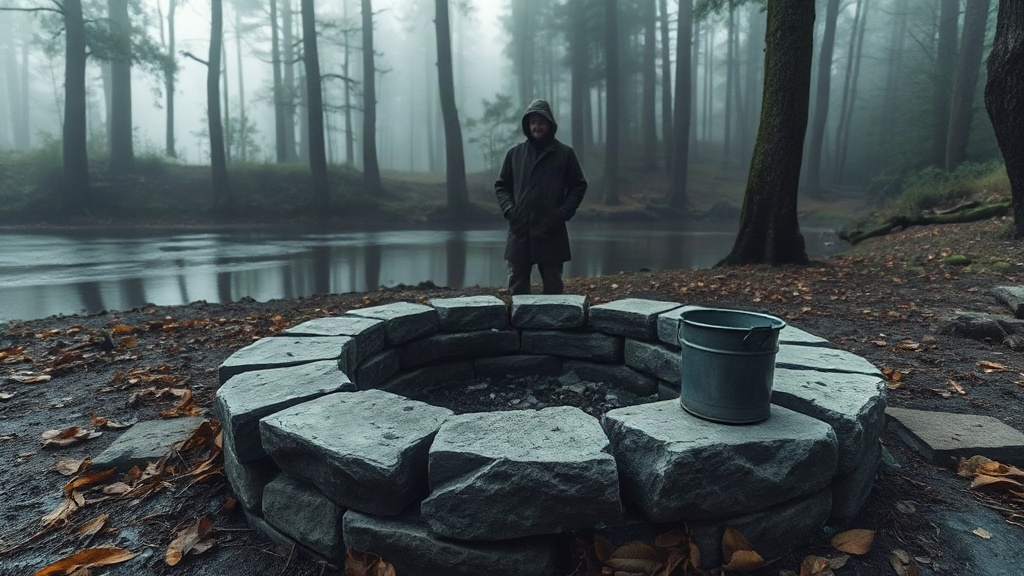
There is no single UK rule about a fire in the woods, and anyone who gives you one is guessing.
Ask which nation, which landowner, and what that body’s own page says this week. On land mapped as open access in England, Natural England’s GOV.UK guidance says the Countryside and Rights of Way Act access right does not include lighting, causing or risking a fire, unless the landowner has given permission or you have some other right to do it. In Scotland, the Outdoor Access Code tells you not to light an open fire in a forest, on peaty ground, on farmland, near buildings or historic sites, or in a prolonged dry spell. On the woodlands and reserves Natural Resources Wales looks after, the instruction is shorter: never light fires in the countryside. None of those sentences is a verdict that a fire is a crime, and none of them is a fine. This page will not tell you how to light one, or how to put one out.
England: the access right stops at a flame
Open access, on Natural England’s page last updated 6 November 2025, is land mapped as open country (mountain, moor, heath or down) or registered common. Walking, sightseeing, climbing and running are the sort of open-air recreation the right covers. Camping is on the list of things the right does not cover. So is this: “light, cause or risk a fire.” So is intentionally removing, damaging or destroying a plant, shrub, tree or root. Permission from the landowner, or some separate right, is what the page says takes an activity off that list.
Someone who does not keep to those restrictions becomes a trespasser. The page says they would be expected to leave if the owner or the owner’s representative asks, and they may not use the open access right to come back to that land, or to other land in the same ownership, for 72 hours. Trespass, on that same page, is a common law matter. The owner can ask a court for an injunction. Breaking the injunction is a matter for the police. That is as far as the page goes. It does not name an offence for a fire, and it does not name a fine. Treat any figure you have seen for “a CROW fire fine” as a figure this guidance does not support.
Woodland is not automatically that mapped open country. A wood can be dedicated for access. Many woods are not. If the land is not open access, the CROW right is not the right you are using, and you are back to the person who owns it. The maps are on GOV.UK. The sign at the gate beats a memory of the map.
GOV.UK’s outdoor fire leaflet applies to England and was updated on 25 May 2022. It says avoid open fires in the countryside and only have them in safe, designated areas. It also says that, on average, 26,500 fires a year are started on grass, heathland and moorland in England, about 73 a day. That is not a woodland count. It is the scale of vegetation fire the leaflet is worried about. If you see a fire, report it. If you cannot put it out with a bucket of water, do not try. Leave.
The Met Office Fire Severity Index does not say where a fire will start. It estimates how severe a wildfire could become if one did start, from rain, drought, wind, temperature and humidity, and the Met Office is explicit that humidity matters because dry weather makes dead vegetation more flammable. Natural England, Natural Resources Wales and the other relevant authorities use it, under the CROW Act, when they decide whether conditions are exceptional enough to suspend open access on vulnerable land. A colour on a map is not a personal permission slip, and this page will not invent a wind speed or a humidity percentage the Met Office page does not give.
Forestry England’s picnic and barbecue page, as of October 2026, says barbecues are not allowed at any of its forests, including bookable ones, because of a government alert and the ground conditions. Disposable barbecues are not allowed anywhere on that page. The same page still mentions fixed barbecues for hire at some forests, and a transportable barbecue only as part of a stay with an onsite accommodation partner such as a campsite. Check the forest you are actually going to. There is no fire-permit rule on that page, so this guide will not invent one.
Scotland: the Code, the national forests, and one park’s byelaw
Scotland is not England with a different accent. The Scottish Outdoor Access Code’s camping guidance says do not light an open fire, and it includes fire bowls and barbecues, during high fire risk (it means a prolonged dry spell) or near forests, farmland, peaty ground, or close to buildings or historic sites. Follow Scottish Fire and Rescue Service warnings and whatever the local signs say. If you need to cook, the Code’s alternative is a stove on a level, non-flammable surface, away from dry grass, vegetation and the tent, and watched while it is alight. Dead wood stays where it is. The Code says it is home and food for other creatures, and it says never cut or damage trees. An out-of-control fire is a 999 call.
NatureScot’s guidance for land managers uses the same places as a year-round message: no fires, barbecues or fire bowls in forests, on farmland or peaty ground, or near buildings and cultural heritage sites. A high or extreme fire risk overrides a spot where a fire might otherwise have been provided for. That is a message for visitors. It is not a UK-wide offence this page can name.
Forestry and Land Scotland is direct about its own woods: do not start fires there. If you see a wildfire, call 999 and ask for the Fire Service. FLS says the vast majority of wildfires in Scotland are caused by people, usually by accident, and that in 2023 wildfires burned the equivalent of 534 football pitches of its ground. The Cannich fire burned for months and cost many hundreds of thousands of pounds to help control. FLS also says its own staff are not firefighters and that it cannot actively suppress fires. Do not wait for a ranger to put out what you started.
The Cairngorms National Park is a further rule on top of the Code, and it is that park’s rule. From 1 April to 30 September, fires and barbecues are banned under the park’s fire management byelaw, and the park says breaking it could mean a fine of up to £500. Outside those dates the park still says there is almost nowhere in the park a fire could be lit responsibly, including stony riverbanks, and it asks people not to light a campfire anywhere, at any time. Do not carry the £500, or the dates, to another Scottish park. Loch Lomond and the Trossachs has seasonal camping byelaws, which the Access Code describes as campsite or permit in certain areas. That is a camping rule on the Code’s page. It is not this fine.
Wales: Natural Resources Wales
On the woodlands and National Nature Reserves Natural Resources Wales looks after, the visiting-safely page says never light fires in the countryside, take a picnic instead of a barbecue, take glass home, and do not discard cigarettes or matches. One stray spark or a glass bottle is the mechanism they name. If you see a fire, call 999. That page is about NRW’s places. It is not a sentence that settles every other Welsh landowner. Signs on the day, and the person who manages that wood, still come first. The Met Office index exists partly so NRW, as a relevant authority under the CROW Act, can suspend access when conditions are exceptional. Again, that is a suspension of access. It is not a number you can read as “safe below this wind speed”.
Download the Free Bushcraft Starter Checklist for the questions to settle before you leave the house: whose land, whose sign, whose warning.
What to stop for, without a made-up threshold
Our guide to when not to light is the decision to leave the spark in the bag. The reasons that survive an official page are these. The vegetation is in a prolonged dry spell, or the fire service has a warning up. The ground is peat, or it feels like peat. You are in a forest the Code or FLS has already named. A sign, a byelaw or the owner has said no. Brown, brittle heather and dead bracken are fuel. You do not need a wind speed this guide is not willing to invent. If you would not want an ember to land in it, you are already in the wrong place.
Our site guide starts by looking up. Dead wood overhead, a hollow among roots, and springy dark ground are reasons to move on, not a clearance radius to measure and then light. No official guidance we found gives a minimum circle to scrape. A made-up circle is how a small fire reaches the litter you thought was far enough away.
Our permission guide is the conversation with the owner or the manager, and the difference between a sign, a byelaw and the access right. Get the nation’s page first. Then the forest or the park. Then the person on the gate. A friendly “nobody was about” is not one of those three.
Leaving, and the fires that are not a campfire
Our extinguishing guide exists because grey ash is a poor proof that a fire is finished. Ash holds heat, and peat can keep burning underground after the flame has gone. FLS treats peat damage as a long recovery, not an afternoon’s scorch. This page will not give you a dousing routine. If the fire is out of your control, the official instruction from GOV.UK, the Access Code, FLS and NRW is the same shape: leave it, and call 999. Do not stand over it inventing a test.
Other starts are on the same pages. GOV.UK, the Access Code and NRW all name glass left in a wood, because sunlight through it can start a fire, and cigarette ends that are not actually out. GOV.UK’s England leaflet also says never use a lighted candle, and never cook inside a tent. The kit you carry is the fire lighting kit guide . The pots are the cooking kit guide . Neither kit creates a place where a fire is allowed.
The question before the spark
| Place | What the opened page actually says |
|---|---|
| Mapped open access, England | The access right does not include lighting, causing or risking a fire without permission or another right. Trespass, then 72 hours off that owner’s land. No fine on the page. |
| England, countryside generally | GOV.UK: avoid open fires. Designated areas only. |
| Forestry England woods | Barbecues not allowed under the current alert, including bookable ones. Check that forest. |
| Scotland, Access Code | No open fire in woods, on peat, on farmland, near buildings or historic sites, or in a prolonged dry spell. |
| Forestry and Land Scotland woods | Do not start fires. A wildfire is 999 for the Fire Service. |
| Cairngorms National Park | Byelaw, 1 April to 30 September, fine up to £500. The park still asks for no campfire outside those dates. |
| NRW woodlands and reserves, Wales | Never light fires in the countryside. |
Ethics, on top of that, is the smaller choice. Do not take live wood. Do not take the dead wood the Scottish Code says to leave. Do not light something you cannot stay with. Do not treat a bothy fireplace, a riverbank or “it rained last week” as a loophole the park or the forest has not already closed.
If you want those checks on one page before you go, Download the Free Bushcraft Starter Checklist . Then read the sign when you arrive. The sign wins.
Further Guidance
Quick answers:
Go deeper on specific topics:
- When Not to Light a Fire UK Woodland
- Extinguish a Campfire Leave No Trace UK
- Fire Bans and Landowner Permission UK Woodland
- Safe Fire Site Selection UK Woodland
Sources & Further Reading
- GOV.UK, Natural England: open access land, rights and responsibilities — updated 6 November 2025. The access right does not include lighting, causing or risking a fire. Trespass and 72 hours. No fine stated.
- GOV.UK: Fire safety outdoors — England, 25 May 2022. 26,500 grass, heath and moor fires a year. Designated areas. Do not fight a fire a bucket of water cannot put out.
- Met Office: Fire Severity Index — severity if a fire starts, not a prediction of where one will. Used to suspend access in exceptional conditions.
- Scottish Outdoor Access Code: camping — no open fire in woods, on peat, on farmland, near buildings or historic sites, or in prolonged dry weather. 999 if it is out of control.
- NatureScot: open fires and barbecues guidance — the visitor messages for forests, peat, farmland and high or extreme fire risk.
- Cairngorms National Park: campfires and barbecues — byelaw 1 April to 30 September, fine up to £500, and the park’s request not to light one at all.
- Forestry and Land Scotland: wildfire prevention — do not start fires in FLS woodlands. 534 football pitches in 2023. Cannich burned for months.
- Forestry England: picnics and barbecues — barbecues not allowed at its forests under the current alert, including bookable ones.
- Natural Resources Wales: visiting our places safely — never light fires in the countryside on the places NRW looks after.
Note: General guidance only, verify details with a qualified professional or official source.