Revive a Dying Fire Without Smothering It
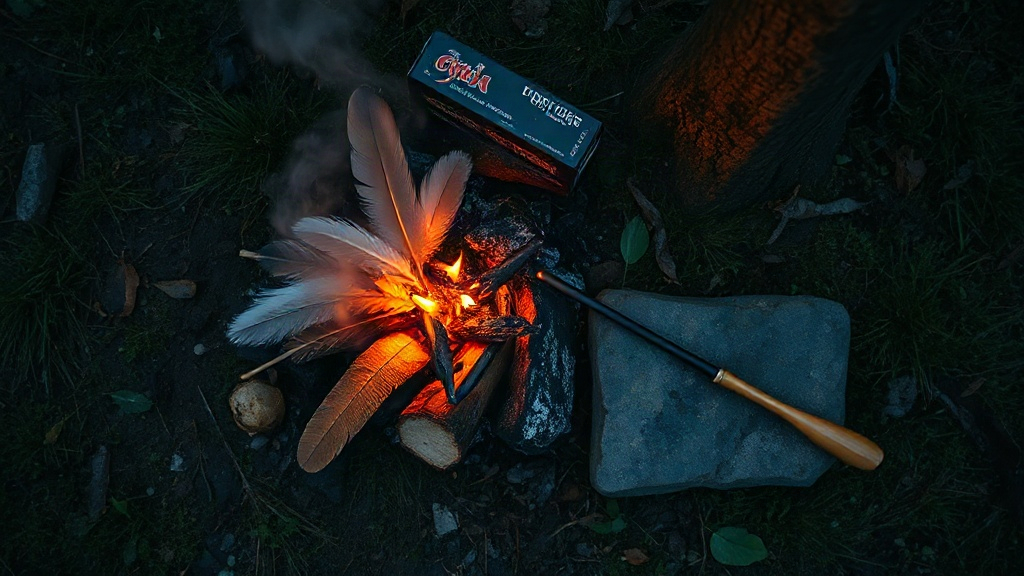
A dying fire is oxygen-starved, not dead. The instinct to add more wood too soon is the very thing that kills it—fresh fuel placed on weak embers cuts off the remaining airflow, smothering the last heat. This is the oxygen-depletion sequence that beginners rarely spot.
A dry twig and some patience is all it takes to reverse the process. Here is how to feed the ember without choking it, and why the fuse method works when blowing fails.
Understanding Fire’s Last Glow
When flames shrink to embers, there remains a core of intense heat. This glowing carbon still burns at several hundred degrees. The fire faltered due to dropping oxygen levels, insufficient dry fuel, or disrupted airflow—not from lack of heat.
Blowing on the coals seems logical but backfires. Unlike a candle flame, a dying ember suffers from evaporative cooling when you force ambient air over it. Residual moisture in the wood and ash draws heat away faster than the coal can sustain. Blow too hard and you extinguish the ember entirely.
The real issue is fuel shape and placement. A thin, dry piece of wood can ignite at the ember’s existing temperature and carry that flame upward. If you are new to fire lighting, the bushcraft fire lighting kit guide covers the tools worth carrying.
Essential Tools for Damp Conditions
While any spark source can work, some kit performs better in British weather when reviving a fading fire.
📺 Watch: Revive A Campfire With No Tools
Ferro rods deliver reliable sparks in wind and rain. The Light My Fire FireSteel Army, Rusty Orange (paid link) produces a strong, consistent spark with practice. The Exotac NanoStriker XL Orange (paid link) offers a compact waterproof case, though some find assembly fiddly. For a budget option, the 3/8-inch Ferro Rod Fire Starter Kit (paid link) throws a good spark as emergency backup.
Buy 3/8-inch Ferro Rod Fire Starter Kit on Amazon → (paid link)
Waterproof matches like Lifesystems Stormproof Waterproof and Windproof Matches (paid link) burn for up to 20 seconds per match according to the manufacturer, enough to ignite prepared tinder. They work best as a secondary option.
View Lifesystems Stormproof Waterproof and Windproof Matches on Amazon → (paid link)
A pocket bellows provides precise airflow control. The Spitfire Pocket Bellows (paid link) directs air without the cooling effect of breath, useful for nurturing small embers. It is designed for careful work rather than building large fires.
Buy Spitfire Pocket Bellows on Amazon → (paid link)
Lighters function in sheltered spots but struggle outdoors. The BIC Mini in particular falters in breeze. Shield any lighter and carry a ferro rod as backup.
The Fuse Technique: Relighting from Embers
This method uses a dry twig to transfer heat from ember to kindling without smothering.
The principle: A hot ember contains sufficient energy to ignite dry wood upon contact. A slender twig will begin to burn almost immediately when touched to the glow. This thin piece acts as a fuse, carrying flame upward to larger fuel.
The steps:
- Select a dry twig no thicker than a pencil. Look for wood that snaps cleanly rather than bending.
- Gently place one end into the edge of the glowing coal. Avoid burying the ember.
- Lift the twig slightly to expose it to airflow. Heat ignites the wood; air sustains the flame.
- Once the twig catches fire—usually within moments—lift it to touch your prepared kindling. The flame transfers, reviving the fire.
This approach succeeds where adding a log fails due to scale. A large fuel piece smothers the small ember, while a pencil-thick twig ignites quickly using the existing heat. You are working with the ember’s capacity, not overwhelming it.
For maintaining a fire once lit, the guide to sustained flame techniques covers airflow and fuel management.
Safe Shutdown Procedure
Reviving a fire is pointless without proper extinguishing. Never leave a site with visible flame, glow, or smoke.
The standard method: douse the fire with water or snow until embers are cold. Stir the ashes to reveal hidden hot spots. Test with the back of your hand; if warmth remains, add more water. Scatter cold ash widely to avoid ground scorching.
With permission and outside of fire bans, a properly extinguished fire leaves no trace.
Common Questions
Can I use just a lighter to revive a fire?
A lighter works in calm conditions with dry tinder. In breeze, a ferro rod proves more reliable. Shield a BIC with your body and keep a rod handy.
What if I have no dry twig?
Preparation matters. Dry bark, petroleum jelly-soaked cotton, or commercial tinder tabs work if kept dry. If everything is damp, use a ferro rod on fresh tinder rather than struggling with a dying ember.
Should I let the fire die and restart?
Not if embers still glow. Starting over consumes more tinder and time. A live ember provides a significant head start. Work with it while heat remains.
Kit Comparison for Fire Revival
| Feature | Ferro Rod | Pocket Bellows | Lighter |
|---|---|---|---|
| Best use | Wind and rain reliability | Controlled airflow | Sheltered conditions |
| Skill required | Moderate | Low | Very low |
| Breeze performance | High | High | Low |
| Backup usefulness | High | Low | Moderate |
Mastering Fire Revival
Reviving a dying fire demonstrates deeper combustion understanding than building from scratch. The reader who masters this reversal grasps airflow and fuel dynamics that escape those who only practise initial ignition. This checklist serves as your revival drill card.
If assembling your kit, a reliable ferro rod, small bellows, and dry tinder source equip you for almost any conditions. The skill lies in recognising what the ember requires—and supplying it without suffocation.
For a practical pre-trip check, Download the Free Bushcraft Starter Checklist .
Once your fire is steady, the guide to campfire meals covers cooking over open flame.
Related Guides
For complete troubleshooting, see our UK Firecraft: Troubleshooting a Fire That Won’t Stay Lit .
As an Amazon Associate we earn from qualifying purchases. The products linked above are ones we think are worth a look.
Note: General guidance only, verify details with a qualified professional or official source.