Extinguish a Campfire Leave No Trace UK
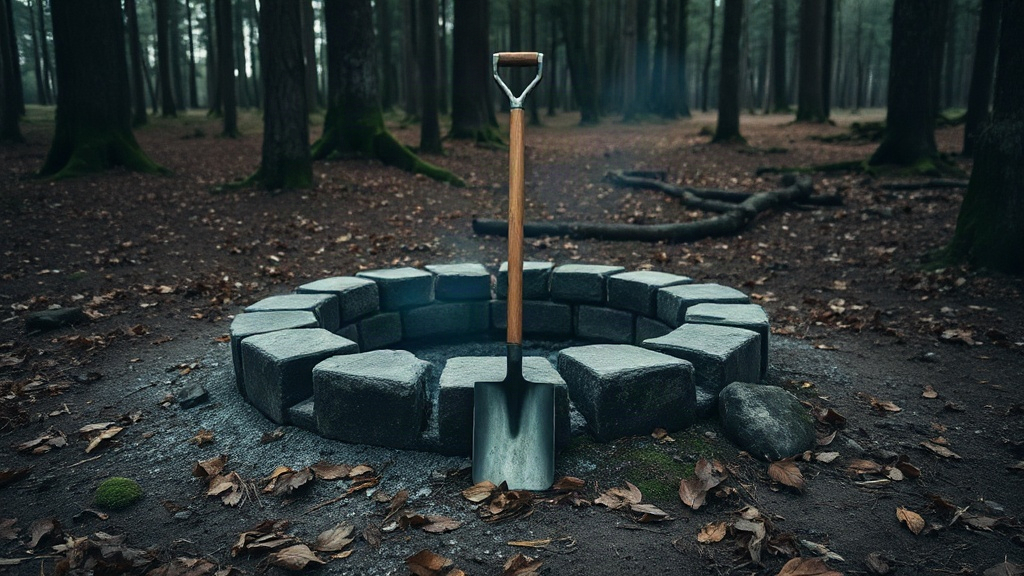
A common belief is that a fire is safely extinguished once the ash turns grey and stops steaming. The real test, however, is physical: holding the back of your hand just above the ashes to feel for any lingering heat. This simple check reveals whether smouldering combustion continues out of sight, a critical step in preventing wildfires.
The problem with relying on visual cues is that a fire pit which appears dead can retain enough heat to ignite surrounding vegetation hours later. This hidden risk is particularly significant in British landscapes where peat-rich soils can sustain underground burning. The correct extinguishing method isn’t complex, but it requires moving beyond what looks safe to what can be physically verified as cold.
The Hidden Danger of Smouldering Combustion
When flames die down, combustion doesn’t necessarily stop; it can continue as a slower, lower-temperature smouldering phase. The visible signs of a dying fire—grey ash, no more crackling—are unreliable indicators that all heat has dissipated.
This creates a genuine hazard in many UK woodlands. Soils with high organic content, particularly peat found in areas like the Scottish Highlands and northern uplands, are vulnerable. Peat is partially decayed plant material that can burn. Forestry England and the Scottish Fire and Rescue Service identify peat fires as a serious, difficult-to-contain risk because they can smoulder underground for extended periods.
The mistake is assuming grey ash means cold. Ash acts as an insulator, trapping heat in the material beneath. As long as fuel and oxygen are present, combustion can persist unseen. This isn’t a minor concern; periods of dry weather, which increase fire risk, often coincide with peak bushcraft activity. A fire that seems out can be reignited by wind, sunlight on dry litter, or residual ground heat.
Applying Enough Water
Dousing a fire requires sufficient water to cool every ember below its ignition temperature. A practical approach is to add water until steaming ceases, then continue with a little more. The amount needed often surprises people.
The error many make is pouring water over the charred logs instead of the ember bed beneath, where the real heat resides. This leaves the most dangerous part of the fire untouched. Stir the ash while adding water using a stick or tool to break up hot spots and ensure penetration to the centre. A Spitfire Pocket Bellows (paid link) lets you move the ash from a short distance instead of leaning over the steam.
See Spitfire Pocket Bellows on Amazon → (paid link)
Warning: splashing water onto hot coals produces steam that can spit. Maintain a safe distance while dousing.
Verifying with the Hand Test
This is the crucial verification step that confirms safety. After dousing and stirring, wait a few minutes. Press the back of your bare hand into the ash and hold it there. If you cannot hold it there comfortably because of the heat, the fire is not out. Add more water, stir again, and retest.
Your hand acts as a calibrated sensor, detecting whether the ash has cooled enough to prevent reignition. Only after passing this test should you scatter the ash widely across a natural area, not in a pile. If you used a cleared site, fluff the soil or leaf litter to restore its natural appearance.
There is no substitute for this physical verification. Wait until the hand test passes—the ash must be cool enough to hold your hand against comfortably. There’s no fixed time; it depends on fire size, water used, and insulation. The test provides the only reliable answer. For a full guide on essential tools, the Bushcraft Fire Lighting Kit covers the sequence from start to finish.
Restoring the Site
Leave No Trace translates into specific, concrete actions for a fire site. The goal is to remove all evidence of your fire.
This includes cool ash, charred stones, and any leftover wood. Scatter the cool ash thinly over a wide area so it breaks down naturally. It is important to note that burying hot material is not a good alternative, as it pushes embers underground where they can smoulder undetected, increasing the risk of a peat fire. The correct sequence is douse, test, and scatter. Restore the ground by breaking down any fire ring and redistributing the soil or fluffing up moss and leaf litter. The site should appear as though no one camped there.
The Scottish Outdoor Access Code and Leave No Trace principles frame this level of care as the baseline for responsible use. It’s about preventing land managers from needing to restrict fire use for everyone else.
Recognising When a Fire is Too Risky
Certain conditions make any open fire unacceptably dangerous, regardless of extinguishing skill.
During prolonged dry spells, high winds, or official wildfire warnings issued by bodies like Fire Scotland, the only responsible choice is to use a stove. Stoves contain the fire, eliminating the coal bed and large thermal mass that pose the greatest risk. If water is genuinely unavailable, this is itself a sign that a smaller fire or a stove would have been the wiser choice. In such a scenario, use sand or loose soil to smother the fire as thoroughly as possible, then perform the hand test, remembering that smothering is less effective than water cooling.
The Scottish Outdoor Access Code specifically advises against lighting open fires during dry or hazardous conditions, recommending stoves instead.
Locations like peat-rich ground, heather moorland, or thin soils over rock are inherently higher-risk. Heat penetrates deeper and faster than expected. While an established fire ring is better than an open clearing, it doesn’t remove the need for the cold ash test.
The reality: On peaty ground or under active wildfire warnings, skipping the open fire in favour of a stove is the only safe option. Technique cannot compensate for a bad location.
Comparing Extinguishing Approaches
| Method | Effectiveness | Best For | Key Consideration |
|---|---|---|---|
| Water Dousing | High | Small to medium fires | Requires enough volume to cool all embers thoroughly |
| Sand/Soil Smothering | Medium | Water scarcity | Insulates rather than cools; less effective |
| Hand Test | Essential | All fire types | The only reliable verification step |
| Stirring | High | All methods | Breaks up hot spots for better cooling |
| Burying | Low | Emergency only | Increases risk of underground smouldering |
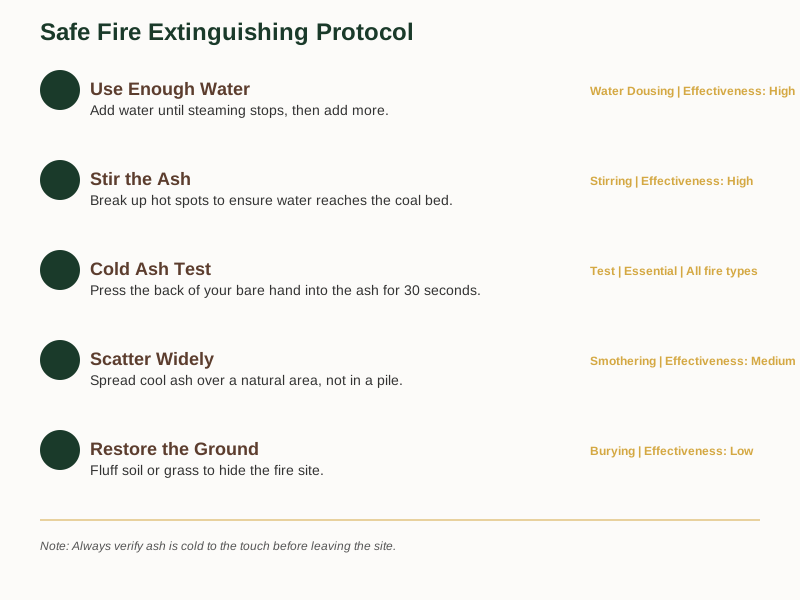
Proper extinguishing is the final act of site craft, determining whether the woodland looks untouched tomorrow. This checklist serves as your leave-no-trace field card.
For a practical reference to carry with your gear, the free Bushcraft Starter Checklist covers this and other essential procedures.
Further Guidance
Our guide on UK Firecraft: Fire Safety, Ethics, and Legality in UK Woodland provides a broader context.
References
Note: This is general guidance. Always verify details with qualified professionals or official sources.