Safe Fire Site Selection UK Woodland
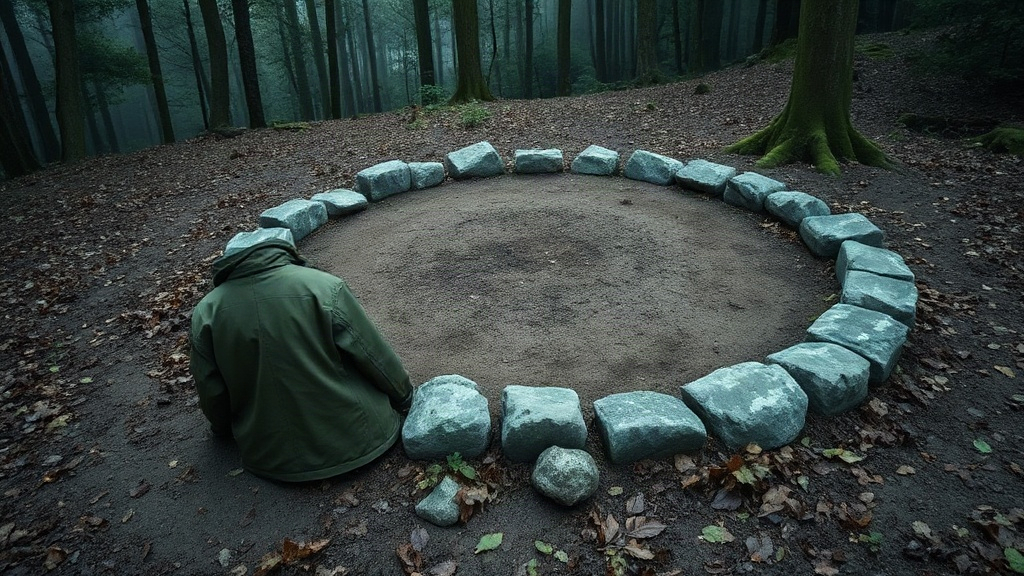
Before you clear anything, look up. Dead canopy and hung-up deadwood are the first assessment a site selector makes, because beginners stare at the ground and never check above them. That single glance overhead can tell you more about a spot’s fire safety than five minutes of ground inspection.
Site selection is the one fire decision that cannot be corrected after ignition. A stray ember catches the edge of some dead bracken near the pit, the bracken dries in the heat, and you’re now dealing with something that moves faster than you can stamp it out. Small fires become big ones not because the fire was too large, but because the clearing was too small.
Ruling Out the Wrong Spots
Some locations are automatic pass-fails. These aren’t marginal decisions—they’re fundamental red flags.
Overhanging branches are the first no-go. Heat rises, sparks follow, and dry branches catch quicker than expected. A one-metre crown above your fire might as well be a lit fuse. The rule is simple: nothing overhead that would fall into the fire.
Root systems and hollows present a danger many haven’t considered. A hollow between tree roots looks sheltered from wind, making it tempting. But those roots are often dry underneath even when the surface appears damp, and fire can travel through root channels underground, emerging far from where you’ve moved on. Avoid places where roots are exposed or the ground feels hollow.
Peat is an absolute no, more common in UK woodland than you might realise. Upland areas and older forests with thick organic soil often sit on peat that can be very deep. Peat doesn’t burn like wood—it smoulders underground, producing smoke that can attract emergency services from a distance. If the ground feels springy, dark, and fibrous underfoot, assume peat until proven otherwise.
Dense dry vegetation close to the fire pit is often overlooked in winter and spring. Bracken, bramble, and long grass might look green, but dead fronds persist through the winter wrapped around living stems. Sparks land, dry material ignites, and the fire spreads to the green stuff before you realise it.
Your mental red flag checklist: overhead branches, exposed roots or hollows, springy dark ground (peat), and dry vegetation within a metre. If any are present, move on.
Clearing the Right Area
Most fire-lighting guides focus on the flame itself. But the moment you put a flame on the ground, the area around it matters as much as the fire.
Clear all combustible material—leaf litter, moss, pine needles, dry grass—in a wide radius around the fire pit. This isn’t a suggestion; it’s the minimum safety standard based on how fire spreads in woodland.
Leaf litter acts as a wick. A spark landing near your pit can ignite dry leaves, which curl and drop into gaps, carrying flame to root channels or dry soil underneath. Once fire goes below ground level, you can’t stamp it out by hand. A generous radius accounts for wind variation and ember splash.
The pit itself should sit well back from the edge of the cleared area. That sounds like plenty of clearance until you’re feeding wood into a fire on a windy evening and your hand misses. A modest buffer ensures a moment’s inattention doesn’t put sparks directly onto uncleared ground.
Seasonal variation affects visibility, not the rule. In winter, the ground is damp and risk seems lower—but dry pine needles and dead leaves persist year-round in coniferous woodland. In summer, dry grass and bracken make the danger obvious. The clearing requirement remains the same.
If you’re unsure whether the ground is clear enough, kneel down and look from ground level. If there’s any material that would hold a spark between your knees and the fire, clear it.
For a field reference covering the full site selection sequence, Download the Free Bushcraft Starter Checklist .
Permission and Legal Considerations
Safety and legality are separate but both matter.
Permission to light a fire in UK woodland is not assumed. On private land, you need the landowner’s explicit say-so before you light up. On public land managed by bodies like the Forestry Commission or local councils, check whether fires are permitted before bringing matches. Many woodland sites have specific fire guidance and designated areas; lighting outside those areas is usually not allowed.
An existing fire ring doesn’t guarantee availability. Abandoned fire sites are common in popular woodland, and the person who dug it may have had permission that’s since lapsed. Always ask first.
Smoke Control Areas exist under the Clean Air Act, and while primarily targeting domestic burning, local councils can impose restrictions on outdoor fires causing nuisance. A small, well-managed campfire on private land with permission is unlikely to attract attention. A fire producing heavy smoke from damp wood, burning late in a residential area, is different.
Wet fuel produces smoke, and smoke causes problems. Keep your wood dry and your fire burning cleanly to minimise nuisance risk.
Before lighting, ensure: you have permission, the site is cleared, weather is stable, you have extinguishing means, and someone knows your location and return time. If any are missing, don’t light it.
Seasonal Variations
The rules don’t change much through the year, but the conditions testing them do.
Winter brings damp ground and short days, suggesting easier fire conditions. The ground is often wet—but dry leaf litter and pine needles persist, and wind is typically stronger. The winter problem is complacency: the fire feels safer because the world is wet, but the fuel around it hasn’t read that memo. Clear the same radius regardless of soil feel.
Summer brings dry ground, long daylight, and different risks. The ground holds less moisture, meaning fire spreads faster if it escapes. Overhanging branches are a greater concern—they’re in full leaf, more flammable, and dried out by sun. Summer thunderstorms also warrant caution; lightning strikes on exposed hilltop clearings are rare but real.
Autumn is the highest-risk season. The fuel load peaks—leaves fall, bracken dies back, and everything is dry. Wind is common and unpredictable. In autumn woodland, generous clearing isn’t a starting point but an absolute minimum. Check your clearing after every large piece of fuel added, and be honest about wind direction before lighting.
| Season | Ground risk | Fuel risk | Main hazard |
|---|---|---|---|
| Winter | Low (damp) | Moderate (dry litter persists) | Complacency, wind |
| Summer | High (dry) | High (dead vegetation, leaf litter) | Overhead branches, storms |
| Autumn | Moderate | Very high | Wind, fuel load |
The pattern remains: whatever the season, the danger is dry fuel close to the fire combined with spark escape routes. Clear the fuel, control the sparks, and the season becomes less critical.
Frequently Asked Questions
Can I light a fire on peat?
No. Peat is not safe to light a fire on or near, regardless of surface dampness. Peat can smoulder underground, creating a wildfire risk long after you’ve left. If the ground feels springy or fibrous, or shows dark organic soil when scraped, find a mineral soil site instead.
Do I need to dig a fire pit?
Not always, but it helps. A shallow pit contains the fire, protects the ground underneath, and simplifies ash management. On sensitive ground or where digging isn’t possible, a cleared stone or sand platform works as an alternative, provided you’ve still cleared a generous radius around it.
Is it okay to light a fire in a wooded area?
Only with landowner permission, after clearing a safe area and checking conditions. Lighting in dense woodland without significant clearing is unsafe—the fuel load is too high and spread risk too great. If you can’t clear a proper radius of all combustible material, find another location.
Final Check Before Ignition
Keep this in mind: site selection is the pre-ignition audit you run before striking a spark. Clear the area, avoid the no-go zones, get permission, and check conditions. That short checklist stops a good evening from becoming a serious problem.
For a printed reference covering site selection, clearing, and the full sequence from spark to shutdown, Download the Free Bushcraft Starter Checklist . Take it on your next trip.
Related Guidance
Our UK Firecraft: Fire Safety, Ethics, and Legality in UK Woodland provides broader context for responsible fire use.
Sources & Further Reading
Note: General guidance only, verify details with a qualified professional or official source.