Leave No Trace UK: The 7 Rules Landowners Actually Care About

Leave No Trace is what keeps bushcraft compatible with the reality of the UK: crowded landscapes, strict access rules, and habitats that can be damaged quickly. The practical goal is simple enough to state and harder to do well: enjoy the place, learn from it, and leave it looking as if no one stopped there.
What Exactly is ‘Leave No Trace’ in the UK?
Leave No Trace is a set of outdoor ethics that promotes conservation in the outdoors, teaching people to enjoy our wild spaces responsibly and minimise their impact on the environment. The core philosophy is simple: leave natural areas as you found them, or even better, leave them looking like no one was ever there. It’s about respecting nature, other outdoor users, and the delicate balance of our ecosystems. While the Leave No Trace Centre for Outdoor Ethics provides the global foundational principles, in the UK, Leave No Trace means adapting these principles to our unique landscapes, access laws, and delicate ecosystems, focusing on respect for both nature and people.
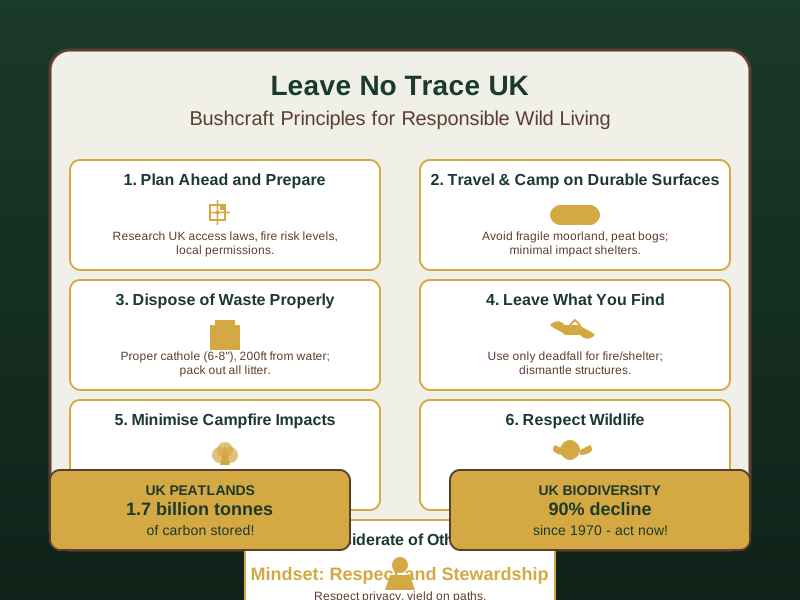
Our country is densely populated, and our woodlands, moorlands, and coastlines are often under significant pressure. This makes responsible behaviour not just a good idea, but an absolute necessity. Unlike vast wilderness areas elsewhere, our woodlands and moors are often more fragile and heavily used. What might be fine in a remote US forest could cause significant damage here. Think about our ancient woodlands, some of which have been continuously forested for centuries, or the delicate peat bogs of the uplands that are vital carbon stores and unique habitats. According to the Scottish Government, peatlands store around 1.7 billion tonnes of carbon in Scotland alone. This highlights just how crucial it is to protect these fragile environments when we’re out and about. These places simply can’t withstand heavy-handed use.
Furthermore, access rights in the UK vary significantly. In Scotland, we have the Scottish Outdoor Access Code, which grants statutory access rights to most land and inland water, provided you act responsibly. Elsewhere in the UK, the Countryside Code (which you can find guidance on from Gov.uk’s Outdoor Code) provides a framework for responsible behaviour on public rights of way and open access land, often with stricter rules around things like fires and camping. Understanding these nuances is absolutely crucial for any bushcrafter. It’s not just about what you can do, but what you should do to be a good steward of these precious places. This means understanding that “wild camping” as understood in some parts of the world isn’t generally permitted in England, Wales, or Northern Ireland without landowner permission, and that fire regulations are often very strict. Ignoring these can lead to fines, loss of access, and real damage to our natural heritage.
UK LNT Principles: Quick Reference
| LNT Principle | General Application | UK Bushcraft Focus / Challenge |
|---|---|---|
| Plan Ahead and Prepare | Know your route, weather, gear. | Research UK access laws, fire risk levels, local permissions. |
| Travel & Camp on Durable Surfaces | Stick to trails, established sites. | Avoid fragile moorland, peat bogs; minimal impact shelters. |
| Dispose of Waste Properly | Pack it in, pack it out. | Proper cathole depth (6-8"), 200ft from water; pack out all litter. |
| Leave What You Find | Don’t take souvenirs. | Use only deadfall for fire/shelter; dismantle structures. |
| Minimise Campfire Impacts | Small fires, douse completely. | Strict fire regulations, use stoves/mound fires; cold to touch. |
| Respect Wildlife | Observe from distance, secure food. | Avoid nesting birds, control dogs near livestock/wildlife. |
| Be Considerate of Other Visitors | Keep noise down, share trails. | Respect privacy, yield on paths, leave gates as found. |
Why LNT Matters More Than Ever for UK Bushcrafters
Every decision a bushcrafter makes, from where they pitch a tarp to how they manage a fire, contributes to the overall health and accessibility of our wild spaces. It’s easy to think that one small action, like leaving a few apple cores or building a slightly too-big fire, won’t make a difference. But the truth is, the cumulative impact of thousands of individuals doing those “small” things adds up to significant environmental degradation. The State of Nature Report consistently highlights the ongoing decline in UK biodiversity, making our individual actions in the outdoors more critical than ever. Our wild places, particularly in a small, crowded island like Britain, are already under immense strain from development, climate change, and intensive land use. We, as bushcrafters, have a unique opportunity – and frankly, a responsibility – to be part of the solution, not the problem.
One of the biggest concerns for many of us who love spending time outdoors is the threat to access. Irresponsible behaviour by a few can quickly lead to blanket restrictions for everyone. We have seen beautiful spots degraded by thoughtless camping and fires. It’s heartbreaking, and it’s exactly what LNT aims to prevent, ensuring places like the Cairngorms or the New Forest remain wild and accessible. If a landowner finds litter, human waste, or damaged trees, their immediate response, quite understandably, will be to close off access. This hurts all of us who seek to respectfully enjoy and learn from nature.
Beyond access, there’s the critical issue of protecting biodiversity and natural beauty. Our woodlands are home to an incredible array of plants, insects, birds, and mammals. Disturbing nesting sites, damaging ground flora, or introducing non-native species (even accidentally, like via contaminated boot treads) can have far-reaching consequences. As bushcrafters, we pride ourselves on connecting with nature, understanding its rhythms, and utilising its resources. But this relationship must be one of respect and stewardship. We are not just visitors; we are temporary guardians. We want these places to be as vibrant and beautiful for our children and grandchildren as they are for us, don’t we? It’s about leaving a legacy of care, not a legacy of impact. By consciously adopting Leave No Trace principles, we actively contribute to the longevity and health of our precious UK wild spaces.
The 7 LNT Principles: Bushcraft Edition (UK Focus)
The Leave No Trace principles provide a brilliant framework for responsible outdoor behaviour, and they’re particularly vital for bushcrafters. Let’s break down each one with a specific focus on how we apply them here in the UK.
Plan Ahead and Prepare
This principle is about doing your homework before you even step foot in the woods. For UK bushcrafters, this means a few key things:
- Research UK access rights: This is critical. Understand the difference between the Scottish Outdoor Access Code and the Countryside Code for England, Wales, and Northern Ireland. Know where you’re allowed to go, what activities are permitted, and if landowner permission is required for camping or fires. Don’t just assume; check. Websites like National Parks UK are excellent starting points for specific park rules.
- Check fire risk levels: This is absolutely critical, especially in dry periods. Forestry England, National Parks, and local authorities often issue fire risk warnings. A small spark can devastate an area. If the risk is high, a stove is your only responsible option – or just enjoy a cold meal.
- Pack appropriate gear for UK weather: Our weather is famously unpredictable! Be prepared for all four seasons in one day. Waterproofs, warm layers, and sturdy footwear are non-negotiable. Being adequately equipped prevents emergencies, which in turn reduces the need for rescue services and potential environmental disturbance.
- Know your group’s skill level: If you’re with others, ensure everyone understands the planned activities and their own capabilities. Don’t push beyond what’s safe or comfortable. A well-prepared group is a low-impact group.
We once planned a trip to Dartmoor, convinced we knew the area. We hadn’t properly checked the specific fire restrictions for that particular part of the national park. Luckily, we spoke to a local ranger before striking a match, and she gently informed us we’d have caused a serious problem. It is a real ’learned-it-the-hard-way’ moment about the importance of hyper-local knowledge, not just general rules. A quick call or email to the ranger or landowner before you go can save a lot of trouble and usually comes across well.
Travel and Camp on Durable Surfaces
This principle means choosing where you walk, pitch your shelter, and conduct your activities to minimise damage to vegetation and soil.
- Focus on established paths and campsites: Where they exist, use them. This concentrates impact in areas already disturbed.
- UK specific: Avoiding fragile moorland, peat bogs, and ancient woodland ground flora: These ecosystems are incredibly sensitive. Walking off-path on heather moorland can easily damage slow-growing plants. Peat bogs, vital for carbon storage, are easily eroded and can take decades to recover from a single footprint. Many beginners learn the hard way about peat bogs – thinking they are on solid ground on one occasion, but ending up knee-deep! Always check your footing and stick to known paths, especially in the uplands. In ancient woodlands, be mindful of delicate ground flora like bluebells or wood anemones. The Woodland Trust provides excellent resources on the unique value and fragility of our ancient woodlands.
- Tarp shelters: Pitch on durable ground like bare soil, rock, or existing clearings. Avoid trampling sensitive vegetation. Keep your footprint small.
- Minimal impact camping: If a fire pit is allowed and already exists, use it. If not, you’ll need to employ LNT fire techniques (more on that below).
Dispose of Waste Properly (Pack It In, Pack It Out)
This is the golden rule: if you bring it in, you pack it out. Every single bit of it.
- The absolute rule: carry all litter out: This includes food scraps like apple cores, banana skins, and orange peels. They might be biodegradable, but they take a long time to break down, are unsightly, and can attract wildlife to human food sources, which is bad for them and us. Pack a dedicated rubbish bag.
- Human waste: Catholes explained: If there are no facilities, you’ll need to dig a cathole. This should be at least 6-8 inches deep (a good trowel is invaluable here!), and crucially, at least 200 feet (about 70 paces) from water sources, trails, and campsites. Bury your waste and all toilet paper completely. In some sensitive UK areas, or where the ground is thin, you might even be asked to pack out your toilet paper. Check local guidance!
- Washing: Use biodegradable soap sparingly and always wash at least 200 feet from water sources. Scatter wastewater broadly to allow soil to filter it. Don’t wash directly in streams or lakes.
Leave What You Find
This principle is about respecting the natural environment by not altering it.
- Resist taking souvenirs: Leave stones, plants, feathers, and artefacts where you find them. They are part of the natural ecosystem and historical record.
- Bushcraft context: Using only dead and downed wood for fires (where permitted): Never, ever cut live trees or branches, strip bark, or break off living plant parts. This damages the tree and the forest. Stick to what’s already on the ground and clearly dead.
- Leave shelters as you found them, or dismantle responsibly: If you build a temporary shelter, dismantle it completely when you leave, scattering the materials to naturalise the site. The goal is for no one to know you were there.
Minimise Campfire Impacts
This is often the trickiest principle for bushcrafters, as fire is such a core skill. But it’s also where we can do the most damage if we’re not careful.
- The big one for UK bushcraft! Emphasise when and where fires are appropriate and legal: As mentioned, fire regulations are strict in the UK. Always check local rules (Forestry England, National Parks, landowners) before even considering a fire. Many areas have outright bans, especially during dry periods. For more detailed guidance on LNT principles specific to the UK, the Leave No Trace Ireland site (which shares many principles with mainland UK) is a brilliant resource, especially for fire.
- Use existing fire rings or LNT fire techniques: If a fire is permitted and there’s an existing fire ring, use it. If not, consider a “fire saucer” (a metal tray placed on the ground to contain the fire) or a “mound fire” (building a fire on a layer of mineral soil or sand, carefully removed from another durable spot and replaced afterwards). These techniques lift the fire off the sensitive ground. We also carry a small collapsible water bucket because it makes proper extinguishing much easier.
- Burn only small, dead, downed wood: Small fires are easier to control and leave less impact. Use wood no thicker than your wrist. Never cut live branches.
- Ensure fires are completely out: This is non-negotiable. Douse the fire with water, stir the ashes, and then douse again. Repeat until the ashes are cold to the touch. Seriously, feel them with your bare hand. If it’s warm, it’s not out.
- Consider alternatives: stoves are often the most LNT option: A small gas or alcohol stove is often the most responsible and practical way to cook a hot meal in the UK, especially in sensitive areas or during fire bans.
Respect Wildlife
Our presence can easily disturb wildlife, so it’s vital to be mindful.
- Observe from a distance, never feed animals: Feeding wildlife makes them reliant on humans, can spread disease, and alters their natural behaviour. Use binoculars for close-up views.
- Secure food from rodents and foxes: Store food in sealed containers or hung from a tree to prevent animals from getting into it. This protects both your food and the animals.
- Avoid disturbing nesting birds or sensitive habitats: Be aware of your surroundings, especially during breeding seasons. If you spot a nest, give it a wide berth. The RSPB offers excellent advice on minimising disturbance to nesting birds.
- Keep dogs under control: If you bring a dog, keep it on a lead, especially near livestock or wildlife. Pick up their waste. A client of ours, a keen bushcrafter in Cumbria, once had a run-in with a farmer after his dog spooked some sheep. It highlighted just how important it is to keep dogs on a lead and under control, not just for wildlife but for livestock too, to maintain good relations with landowners. My rule of thumb for wildlife is simple: if your presence changes their behaviour, you’re too close.
Be Considerate of Other Visitors
We’re not alone in the outdoors. Sharing space respectfully is key.
- Keep noise levels down: Enjoy the peace and quiet of nature. Loud conversations, music, or shouting can disturb wildlife and other people.
- Respect privacy and avoid large groups in sensitive areas: Give other campers or walkers space. Bushcraft is often a solitary pursuit, but if you’re with a group, try to keep your presence discreet.
- Share the space – yield on paths: Be polite and friendly. If you meet someone on a narrow path, the person going downhill should generally yield to the person going uphill.
- Leave gates as you find them: If a gate is closed, close it behind you. If it’s open, leave it open. This is crucial for livestock management.
Common Bushcraft Practices That Conflict with LNT (And How to Fix Them)
Let’s be honest, some traditional bushcraft practices can feel like they’re at odds with Leave No Trace. But the beauty is that with a bit of thought and adaptation, we can still enjoy our skills responsibly. It’s not about abandoning bushcraft, but about evolving it.
Fire Lighting: The desire to build big fires vs. LNT principles.
- The Problem: There’s a primal urge to build a roaring blaze, but large fires require more wood, create more ash, scorch a wider area, and are harder to control. They also leave a much larger scar.
- The Solution: Focus on small, controlled fires. The goal of bushcraft fire lighting isn’t the size of the flame, but the skill in getting it going and keeping it efficient. We cover specific fire lighting techniques in more detail on the blog. Use a small “keyhole” or “star” fire lay that uses minimal wood and concentrates heat. Better yet, use a fire saucer or a mound fire technique to protect the ground underneath. And honestly, a good stove is often the most practical and LNT-friendly way to cook or boil water in the UK. We used to clear a massive area for our fire, thinking we needed space. Now, we use a fire saucer or build a small mound fire that contains the heat and ash, minimising ground impact, and it’s far more efficient.
Shelter Building: Using natural materials vs. disturbing the environment.
- The Problem: Building a substantial natural shelter often involves gathering a lot of materials, which can strip an area of deadfall and potentially damage living plants if you’re not careful. Leaving a large, constructed shelter can also look unnatural and impact the aesthetics of the landscape.
- The Solution: Prioritise low-impact structures. A tarp and a few poles (deadfall only!) is often the most practical and LNT-friendly option. If you’re building a debris shelter for practice, use only dead and downed wood and leaves. Build it minimally, clear the area minimally, and critically, dismantle it completely when you leave. Scatter the materials so they blend back into the environment, making the site look untouched. The key to responsible bushcraft shelter building is using only dead, downed materials and ensuring the site is indistinguishable from its surroundings once you leave.
Foraging: Taking too much vs. sustainable harvesting.
- The Problem: The excitement of finding wild edibles can sometimes lead to over-harvesting, leaving nothing for wildlife or for the plant to regenerate.
- The Solution: Follow LNT foraging guidelines. This means knowing your limits – only take what you need for immediate consumption, and leave plenty behind for wildlife and for the plant to recover. Never strip a plant bare. If you find a patch of wild garlic, take a few leaves from various plants, not all of them from one. Learn sustainable harvesting techniques and never damage the root system unless you intend to harvest the entire plant (and know it’s sustainable to do so).
“Making things look wild”: Over-tidying or leaving unnatural arrangements.
- The Problem: Sometimes, in an effort to “clean up,” we can inadvertently make an area look less natural. Piling up branches neatly, sweeping an area bare, or arranging stones can create an unnatural aesthetic that screams “human was here.”
- The Solution: Naturalise your site thoroughly. Instead of neat piles, scatter any disturbed leaves, pine needles, or small branches to blend with the surroundings. Break up any compacted soil patches with a stick to aerate them and help them disappear. The goal is to make the site look as if no one ever stopped there. Think like a detective trying to remove all evidence!
Your Bushcraft LNT Toolkit: Essential Gear & Mindset
Embracing Leave No Trace isn’t just about what you don’t do; it’s also about having the right tools and, more importantly, the right mindset. These aren’t just for convenience; they’re integral to responsible bushcraft.
First, let’s talk gear. A few simple items can make a world of difference:
- Trowel: Absolutely essential for digging catholes for human waste. A good trowel isn’t just for digging catholes; it’s essential for creating LNT-friendly mound fires and naturalising your campsite.
- Small saw or axe: For processing dead and downed wood efficiently. This prevents you from needing to break branches off living trees.
- Stove and fuel: As we’ve mentioned, a small, lightweight stove is often the most LNT way to cook a hot meal in the UK, especially in sensitive areas or during fire bans. They’re quick, efficient, and leave no trace of fire.
- Waterproof bags: For packing out all your litter, including any food scraps or toilet paper if local guidance requires it.
- Biodegradable soap: If you need to wash, this minimises chemical impact, but remember to still wash well away from water sources.
Beyond the physical gear, carrying a small notebook can help you slow down, plan better, and think through the likely impact of what you are about to do before you start.
But perhaps even more vital than the gear is the mindset. This is where the real “bushcrafter’s LNT toolkit” truly lies:
- Patience: Rushing often leads to mistakes and greater impact. Take your time, observe, and make considered decisions.
- Observation: Pay attention to your surroundings. Where are the fragile plants? Where are others likely to walk? What’s the fire risk?
- Planning: The “Plan Ahead and Prepare” principle isn’t just a suggestion; it’s the foundation of low-impact bushcraft.
- Respect: Respect for nature, for wildlife, for landowners, and for other outdoor enthusiasts. This underpins everything.
- Continuous learning: LNT isn’t a fixed rulebook; it’s a living philosophy. Conditions change, knowledge evolves. Always be open to learning better, more responsible ways.
Honestly, a small, lightweight stove is often the most LNT way to cook a hot meal in the UK, especially in sensitive areas or during fire bans. Using it is a skill in itself, and a highly responsible one at that. Remember, LNT is a skill that develops with practice. The more you consciously apply these principles, the more intuitive they become, until they’re just a natural part of your bushcraft journey. We often share more thoughts on developing this mindset on the blog.
Sources & Further Reading
- Scottish Government (Peatland Action case studies on carbon storage)
- State of Nature Report (UK biodiversity decline)
- Scottish Outdoor Access Code (Access rights in Scotland)
- Gov.uk’s Countryside Code (Responsible behaviour in England, Wales, NI)
- National Parks UK (Specific park rules and guidance)
- Forestry England (Fire safety advice)
- Woodland Trust (Ancient woodland value and fragility)
- Leave No Trace Ireland (LNT principles, especially fire guidance)
- RSPB (Minimising disturbance to nesting birds)
Note: This article covers general principles and tips. For advice specific to your situation, get in touch.
Frequently Asked Questions
Can I build a campfire anywhere in the UK when bushcrafting?
No. Fire rules are strict across much of the UK, and in many places the answer will be no unless you have specific permission. Even where a fire is allowed, it still needs to be small, controlled, and fully extinguished, and a stove is often the lower-impact option anyway.
Is it okay to use natural materials for shelter building?
Yes, but only if you are using dead and downed material and only where the activity itself is permitted. Never cut live wood or strip bark from living trees. When you finish, dismantle the shelter fully and return the site to a natural-looking state.
What about human waste? Where should I go?
If there are no toilet facilities, dig a cathole at least 6-8 inches deep and at least 200 feet away from water, paths, and campsites. Bury waste properly and follow the local guidance on toilet paper, because in some sensitive places you may need to pack it out.
How can I ensure I’m truly leaving no trace when I leave my campsite?
Treat your departure like a final inspection. Remove all litter, scatter disturbed material so it blends back in, and make sure any fire remains are cold and fully naturalised. Our own rule is simple: if we can still clearly tell we were there, we have more work to do.
Does Leave No Trace apply to foraging for wild edibles?
Yes. Foraging still falls under Leave No Trace, which means taking only what you need, avoiding damage to the plant, and leaving enough for wildlife and regeneration. Sustainable harvesting matters just as much as correct identification.
Keeping Our Wild Spaces Wild
Bushcraft and Leave No Trace should reinforce each other, not compete. If your skills leave places damaged, restricted, or visibly altered, something in the approach needs adjusting.
If you’re unsure how a particular skill fits with low-impact practice, reach out. Responsible bushcraft is still bushcraft; it is just better thought through.
Know your rights and responsibilities — grab the free UK Land Access & Wild Camping Reference for a quick overview of the rules.