Best Natural Tinder by Season UK
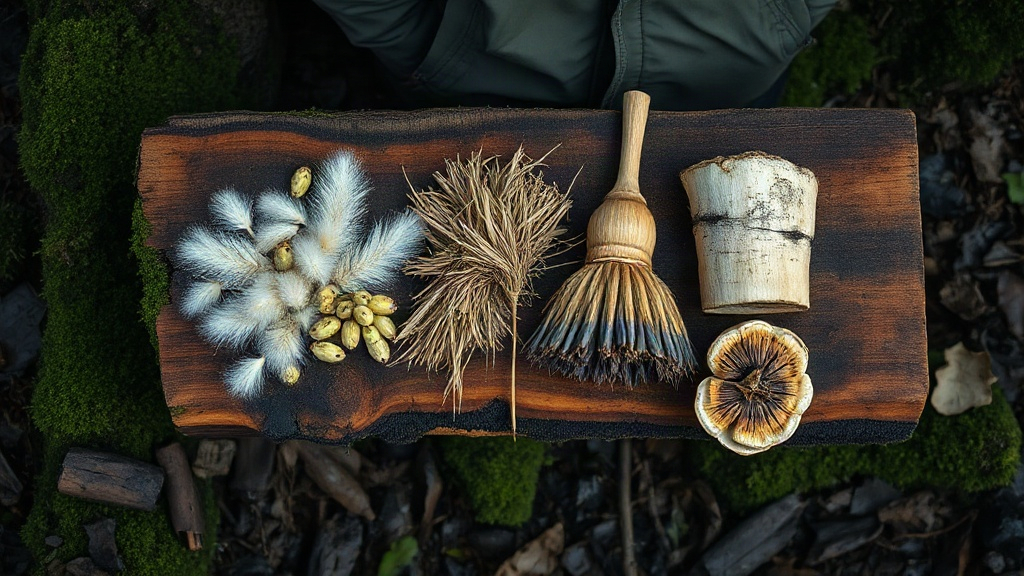
The UK’s most reliable natural tinder appears during a surprisingly narrow window: the catkin season, which is only a short window in early spring. This brief period offers materials that are genuinely dry and spark-ready when most woodland remains damp.
Natural tinder availability follows a clear seasonal pattern. Each part of the year produces specific materials that work when others fail. Understanding this cycle means knowing what to look for in March versus what will work in November. The right choice changes everything when trying to start a fire with damp kindling.
Spring’s First Spark: Catkins
Alder, poplar and willow catkins emerge as the first dependable natural tinder of the year, typically appearing from March through April. Their fine, woolly fibres create exceptional surface area for catching sparks when teased apart properly.
The key is preparation. Pull handfuls apart with your fingers to create a loose mass rather than using them whole. This fluffed-out structure gives a ferro rod spark somewhere to catch and hold. They work best as spark-tinders rather than sustained flame sources—perfect for bridging the gap between ignition and your first kindling in conditions where other vegetation remains damp.
Alder and poplar catkins tend to be the most responsive. Willow catkins can also work but are often denser and less fibrous. Look for the drooping male catkins on alder trees, which appear before the leaves. While they won’t sustain a large flame alone, their ability to catch a spark makes them valuable during the early spring transition period.
Summer Sustenance: Grass and Fine Fibres
Dry grass serves a different purpose than many assume. It’s not primarily a spark-tinder but excels at sustaining a flame once you have an ember going. The dead, bleached grass that has stood since autumn provides the ideal material—properly dried over months rather than weeks.
The technique involves roughing it up between your palms to break the smooth stems and create a loose structure. This allows heat to transfer effectively to your kindling. If you encounter damp grass, laying it across bramble or hawthorn in direct sunlight can improve its usability within an hour through better air circulation.
Thistle down from creeping thistle seedheads offers another summer option. This finer material burns quickly and works well for coaxing a small ember into a proper flame. While not suitable for direct spark ignition, it serves as excellent supplemental material when building your fire lay.
Autumn’s Weatherproof Options
Autumn brings the most reliable wet-weather tinder sources. Bracket fungi become fully formed and more visible after leaf fall, providing materials that remain functional when others fail.
Horse hoof fungus (Fomes fomentarius) grows predominantly on birch and beech trees. The key is the felty trama—the pale, fibrous tissue beneath the hard crust. Scraping this out produces a dry, fluffy material that catches sparks readily even in damp conditions. The fungal tissue naturally resists moisture absorption, making it valuable during wet autumn weather.
King Alfred’s Cakes (Daldinia concentrica) appear as small, coal-like black nodules on dead ash and beech wood. When fully hardened and black throughout, they can serve as direct spark-tinders. The charcoal-like texture burns slowly, functioning as both igniter and sustainer.
This season is ideal for preparing a tinder bundle. The materials are at their most accessible, and storing scraped trama or collected fungus nodules means you’re prepared for winter conditions when finding dry tinder becomes more challenging.
Winter Reliability: Birch and Resin
Winter presents the toughest conditions for natural tinder, but birch bark remains remarkably effective. The outer bark contains natural oils that repel water, often staying dry internally even after extended rain. This, combined with its ability to ignite readily from sparks, makes it the standout winter choice.
The technique involves finding dead or fallen birch trees and stripping flexible outer bark strips. Crumpling them loosely rather than tight bundling improves airflow and combustion. Young birch twigs make excellent kindling once you have a flame established.
Pine resin can be useful in deep winter where available. The solidified resin from pine and spruce tree wounds is highly flammable and can ignite even when damp. However, its distribution is patchy across the UK, making it less reliable than birch as a primary winter source.
When harvesting birch bark, focus on standing dead trees or fallen trunks after storms. Avoid stripping living trees to prevent damage to the cambium layer.
Building Your Seasonal Tinder Kit
The common mistake is waiting until you need fire to think about tinder. A prepared tinder bundle eliminates this problem. Store seasonal materials in a waterproof container—scraped fungus trama, crumpled birch bark, or dried grass collected during woodland walks.
📺 Watch: Firecraft For Dummies: My Top 5 Natural Tinder Sources
An effective bundle contains three components:
- Spark-catcher: Material that ignites directly from sparks (birch bark, fungus trama)
- Sustain layer: Keeps the flame going (dry grass, thistle down)
- Carrier: Holds the bundle together and transfers flame
Building this before you need it means you’ll have reliable tinder regardless of conditions when you next head out.
If you’re assembling your first fire kit, Download the Free Bushcraft Starter Checklist —it covers the tinder, tools and kindling strategy that work together.
Seasonal Tinder Reference
| Season | Primary Tinder | Best For | Key Characteristic |
|---|---|---|---|
| Spring | Alder, Poplar & Willow Catkins | Spark ignition | Fibrous structure ideal for catching sparks |
| Summer | Dead Grass & Thistle Down | Flame sustainment | Dry material that bridges ember to flame |
| Autumn | Bracket Fungus | Wet conditions | Moisture-resistant tissue burns steadily |
| Autumn | King Alfred’s Cakes | Direct spark | Hardened nodules ignite readily |
| Winter | Birch Bark | Harsh conditions | Water-repelling oils maintain dryness |
Common Tinder Questions
Can wet grass be used? Wet grass will typically smoulder rather than flame. If you only have damp grass, try drying it on thorny vegetation in sunlight, or reserve it for use when drier conditions return.
How does birch bark perform in rain? The natural oils in birch bark help it resist water absorption. Even when the surface is damp, inner layers often remain dry enough to catch a spark, making it valuable in wet conditions.
What works best with ferro rods? Materials with high surface area and low density catch sparks most effectively—inner bark fibres, catkins, and fungus trama all work well. Sustain materials like dry grass work better once an ember is established.
Identifying usable bracket fungus Look for firm, heavy specimens with dry, fibrous trama inside. Avoid fungi that feel spongy or have wet-looking undersides, as these retain too much moisture.
The seasonal tinder cycle provides a practical framework for UK firecraft. Consider using this guide as a living document—note which species you find and when throughout the year, adapting the checklist to your local woodland. Keeping seasonal notes transforms theoretical knowledge into practical skill.
Build your kit around this seasonal understanding, download the free checklist to ensure you’re prepared, and you’ll have reliable fire-starting capability regardless of conditions.
Further Reading
Our guide on UK Firecraft: Sourcing Tinder and Kindling in Wet Woodlands provides additional context for responsible foraging.
Disclaimer: This guidance is based on established bushcraft practices. Always verify identification with reliable sources and follow local regulations regarding foraging and fire use.